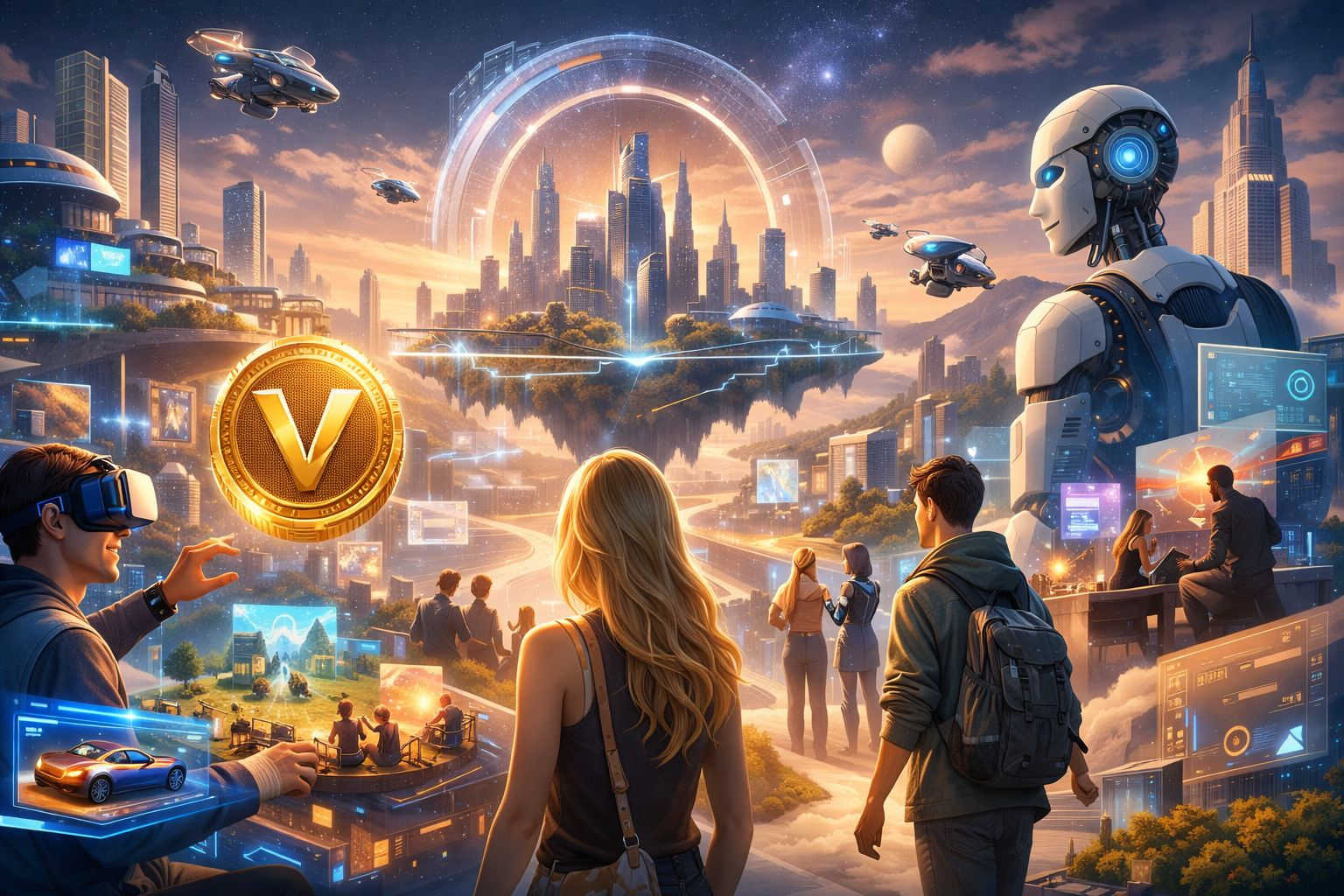
Sometimes crypto talks so loudly about technology that it forgets the human on the other side of the screen. We see charts, metrics, TPS numbers — but rarely ask a simple question: does this actually feel natural to use? The conversation growing around vanar and the role of $VANRY inside the Vanar ecosystem feels different because it starts there — with experience, not noise.
Most of us don’t wake up excited to manage wallets or think about network fees. We go online to play, connect, build something, express who we are. The vision forming around Vanar Chain feels closer to designing a living digital space than launching another piece of infrastructure. It’s like the difference between visiting a construction site and walking through a well-designed city. In one, you see the scaffolding everywhere. In the other, everything just works — lights turn on, roads flow, people move — and you barely think about what’s underneath.
That’s the emotional shift happening here. The focus isn’t just on being fast or scalable for the sake of headlines. It’s about creating conditions where games feel smooth, AI-powered apps feel responsive, and digital environments feel alive instead of technical. When millions of tiny actions happen — clicks, trades, interactions, ownership changes — the system can’t feel heavy. It has to feel invisible.
There’s also something deeper than tech at play: behavior. The internet isn’t static anymore. It’s interactive, immersive, and increasingly tied to digital identity. We don’t just browse — we participate. We own in-game assets, join online communities, follow digital creators, and soon interact with AI agents that act almost like users themselves. In that world, blockchains can’t behave like financial back offices. They need to feel like real-time environments. That’s the lane Vanar is moving toward.
VANRY fits into this story not as a background detail, but as the fuel for participation. Ecosystems only last when everyone involved — users, builders, platforms — has a reason to stay and grow together. When value flows in a loop instead of jumping in and out for speculation, the system starts to feel stable, almost organic. That’s when communities form, not just markets.
And honestly, mainstream adoption won’t arrive because people finally understand blockchain terminology. It’ll arrive when they don’t even realize they’re using it. When playing a game, joining a digital event, or interacting with an online world feels as normal as scrolling a social app. The complexity fades, the experience stays. That’s a very human goal — reduce friction, increase flow.
Looking ahead, everything online is becoming more alive. AI is turning into active agents. Games are turning into economies. Brands are building digital spaces instead of just ads. These shifts need infrastructure that can quietly handle intensity without demanding attention. The direction around vanar suggests a belief that the future of Web3 isn’t about louder tech — it’s about softer edges.
So the story of VANRY and the growth of Vanar doesn’t feel like another cycle of hype. It feels more like early groundwork for digital places people might actually want to live in, create in, and stay in. Less about proving the technology works — more about making it feel human.