
The biggest lie crypto ever told users was that blockchains are easy to use.
For most people, interacting with crypto still means managing gas tokens, worrying about fees, failed transactions, and unpredictable costs. Even today, the question “Do you have ETH for gas?” blocks real adoption.
Plasma flips this model completely.
By introducing gasless transactions and stablecoin-first gas, Plasma doesn’t just optimize blockchain performance it removes friction at the UX layer that has quietly kept billions of users out of crypto. This is not a small improvement. It’s a permanent shift in how blockchains should work.
The UX Problem with Traditional Gas Models
In most blockchains, users must:
Hold a native gas token
Estimate gas fees
Time transactions during low congestion
Understand why transactions fail
This complexity makes sense for engineers, but not for retail users, merchants, or institutions who only care about sending money reliably.
Traditional Transaction Flow
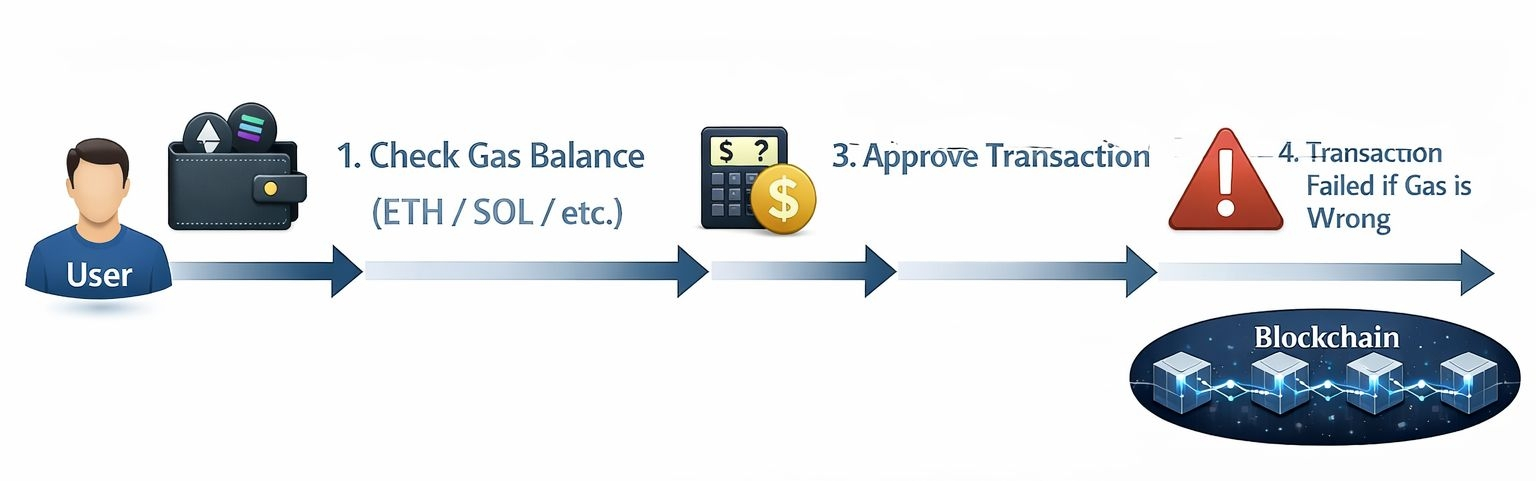
This flow creates cognitive load, failed payments, and friction, especially in high-adoption regions where stablecoins are used like cash.
What “Gasless” Really Means on Plasma
Gasless transactions on Plasma do not mean validators work for free.
Instead, Plasma redesigns who pays gas, what gas is paid in, and when users need to think about it.
Key principles:
Users do not need a separate gas token
Fees can be abstracted away
Stablecoins (like USDT) are first-class citizens
UX feels closer to Web2 payments than crypto
Plasma Transaction Flow (Gasless UX)
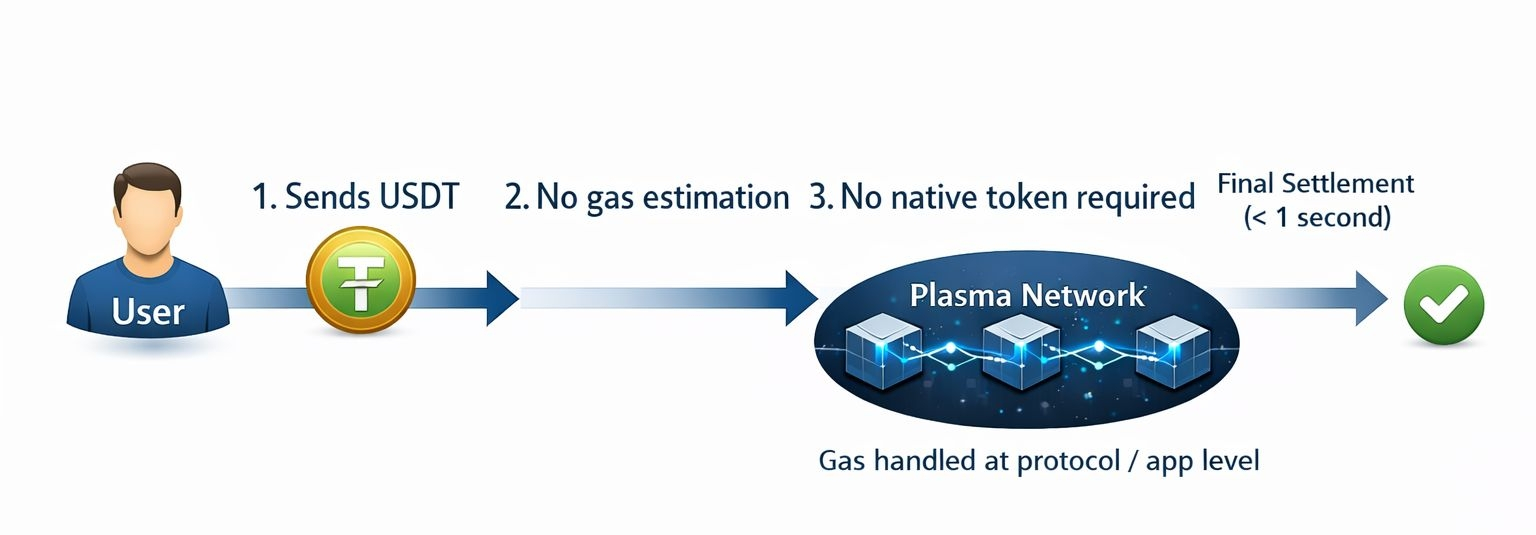
From a user’s perspective, sending stablecoins just works.
Stablecoin-First Gas: A UX Breakthrough
Most blockchains treat stablecoins as applications.
Plasma treats them as infrastructure.
On Plasma:
Stablecoins can be used directly for fees
Or transactions can be fully gasless for end users
Developers can sponsor fees or batch them efficiently
This aligns perfectly with how people already think:
“If I’m sending dollars, why do I need another token?”
Mental Model Shift
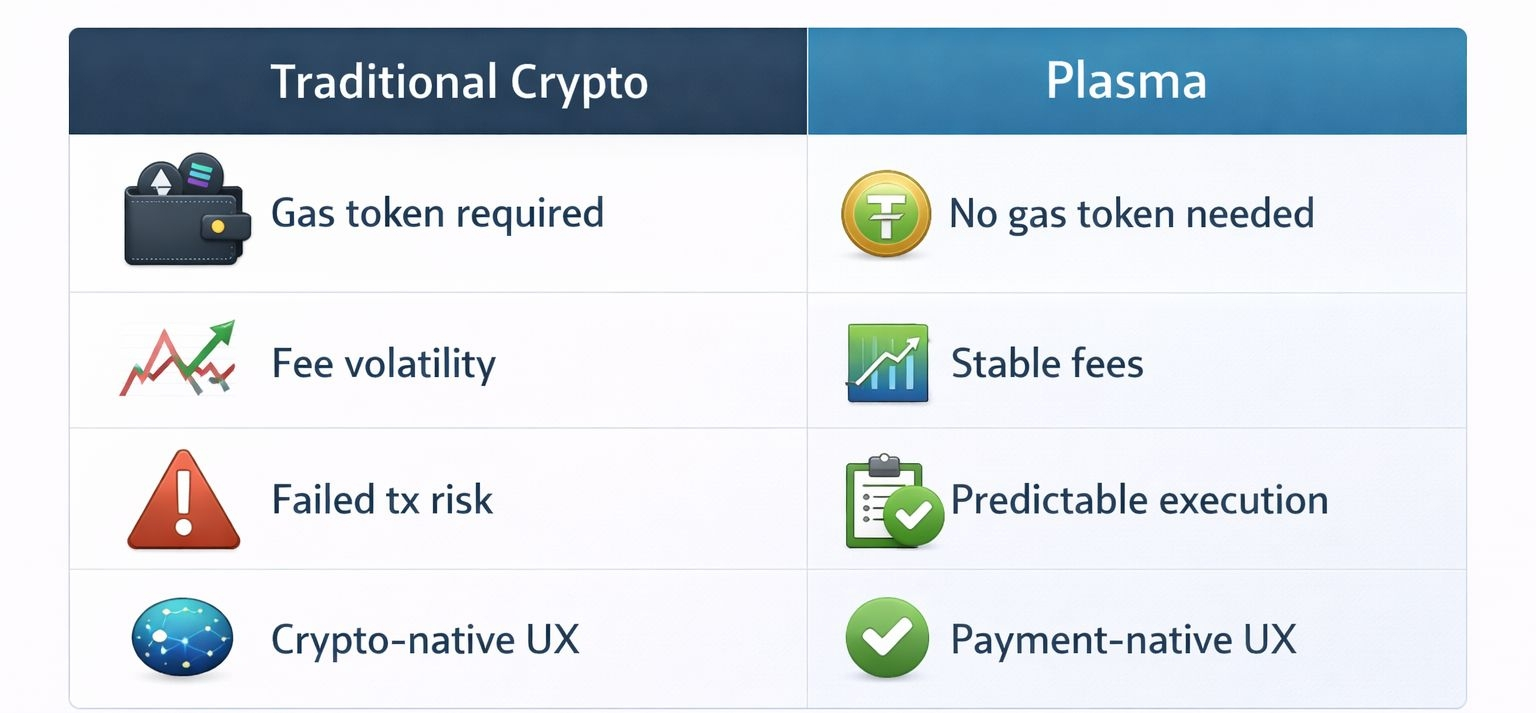
Why This Changes UX Forever
Gasless transactions aren’t just a feature they change behavior.
1. Onboarding Becomes Instant
Users can receive and send stablecoins without setup.
No wallet funding loops. No gas panic.
2. Payments Feel Familiar
The experience mirrors:
Mobile wallets
Fintech apps
Card payments
This makes Plasma ideal for:
Remittances
Merchant payments
Payroll
B2B settlements
3. Developers Can Design Real Products
Without gas friction, developers can:
Hide blockchain complexity
Design seamless flows
Build for non-crypto users
Comparison: Plasma vs Traditional Layer 1 UX
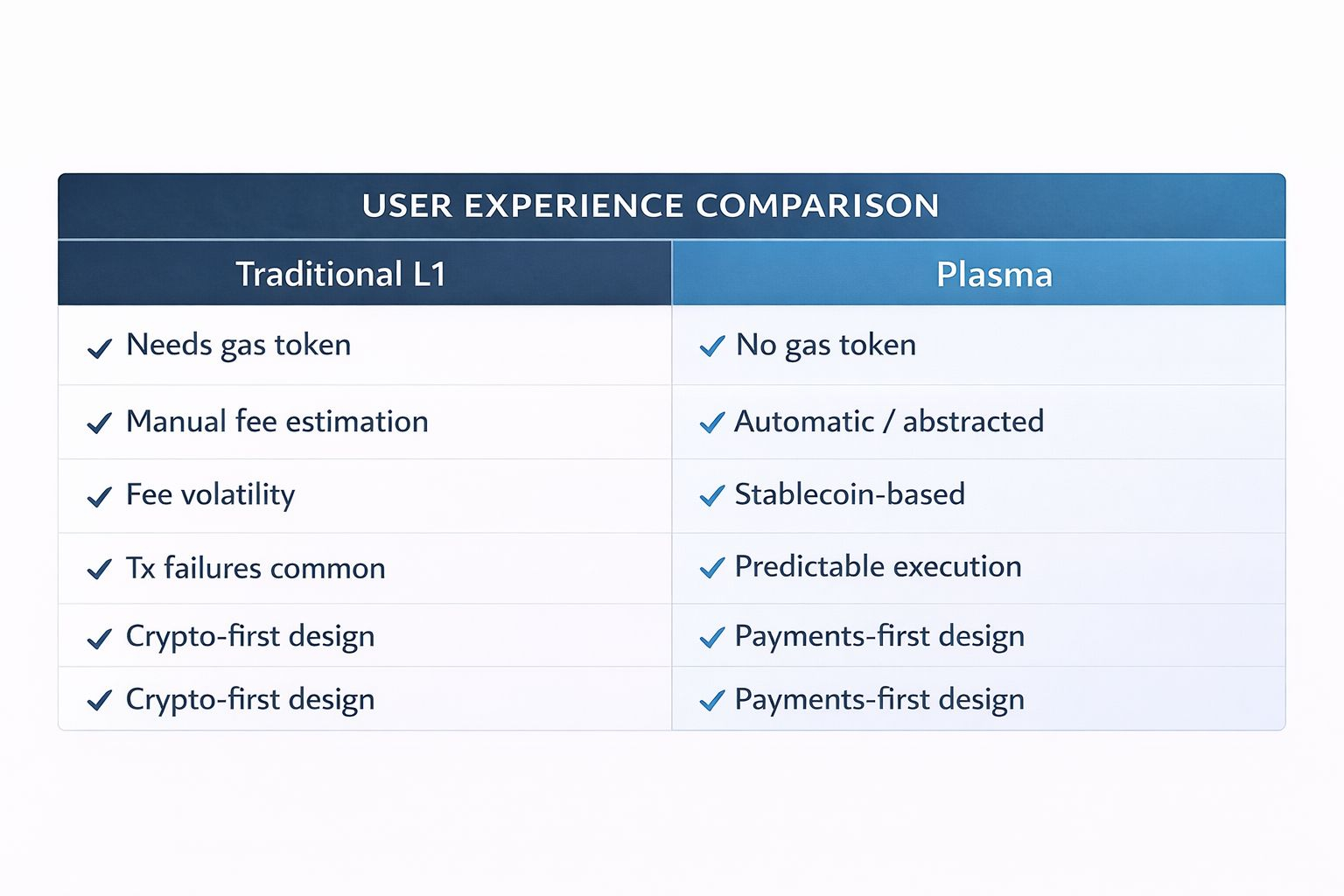
The difference isn’t technical it’s psychological.
Why Gasless UX Matters for High-Adoption Markets
In regions where stablecoins are already used daily:
People think in dollars, not tokens
Reliability matters more than decentralization philosophy
Speed and predictability beat flexibility
Gasless transactions mean:
Merchants don’t need crypto education
Users don’t manage multiple balances
Stablecoins behave like digital cash
Institutions Need This Too
Institutions care about:
Cost certainty
UX reliability
Compliance-ready infrastructure
Plasma’s model:
Removes operational friction
Simplifies accounting
Reduces transaction failure risk
Gasless UX isn’t just retail-friendly it’s institution-grade.
Sub-Second Finality Completes the Experience
Gasless UX without speed would still feel broken.
Plasma’s sub-second finality ensures:
Payments settle instantly
UX matches real-world expectations
No “pending transaction anxiety”
When users tap “send,” the money is final not eventually final.
Why This Model Will Become the Standard
Gasless transactions solve a truth crypto ignored too long:
People don’t want to manage infrastructure. They want outcomes.
Plasma proves that:
Decentralization doesn’t require bad UX
Stablecoins deserve first-class treatment
Blockchains can feel invisible
In the future, users won’t ask:
“What’s the gas fee?”
They’ll ask:
“Did the payment go through?”
And on Plasma, the answer will simply be: yes.