
The rapid evolution of Web3 demands infrastructure that is scalable, user-friendly, and designed for real-world adoption. Vanar is a Layer-1 blockchain built specifically to bridge the gap between advanced blockchain technology and mainstream consumer use. At the heart of Vanar’s ecosystem lies the 5-Layer Vanar Stack, a modular architecture designed to support gaming, AI, metaverse experiences, brand integrations, and large-scale consumer applications.
This article explores the structure, purpose, and impact of the 5-Layer Vanar Stack and explains how it enables seamless Web3 adoption.
Overview of the 5-Layer Vanar Stack
The Vanar Stack is organized into five interconnected layers, each responsible for a critical function in the ecosystem. This layered approach allows developers to build scalable applications while maintaining performance, security, and usability.
High-Level Flow of the Vanar Stack
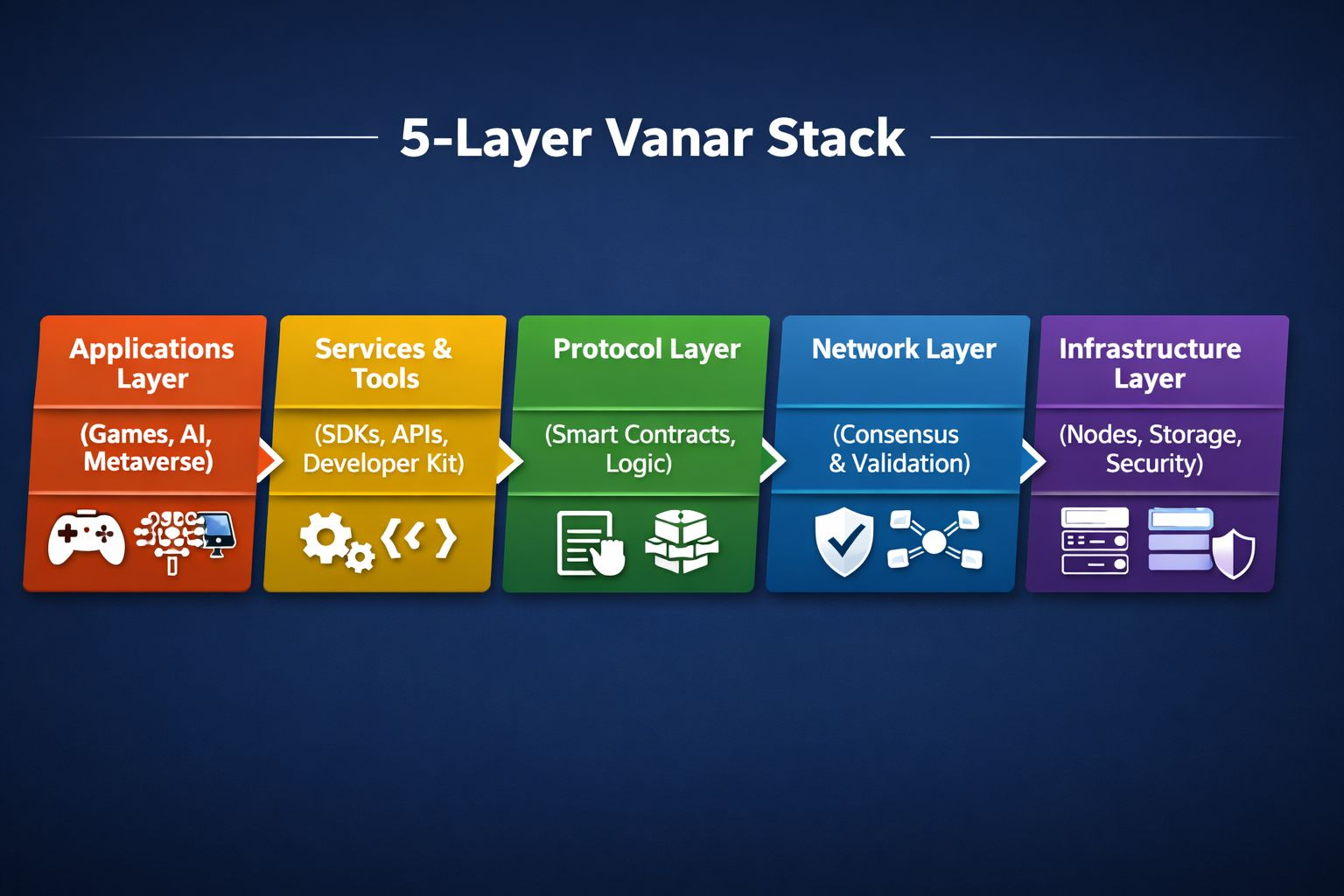
Each layer builds upon the one below it, creating a strong and flexible blockchain framework.
Layer 1: Infrastructure Layer
The Infrastructure Layer forms the foundation of the Vanar blockchain. It includes the physical and virtual components required to operate the network, such as nodes, storage systems, and security mechanisms.
This layer ensures:
Reliable data storage
Network security
High uptime and performance
Decentralized node operation
By optimizing infrastructure, Vanar supports high transaction throughput and low latency, which are essential for gaming and real-time digital experiences. A robust infrastructure layer ensures the ecosystem remains stable even under heavy usage.
Layer 2: Network Layer
The Network Layer is responsible for communication between nodes and maintaining consensus across the blockchain. It manages how transactions are validated and added to the ledger.
Key features include:
Efficient consensus mechanisms
Fast transaction finality
Secure peer-to-peer communication
Scalable network architecture
This layer enables Vanar to process transactions quickly and securely, making it suitable for consumer-facing applications where speed and reliability are critical.
Layer 3: Protocol Layer
The Protocol Layer defines the core blockchain logic. It includes smart contracts, governance rules, and token operations powered by VANRY.
This layer allows developers to:
Deploy smart contracts
Create decentralized applications
Manage digital assets
Automate on-chain processes
The protocol layer acts as the brain of the ecosystem, coordinating how applications interact with the blockchain while maintaining transparency and trust.
Layer 4: Services & Tools Layer
The Services & Tools Layer provides developer-friendly resources that simplify application creation. It includes SDKs, APIs, integration tools, and middleware solutions.
This layer is designed to reduce complexity and accelerate development by offering:
Developer SDKs
Integration frameworks
Analytics tools
Cross-platform compatibility
By lowering technical barriers, Vanar empowers developers and brands to build Web3 solutions without deep blockchain expertise.
Layer 5: Applications Layer
The Applications Layer is where end-user experiences are created. It includes games, metaverse platforms, AI systems, and brand solutions built on Vanar.
Examples of applications supported by this layer include:
Immersive gaming ecosystems
Virtual worlds and metaverse platforms
AI-powered digital services
Brand engagement solutions
This layer represents the visible face of the Vanar ecosystem. It transforms blockchain infrastructure into practical tools and entertainment platforms for everyday users.
Interaction Between Layers
The strength of the 5-Layer Vanar Stack lies in how seamlessly its layers interact. Each layer supports and enhances the others, creating a smooth flow of data and functionality.
Layer Interaction Flow
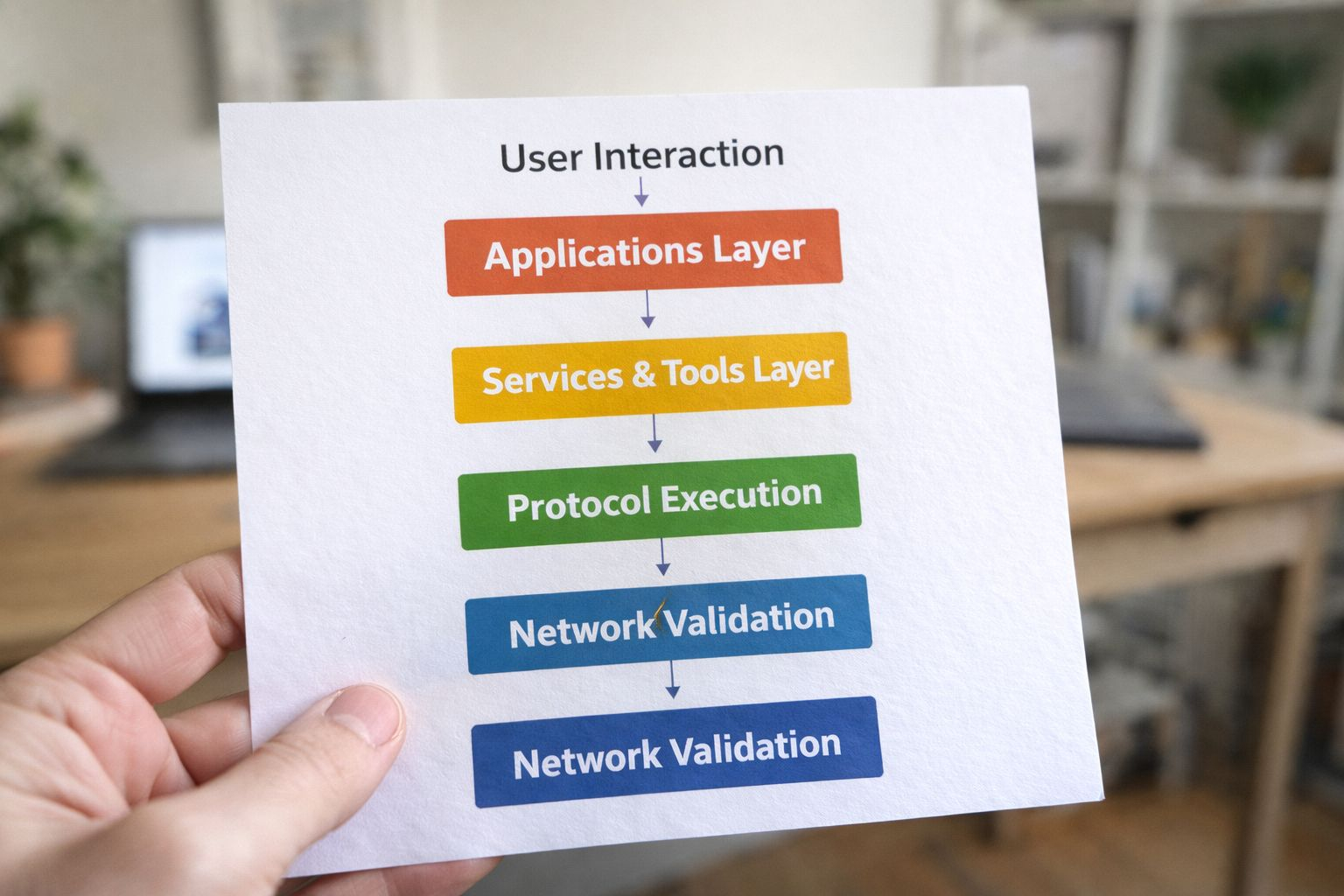
This vertical integration ensures efficiency, scalability, and user-friendly performance.
Benefits of the 5-Layer Architecture
The structured design of the Vanar Stack offers several advantages:
Scalability
Each layer can evolve independently, allowing the ecosystem to scale without disrupting existing applications.
Developer Accessibility
Tools and services simplify onboarding for developers, encouraging innovation and ecosystem growth.
Performance Optimization
Layer separation enables targeted improvements in speed, security, and efficiency.
Real-World Adoption
By focusing on usability and mainstream integration, Vanar supports applications that appeal to global audiences.
Future Potential of the Vanar Stack
As Web3 continues to expand, modular blockchain architectures like the Vanar Stack are expected to play a crucial role in mass adoption. The ability to support gaming, AI, and brand ecosystems positions Vanar as a versatile infrastructure platform.
Future enhancements may include:
Advanced AI integration
Cross-chain interoperability
Enhanced developer frameworks
Expanded consumer applications
These developments could further strengthen Vanar’s role in shaping the next generation of decentralized technology.
Conclusion
The 5-Layer Vanar Stack represents a thoughtfully designed blockchain architecture aimed at bridging the gap between Web3 technology and real-world usage. By separating responsibilities across infrastructure, networking, protocols, services, and applications, Vanar creates a scalable and developer-friendly ecosystem.
This layered model not only improves performance and flexibility but also supports a wide range of innovative applications. As blockchain adoption grows, architectures like the Vanar Stack may become essential in delivering seamless digital experiences to billions of users worldwide.