There is a quiet frustration many of us carry but rarely put into words. We create endlessly. Photos of loved ones. Videos of moments that will never happen again. Code, art, research, ideas we stay up late perfecting. And yet all of it lives on servers we do not own, governed by rules we never agreed to. One policy change, one outage, one silent ban, and years of effort can vanish. Walrus was born from this unease, from the human need to feel that what we create actually belongs to us.
Walrus is not just another crypto project chasing trends. It is an answer to a very real question: how do we store our digital lives in a way that is private, resilient, and truly ours?
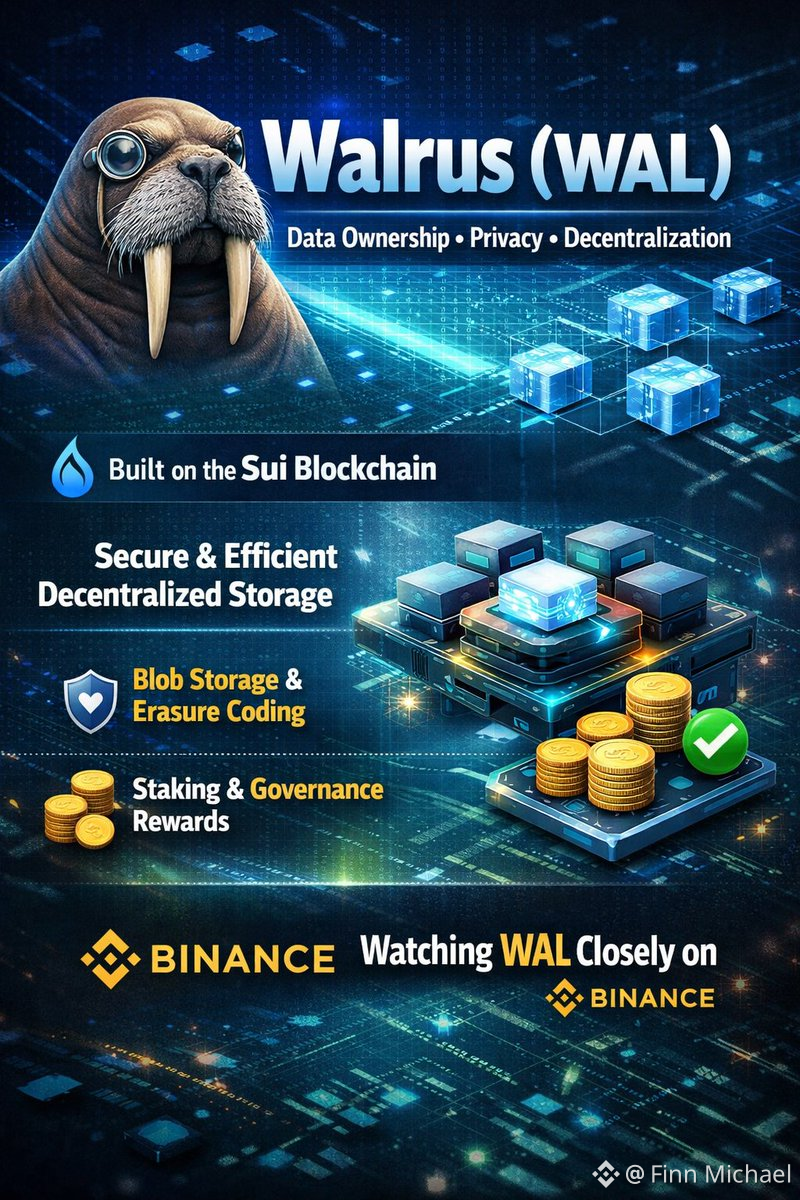
At its core, Walrus is a decentralized storage protocol built on the Sui blockchain, designed to handle massive amounts of data without sacrificing security or privacy. Its native token, WAL, powers an ecosystem where storage, governance, and participation are shared responsibilities rather than centralized commands. But to understand Walrus, you have to look beyond the technical definitions and into the philosophy driving it.
Today’s internet is built on convenience, but that convenience comes at a cost. Centralized cloud providers are fast and familiar, yet they are also fragile in ways we have learned the hard way. Outages freeze businesses. Accounts get locked without explanation. Entire platforms disappear, taking user data with them. Walrus challenges this model by spreading data across a decentralized network, removing single points of failure and the silent authority of gatekeepers.
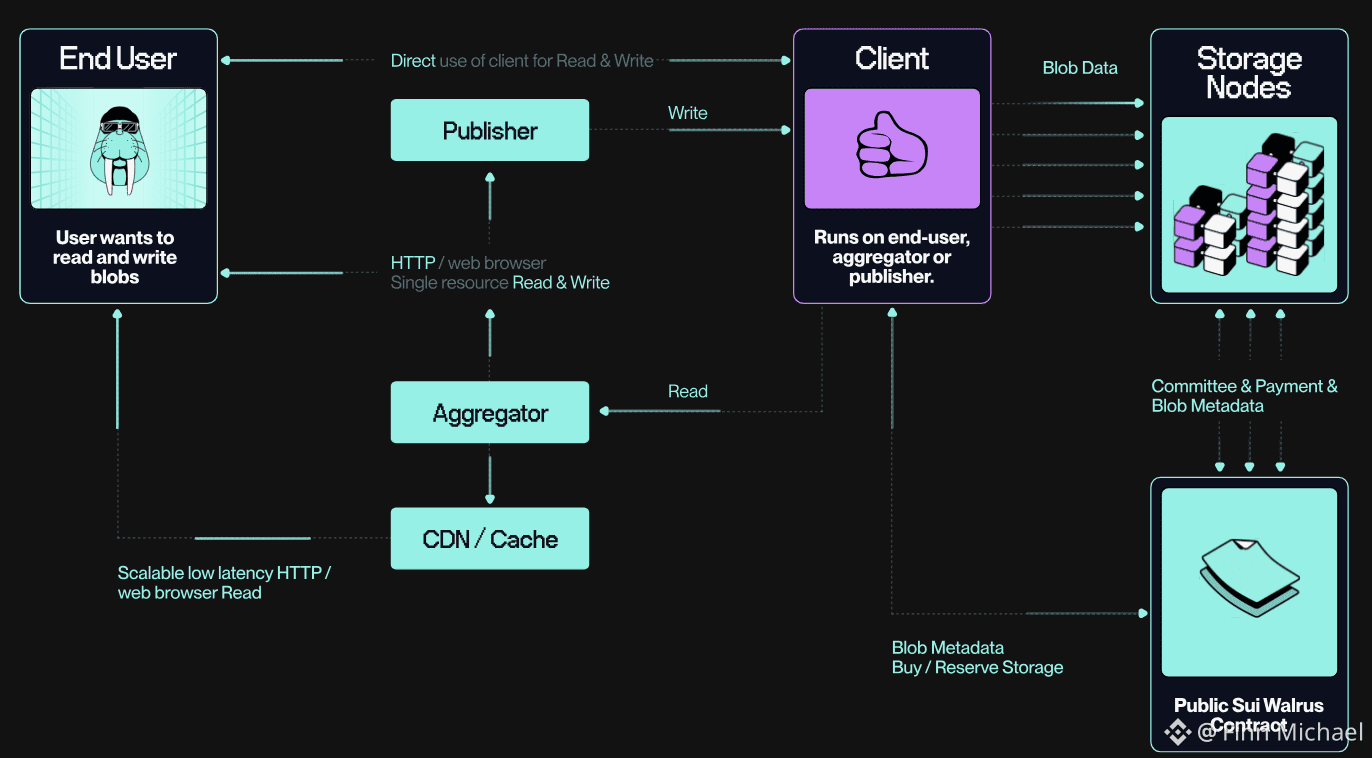
Instead of uploading your files to one company’s servers, Walrus breaks large data into smaller pieces and distributes them across many independent nodes. This process uses advanced erasure coding, meaning your data can be fully recovered even if parts of the network go offline. It is like entrusting your memories to a community rather than a single locked room. No one node holds the full picture, yet together they preserve it.
What makes Walrus especially powerful is how it blends this storage layer with the Sui blockchain. The actual data lives off chain for efficiency, but proofs, metadata, and rules live on chain. This creates a system where anyone can verify that data exists, is intact, and is being stored honestly, without exposing the data itself. Trust is no longer based on promises or brand names, but on cryptography and transparency.
The WAL token is the heartbeat of this system. It is used to pay for storage, to stake in support of reliable storage providers, and to participate in governance decisions that shape the future of the protocol. This turns users into stakeholders. You are not just renting space; you are helping maintain and evolve the network that protects your data.
Now imagine a small but telling moment. A developer wakes up to an alert that a major platform has shut down. Projects are disappearing. Repositories are frozen. Panic spreads. But their application, built with decentralized storage, is still alive. Users can still access it. Data is still there. No permission was needed. No appeal was filed. This is not a fantasy. This is the kind of quiet resilience Walrus is designed to provide.
The human impact of this design stretches far beyond developers. A filmmaker can store raw footage without watching costs spiral out of control. A digital artist can host a portfolio that cannot be silently removed. An AI researcher can preserve massive datasets with verifiable integrity, independent of corporate infrastructure. Walrus is built for people who need more than convenience. It is built for people who need certainty.
Privacy is another deeply human concern woven into Walrus. In a world where data is constantly tracked, analyzed, and monetized, the ability to store information without exposing it is powerful. Walrus enables private, permissioned access while still benefiting from decentralization. Your data does not have to be public to be secure, and it does not have to be centralized to be useful.
Behind Walrus is a long term commitment to real infrastructure. Developed initially by Mysten Labs and now supported by the Walrus Foundation, the protocol is backed by serious research, funding, and vision. This is not a short term experiment. It reflects a growing understanding that Web3 cannot mature without storage systems capable of handling real world scale, from large media files to enterprise and AI workloads.
Looking forward, the role of storage will only become more critical. As artificial intelligence grows more data hungry, as on chain identity expands, and as immersive digital worlds become more common, the question will not be which application wins, but which foundations can support them. Walrus positions itself not as a feature, but as a base layer, quiet, dependable, and built to last.
Yet what truly sets Walrus apart is its tone. It does not shout. It does not promise instant rewards or overnight success. It focuses on something deeper and harder: building trust through structure. In a digital world that often feels disposable, that restraint feels intentional.
The question is no longer where your data is stored. The question is who decides its fate.
Walrus offers a future where that decision shifts back to the people who create, build, and remember. Not through rebellion, but through design. Not through noise, but through resilience. And in an age where control over data increasingly defines power, that quiet shift may be the most important change of all.