

P🤯 The Wrong Question Everyone Asks About Storage
Most discussions around decentralized storage begin with the same question:
👉 “How cheap is it?”
👉 “How many copies does it keep?”
👉 “Is it faster than Web2?”
Walrus begins with a much harder question:
What happens when the network is late, broken, dishonest, and partially offline — all at the same time?
This is not a hypothetical question.
This is the default condition of open, permissionless networks.
And this is why Walrus Protocol is fundamentally misunderstood when described as “just decentralized storage.”
Walrus is better described as a data survival protocol.
Everything else is secondary.
All technical grounding in this article comes directly from the Walrus whitepaper
🌪️ Reality Check: Networks Are Not Synchronous or Honest
In textbooks, distributed systems are often:
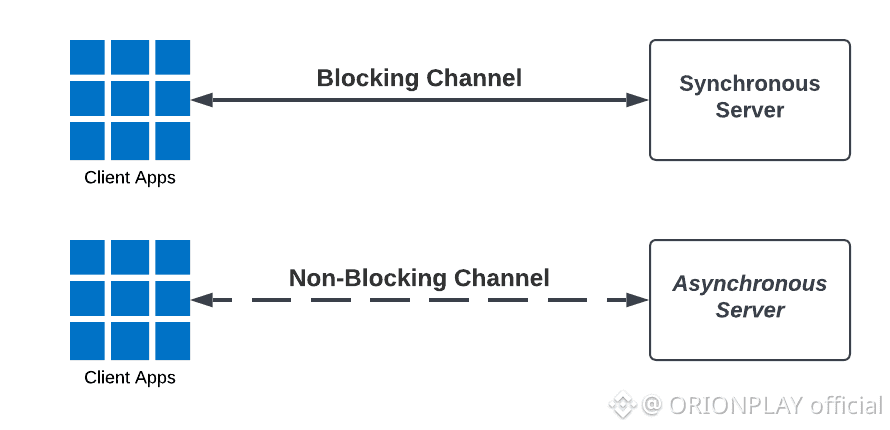
Synchronous
Reliable
Predictable
In reality:
Messages are delayed
Nodes crash silently
Some participants lie
Others disappear forever
This is called an asynchronous Byzantine environment — and most systems quietly assume it won’t happen too often.
Walrus assumes it happens constantly.
🧩 Why “Asynchronous” Changes Everything
“Asynchronous” doesn’t just mean slow internet.
It means:
No global clock
No guaranteed message timing
No assumption of coordination
In such a world:
You cannot wait forever
You cannot trust ordering
You cannot assume fairness
Many storage protocols fail here — not loudly, but subtly.
They:
Hang during recovery
Stall during reconfiguration
Lose liveness under churn
Walrus is designed from the ground up for asynchrony.
📚 Introducing ACDS: Asynchronous Complete Data Storage
One of Walrus’s most important contributions is formal, not flashy.
It defines a new problem:
Asynchronous Complete Data Storage (ACDS)
ACDS guarantees three things, even when the network misbehaves:
• Write completeness – honest data eventually spreads
• Read consistency – readers agree or safely fail
• Validity – honest writes are always recoverable
Most storage systems guarantee some of these.
Walrus guarantees all three together
🟥 Why Red Stuff Exists (Beyond Efficiency)
In Article 1, Red Stuff was explained as an efficiency breakthrough.
Here’s the deeper truth:
👉 Red Stuff exists to survive asynchrony.
What Goes Wrong Without It
In asynchronous networks:
Some nodes never receive data
Others receive partial data
Writers must stop eventually
If recovery requires:
Full file reconstruction
Global coordination
Then the system eventually deadlocks.
Red Stuff avoids this by design.
🧠 Survival Through Local Recovery
With Red Stuff:
Nodes recover only what they are missing
Recovery uses local intersections
No node needs the full blob to help another
This creates something rare:
Recovery that does not amplify failures
Failures stay local.
Bandwidth stays bounded.
The network keeps moving.
🔍 Readers Don’t Trust — They Verify
Walrus assumes:
Writers may be malicious
Storage nodes may cheat
Data may be inconsistent
So readers:
Collect enough slivers
Reconstruct the blob
Re-encode it
Re-check commitments
If anything mismatches:
👉 Output is ⊥ (safe failure)
This is not pessimism —
this is defensive correctness.
🧯 Surviving Malicious Writers (An Overlooked Problem)
Many systems focus on malicious storage nodes.
Walrus also protects against:
Malicious uploaders
Inconsistent encodings
Poisoned data
If a writer uploads broken slivers:
Nodes can generate verifiable fraud proofs
The network agrees on inconsistency
The blob is effectively neutralized
No silent corruption.
No endless retries.
No ambiguity
🔄 Epochs: Controlled Change Instead of Chaos
Open networks must change:
Stake shifts
Nodes enter
Nodes exit
Uncontrolled change breaks systems.
Walrus introduces epoch-based committees:
Fixed participants per epoch
Predictable transitions
Safe overlap during handover
Reads continue.
Writes continue.
No “maintenance windows.”
This is survival thinking — not optimization.
🧠 Why Walrus Doesn’t Panic During Reconfiguration
Most systems fear reconfiguration because:
State is huge
Migration is expensive
Failures cascade
Walrus avoids this because:
Slivers are recoverable
Recovery cost is bounded
No full rewrites are required
Reconfiguration becomes:
A controlled data reshuffling, not a disaster event
😄 Analogy Time (Because This One Helps)
Traditional storage:
“Everyone memorize the entire book.”
Walrus:
“Everyone memorize overlapping paragraphs.”
Someone forgets?
Others help — without re-reading the whole book.
That’s survivability.
🧠 Why This Matters Beyond Storage
Walrus’s design is valuable because:
AI training data must survive manipulation
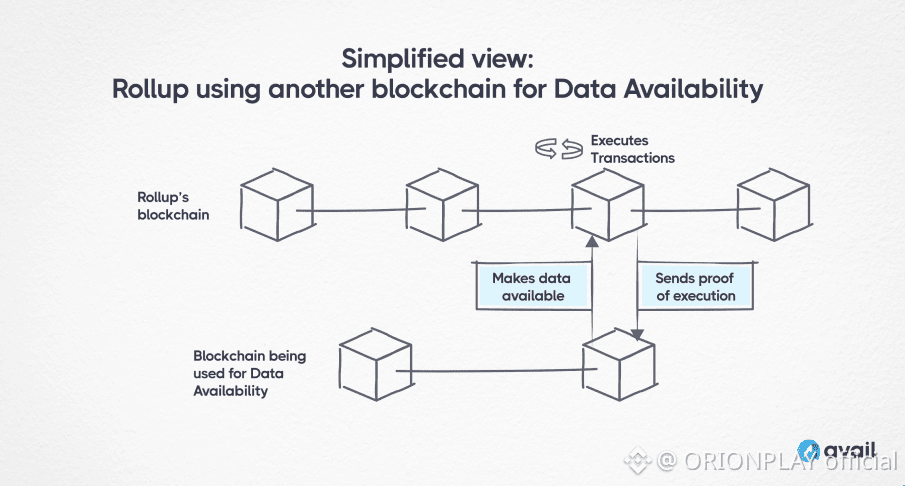
Rollups require guaranteed data availability
Public records need neutrality
Social platforms need uncensorable media
In all these cases:
Failure is not data loss — failure is uncertainty
Walrus eliminates uncertainty.

