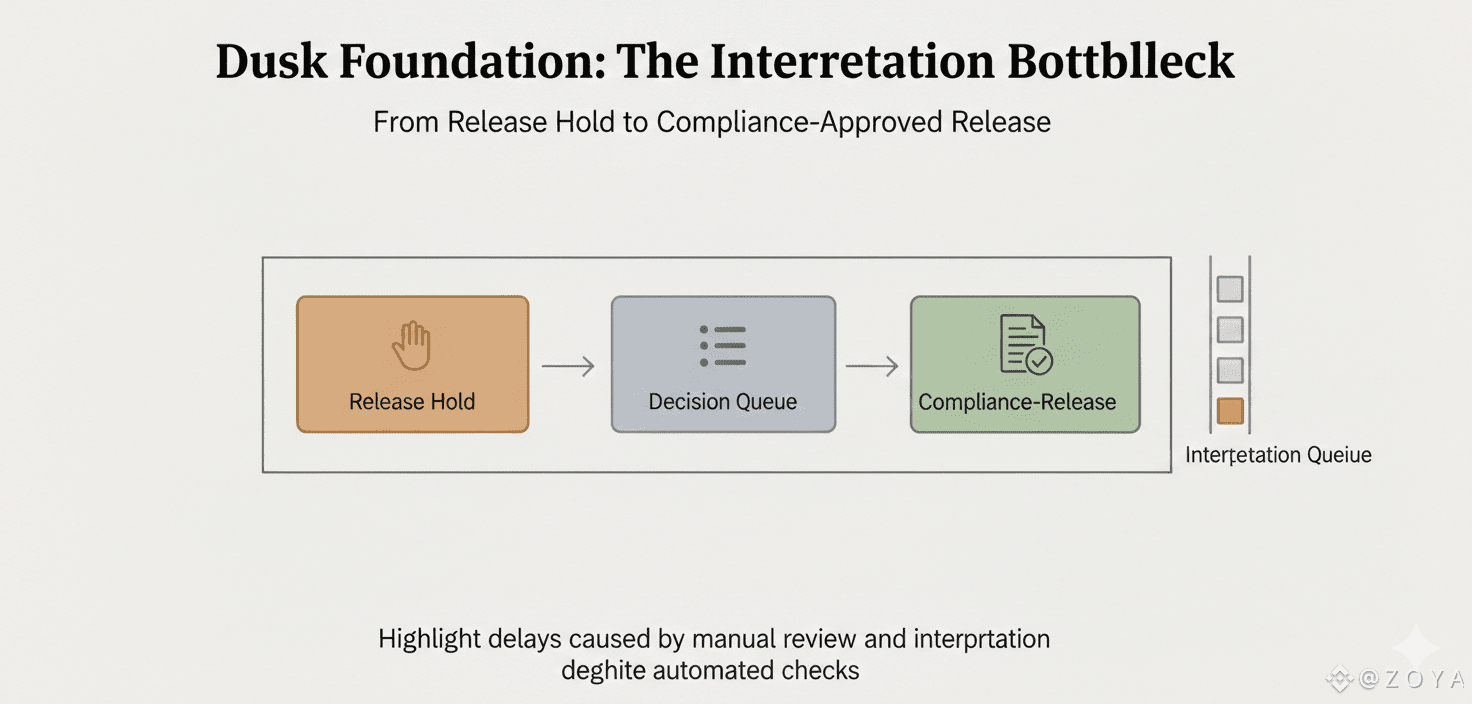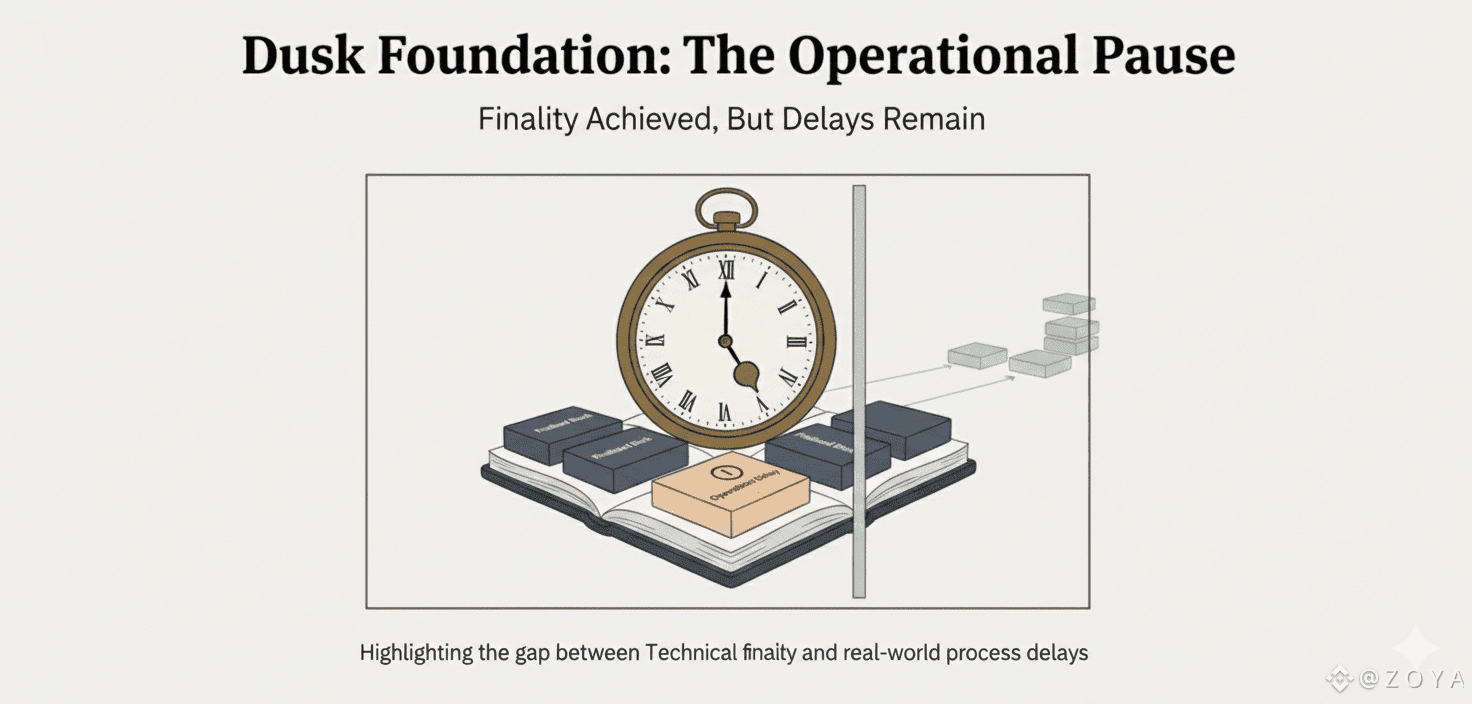
Nothing failed. Everything on-chain landed perfectly. Finality on schedule. Latency normal. Charts flat. But the desk still didn’t move. The problem wasn’t tech—it was interpretation. Who signs off? Which policy version counts? Which disclosure envelope applies? The answers aren’t on-chain. They live in human judgment, and that’s where time explodes.
Settlement can be final. Release can still be blocked. Evidence exists, but actionable decisions lag. Teams confuse “we can show proof” with “we understand what to do with it.” On Dusk, you can’t widen visibility mid-flight. The disclosure scope is bounded. The workflow defines what counts. You can’t cheat the system by dumping more data.
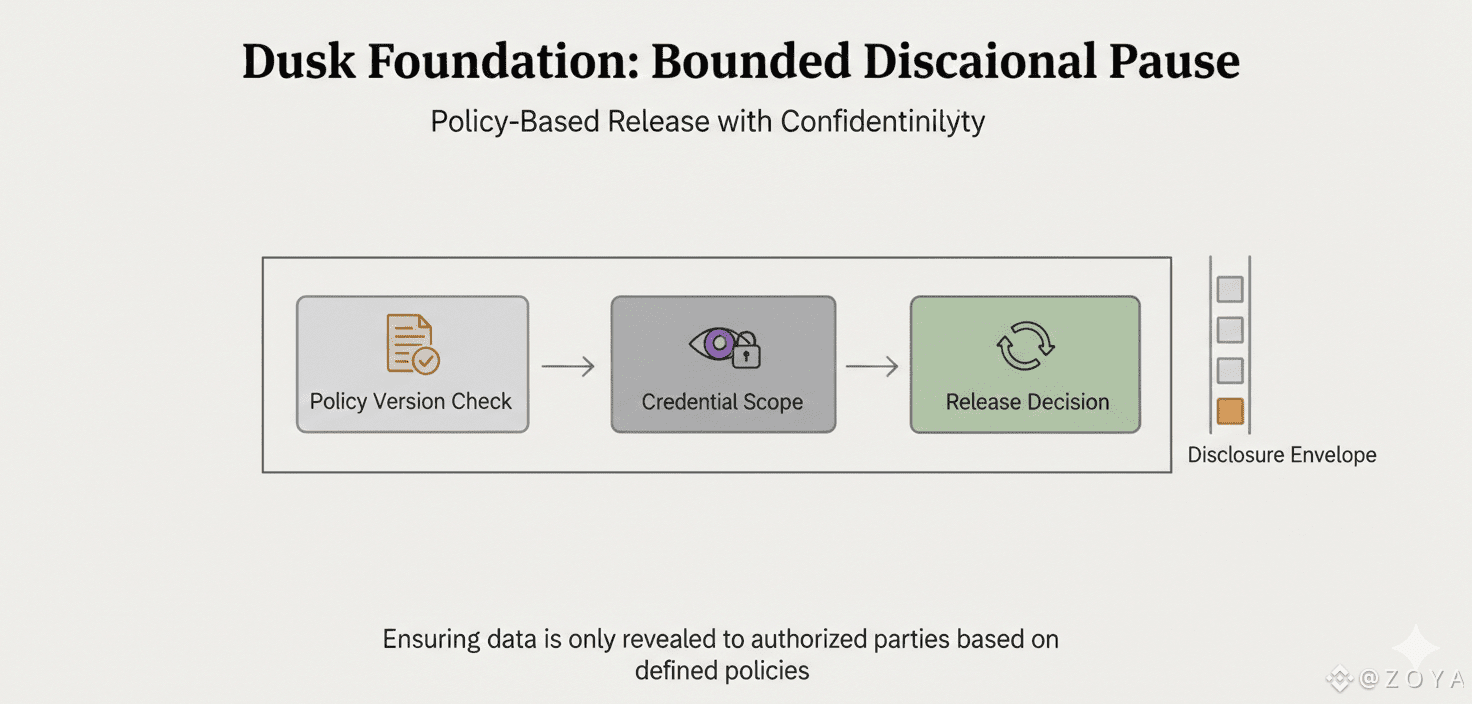
The result is subtle friction, invisible in dashboards. Ops can say “nothing is broken.” Risk can say “we can’t sign off yet.” Compliance can say “we need the review.” All correct. But release sits. The bottleneck is human, not blockchain. This is the reality Dusk designs for: explicit ownership, strict queues, tight timing bounds. You can’t improvise. The rules aren’t soft.
Interpretation becomes the metric. Time to defensible decision—not chain finality—is what matters. The system looks stable, so teams assume speed. But the human queue tells a different story. Evidence is legible, but only if the workflow matches it. Dusk doesn’t let teams hide behind “proof exists.” The rules fire, the release waits, and that pause is where real control lives.