
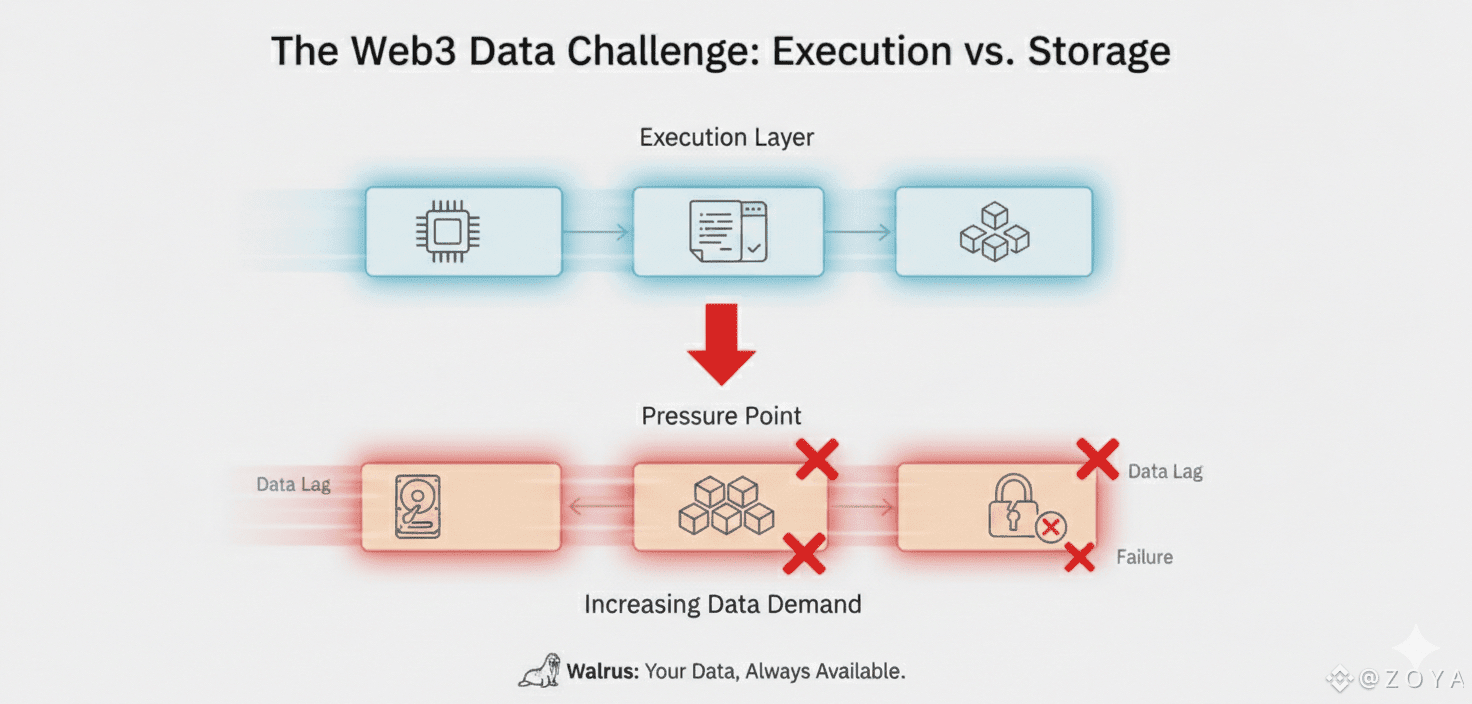
It usually breaks at the worst moment.
The app loads. The transaction clears. Then the image doesn’t. Or the file hangs. Or the data you assumed would always be there suddenly isn’t. That’s the part nobody screenshots for launch threads. Storage failures don’t trend. They just rot trust slowly, one missing asset at a time.
Walrus exists because too much of Web3 pretends this problem is already solved. It isn’t. We patched over it with centralized buckets and crossed our fingers. It worked—until it didn’t. And once apps started carrying real weight—media, game states, datasets, identity proofs—the cracks stopped being cosmetic. They became structural.
What Walrus does feels almost boring at first glance, which is usually a good sign. No grand promises about reshaping humanity. Just an insistence that large data shouldn’t live on borrowed infrastructure. Data shouldn’t vanish because one provider sneezed. And it definitely shouldn’t require blind trust to stay intact. Walrus treats storage like something that deserves rules, incentives, and consequences.
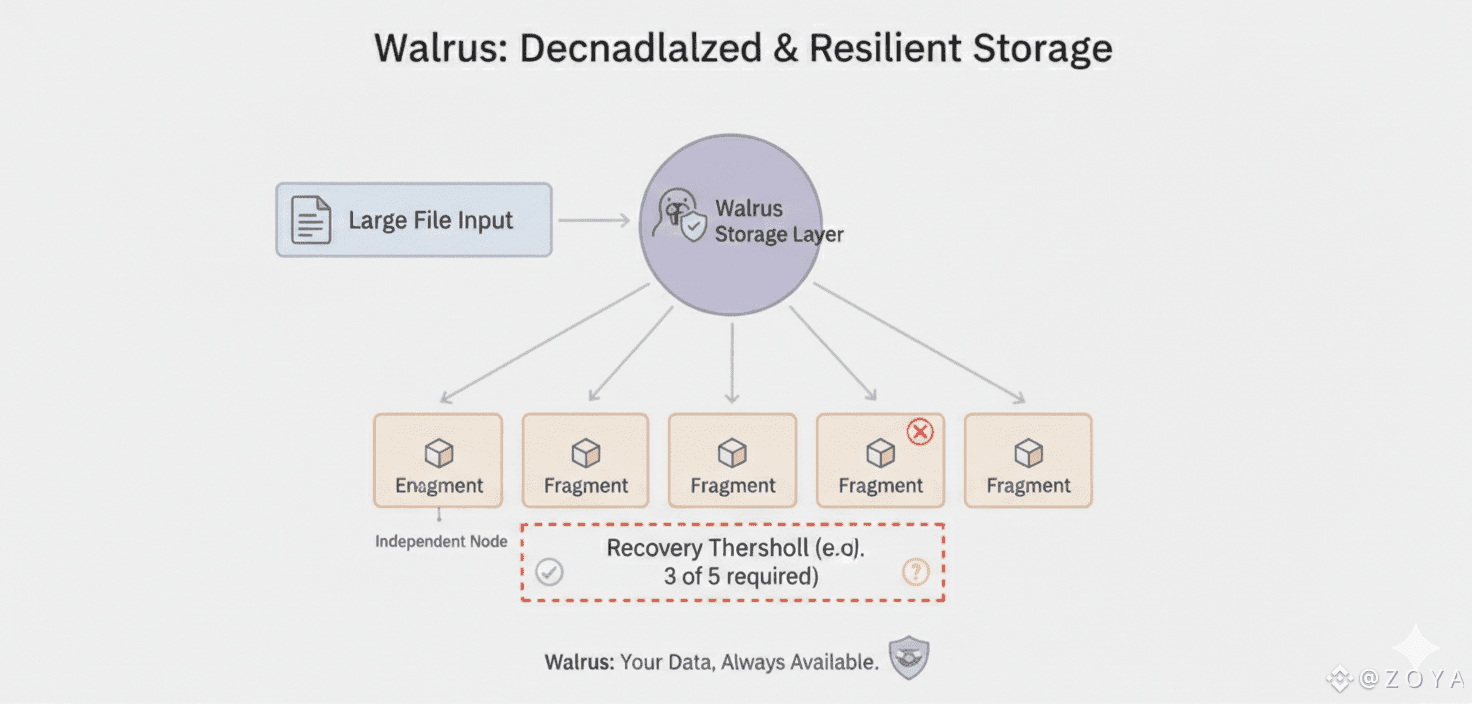
The design choice that matters most isn’t flashy. It’s fragmentation. Data sliced, scattered, made stubborn. Pieces spread wide enough that losing a few doesn’t matter. That changes the psychology of failure. Instead of praying nothing goes wrong, the system assumes something will. Nodes disappear. Connections drop. Reality interferes. Walrus plans for that mess instead of denying it.
There’s also something quietly defiant about how privacy is handled. Nodes don’t know what they’re holding. They don’t need to. No voyeurism baked into the protocol. No accidental transparency masquerading as virtue. Just encrypted fragments doing their job, blind and indifferent. It makes indexing harder. It makes analytics inconvenient. That’s the trade. Walrus chooses discomfort over compromise.
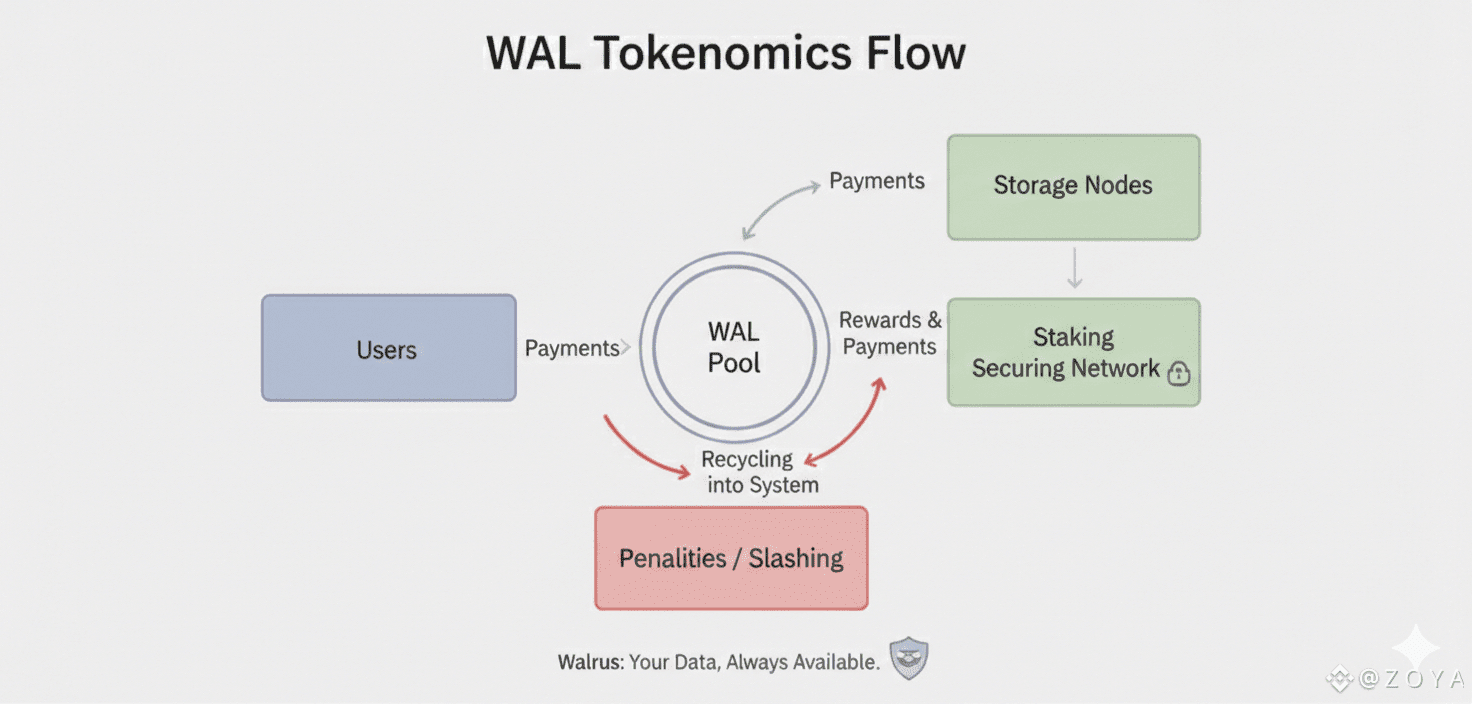
The token economics aren’t pretending to be philosophical either. WAL isn’t there to decorate dashboards. It’s there to keep people honest. Store the data properly, get paid. Cut corners, bleed stake. Simple. Brutal. Markets doing what management teams usually screw up. Whether that balance holds under pressure is the real test, not the whitepaper math.
Adoption won’t come from hype cycles. Storage never does. It creeps in through necessity. One builder decides they’re tired of explaining missing files. Another decides reliability is cheaper than apologies. Then another. That’s how infrastructure wins. Slowly. Quietly. Without applause.
Walrus won’t feel exciting on green days. It’ll feel invisible on good days. And deeply missed on bad ones. If it works, nobody will thank it. They’ll just stop worrying about whether their data shows up when it’s supposed to. In this space, that’s not boring. That’s power.

