

Walrus is gaining attention as Web3 applications shift toward data-heavy workloads. As onchain activity expands beyond simple transactions, the need for scalable, cost-efficient storage has become immediate—not theoretical. Walrus is built for this moment.
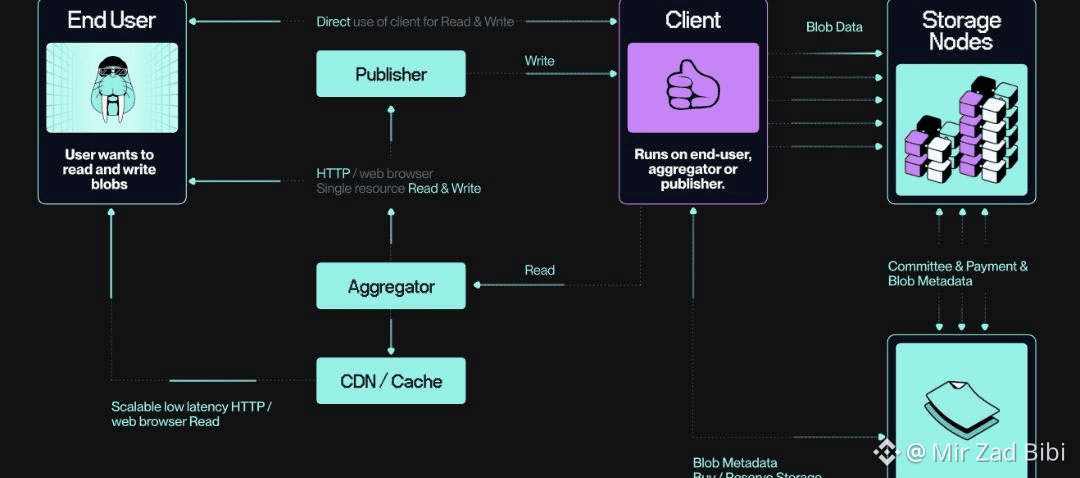
Unlike legacy decentralized storage systems, Walrus is optimized for large binary data such as videos, AI datasets, gaming assets, and rich NFT media. Its architecture avoids excessive replication by using erasure coding, allowing the network to scale storage without pushing costs higher.
Deep integration with the Sui ecosystem gives Walrus a structural advantage. Smart contracts can directly reference stored data, tightening the link between execution and storage. This enables faster application performance and cleaner developer workflows.
Cost efficiency is a major differentiator. Walrus reduces redundant data storage while preserving durability guarantees, making it economically viable for consumer applications and enterprise-scale platforms. This efficiency becomes more important as onchain data volumes grow.
Walrus is also unlocking programmable data access. Through privacy-focused integrations such as Seal, developers can define who can read or use stored data. This supports private content, secure data sharing, and new monetization models without compromising decentralization.
Built by Mysten Labs, the same team behind Sui, Walrus benefits from strong technical leadership and ecosystem alignment. As Web3 evolves toward richer applications and real-world utility, infrastructure designed for scale tends to become indispensable rather than optional.
Momentum is shifting toward protocols that solve real constraints. Walrus is positioning itself where onchain execution meets offchain-scale data—and that intersection is only getting bigger.

