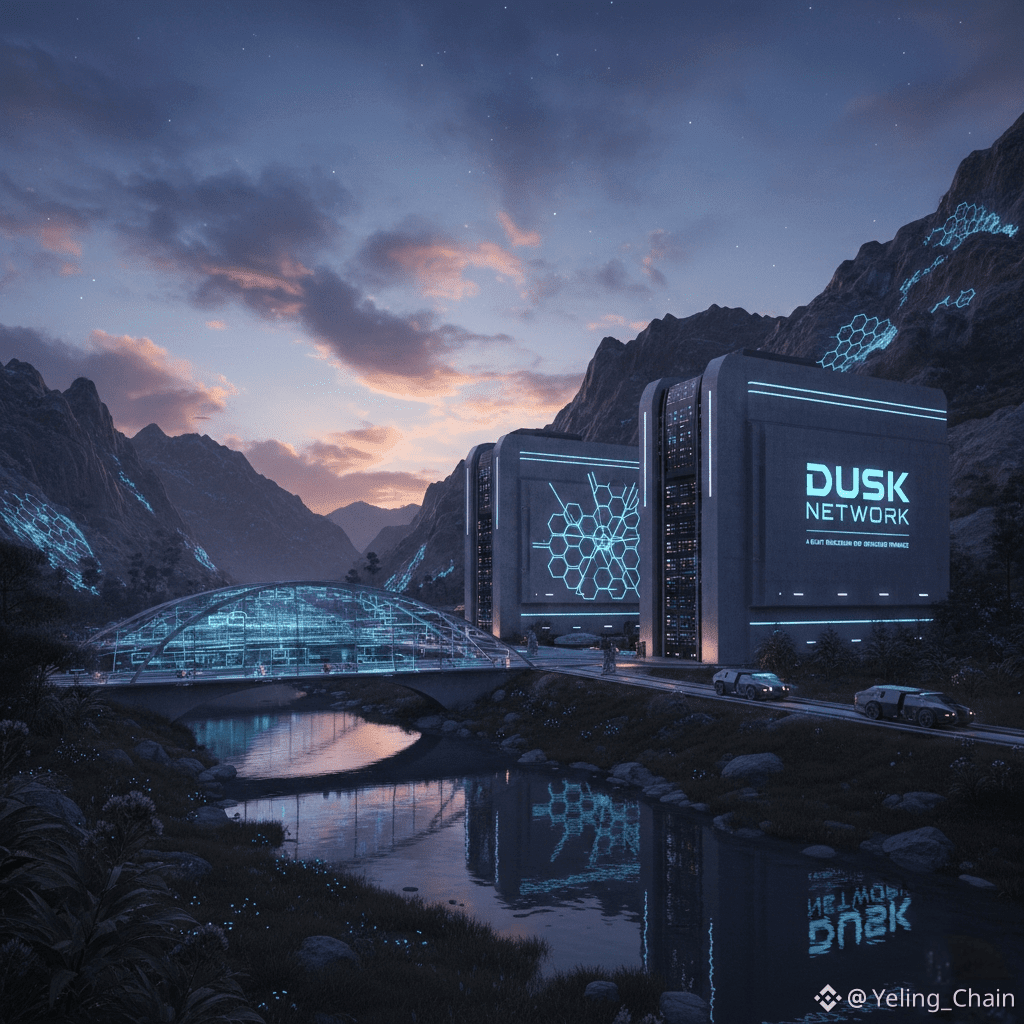
Dusk didn’t begin as a flashy idea chasing the excitement of the moment. It started quietly in 2018, at a time when most blockchain projects were racing to capture attention rather than solve uncomfortable problems. The team behind Dusk was looking at a different gap altogether. They saw that while public blockchains were great at transparency, they were deeply unfit for regulated finance, where privacy, legal accountability, and auditability are not optional extras but basic requirements. From the beginning, Dusk tried to hold two ideas together that the industry often treated as opposites: confidentiality and compliance.
Building Crypto Beyond the Hype
In the early days, that vision felt both ambitious and slightly out of step with the broader crypto narrative. While DeFi was experimenting with open liquidity pools and anonymous participation, Dusk was asking slower, more grounded questions. How do you tokenize a real-world asset without exposing sensitive data? How do institutions interact on-chain without breaking regulatory rules? Those questions didn’t generate viral hype, but they attracted a certain kind of attention — developers, researchers, and early institutional observers who understood that if blockchain was ever going to move beyond speculation, these problems would eventually need real answers.
There was a moment of genuine excitement when Dusk’s core ideas began to solidify into working technology. Confidential smart contracts, privacy-preserving asset standards, and a modular layer-one design weren’t just theoretical anymore. They were becoming tangible tools. For a while, it felt like Dusk might be early rather than wrong — a project ahead of its time, quietly building while the market chased faster rewards. That early optimism wasn’t loud, but it was real, and it gave the team enough momentum to keep pushing forward.
Then the market changed, as it always does. Capital became harder to raise, attention shifted elsewhere, and many projects that had launched with bigger promises simply disappeared. For Dusk, this period wasn’t about dramatic pivots or desperate reinvention. It was about survival through discipline. The team narrowed their focus, doubled down on the parts of the technology that actually mattered, and resisted the temptation to chase trends that didn’t align with their long-term goal. Instead of expanding outward, they went deeper — refining their privacy model, strengthening the protocol’s architecture, and thinking carefully about what “institutional-grade” really means in practice.
That survival phase changed the project. It stripped away some of the early idealism and replaced it with maturity. Dusk became less about proving that something was possible and more about making sure it actually worked under real-world constraints. The slow path toward mainnet, the emphasis on auditability alongside privacy, and the careful rollout of staking and governance mechanisms reflected a team that had learned patience the hard way. These weren’t just technical milestones; they were signs that Dusk was growing into its own identity as infrastructure rather than an experiment.
Over time, new products and integrations began to shape the ecosystem around the chain. Tokenized securities, compliant DeFi use cases, and partnerships with entities that understood regulation from the inside helped ground the technology in reality. These weren’t the kinds of announcements that sent token prices soaring overnight, but they mattered in a different way. They showed that Dusk was being taken seriously by people who had real legal and operational risk on the line. That kind of trust is slow to earn and easy to lose, and Dusk treated it accordingly.
The community evolved alongside the protocol. Early supporters were mostly crypto-native — developers, privacy advocates, and long-term believers. As the project matured, a different crowd began to appear. Lawyers, fintech professionals, and institutional builders started paying attention, not because Dusk promised quick returns, but because it spoke their language. Discussions became less about speculation and more about compliance frameworks, settlement mechanics, and how confidential smart contracts could coexist with audits and reporting. It wasn’t louder, but it was more serious.
None of this means the road ahead is simple. Building privacy-focused infrastructure in a regulated world is inherently difficult. Regulations change, adoption moves slowly, and technical complexity remains a barrier for developers. Dusk also competes in a crowded landscape where newer chains promise speed, simplicity, or massive ecosystems. Network effects are real, and they don’t come easily to projects that prioritize correctness over hype. These challenges haven’t disappeared, and pretending otherwise would miss the point of Dusk’s journey.
What keeps the project relevant today is not a single breakthrough, but its consistency. Dusk is still pursuing the same core idea it started with: making blockchain usable for real financial markets without sacrificing privacy or regulatory integrity. As tokenization of real-world assets moves from theory to practice, that focus feels less niche than it once did. The industry is slowly realizing that transparency alone isn’t enough, and that privacy done responsibly is not a weakness but a requirement.
Final Thoughts
Dusk’s story isn’t about explosive growth or dramatic reinvention.It’s about endurance. It’s about a team that chose a difficult problem, stayed with it through unfavorable market conditions, and allowed the project to mature at its own pace. Whether Dusk becomes a foundational layer for regulated finance or remains a specialized solution, its journey reflects a broader truth about Web3: the most meaningful infrastructure is often built quietly, by people willing to trade short-term excitement for long-term relevance.