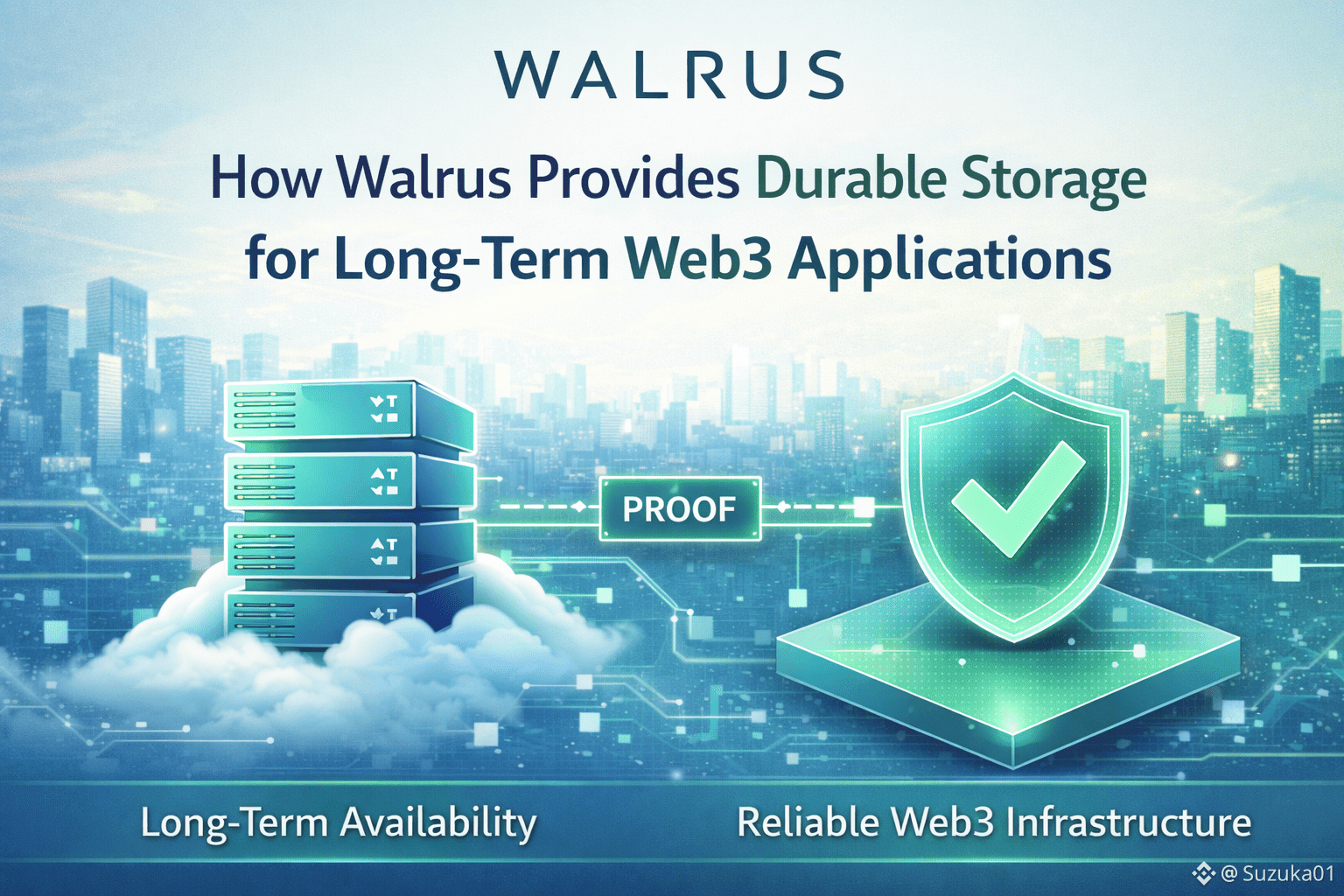
Web3 applications often fail when their underlying storage cannot remain reliable over time. As usage grows, data availability issues such as node failures, congestion, or fragmented storage layers can cause applications to break. @Walrus 🦭/acc is designed to address this problem by treating storage as long-term infrastructure rather than temporary data hosting.
Walrus focuses on data durability and availability at the protocol level. Instead of optimizing only for short-term performance, Walrus ensures that stored data remains accessible even as network conditions change or application demand increases. This approach reduces dependency on fragile workarounds or frequent data migrations.
For developers, predictable storage behavior simplifies application design. Teams do not need to constantly manage backups, replicate data manually, or worry about sudden data loss when usage spikes. Walrus provides a stable storage layer that applications can rely on throughout their lifecycle.
This reliability is especially important for Web3 projects moving beyond early testing. When applications enter regular usage, storage failures quickly impact user trust and operational stability. Walrus supports smoother transitions from early deployment to sustained production use by keeping data consistently available.
By prioritizing durability and availability, Walrus strengthens the foundation of Web3 infrastructure. Reliable storage allows developers to focus on building applications that scale responsibly, without storage becoming a limiting factor as adoption grows.