
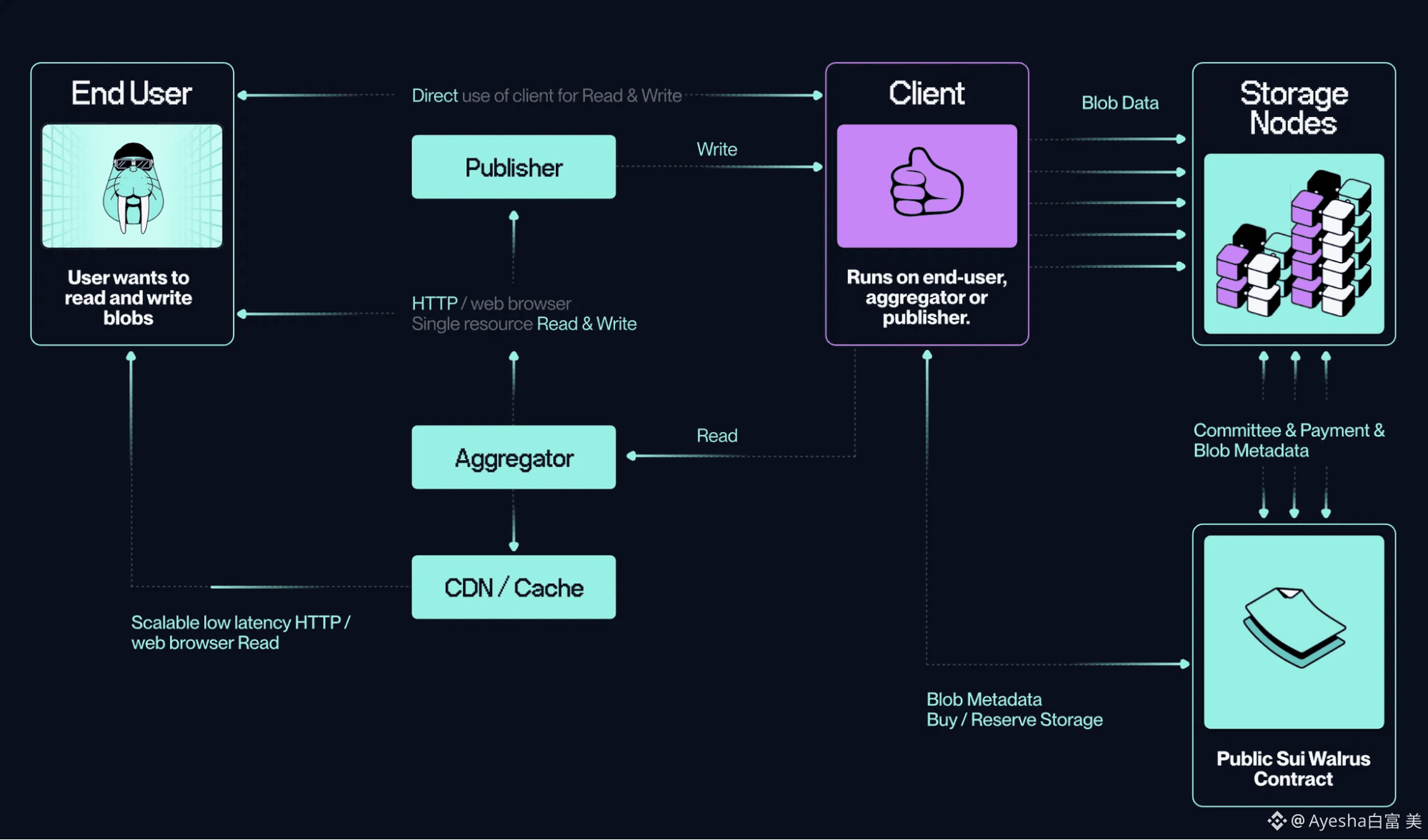
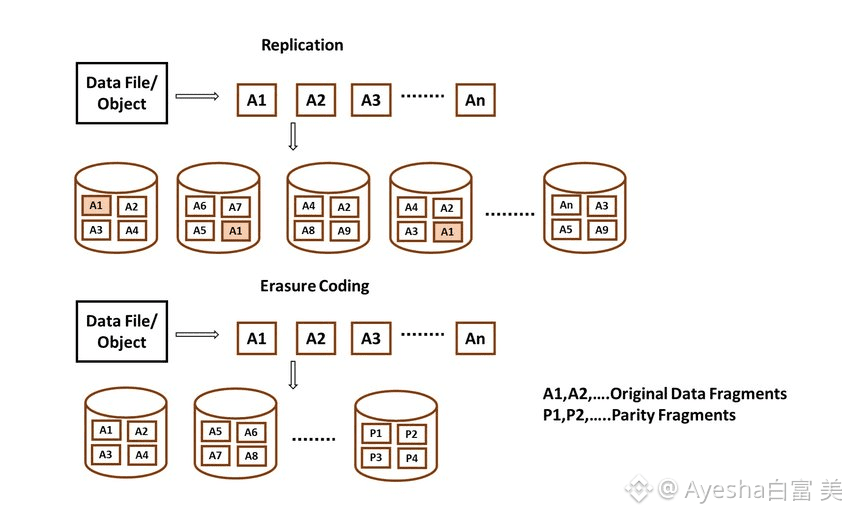
In the world of decentralized storage, where blobs like images, videos, and AI datasets need to remain accessible amid fluctuating node participation, the Walrus protocol stands out with its elegant shard migration mechanics. Built on Sui's high-throughput blockchain, Walrus leverages delegated Proof-of-Stake (PoS) and its proprietary Red Stuff 2D erasure coding to ensure low-replication overhead—around 4.5–5×—while maintaining Byzantine fault tolerance. At the heart of this is shard migration: a process that dynamically reassigns data shards as node stakes ebb and flow, preventing any malicious minority from grinding the network to a halt. Let's unpack this calmly, step by step, in cryptoeconomic terms.
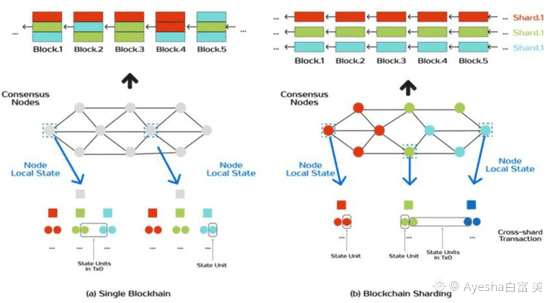
Shard migration isn't just a technical necessity; it's a cryptoeconomic safeguard. In Walrus, shards—those erasure-coded fragments of user blobs—are distributed across a committee of storage nodes. As delegators shift their stakes, nodes' relative influence changes, triggering reassignments every epoch. This keeps the system balanced, ensuring no single node or colluding group can withhold data indefinitely.
The Stake-Based Assignment Algorithm: Fairness Through Economics
The process kicks off near the end of each epoch, once staking and unstaking requests are locked in. Walrus assigns shards strictly based on relative stake, ignoring self-declared storage capacities to deter gaming. This stake-weighted approach aligns incentives: higher stake means more responsibility—and potential rewards from serving challenges—but also the risk of needing to provision extra storage on notice.
To promote stability, the algorithm minimizes churn. Nodes gaining stake hold onto their existing shards and absorb those shed by others. There's even an epsilon tolerance—a small buffer—to avoid frivolous back-and-forth transfers from minor stake wobbles. In future upgrades, nodes could express preferences, like favoring transfers within co-located data centers to cut bandwidth costs, or even trade obligations via side channels while honoring the overall allocation.
This design gives nodes breathing room: assignments finalize before the epoch closes, allowing time to scale hardware or halt new delegations. It's a nod to real-world ops in DeFi and DePIN ecosystems, where predictability fosters participation.
The Cooperative Pathway: Smooth Handovers Without Drama
Once the new epoch begins, migration enters its cooperative phase—a window for sending and receiving nodes to coordinate shard transfers bilaterally. If all goes well, the receiver attests to receipt via on-chain proofs, shifting challenge responsibilities without any token burns or slashes. No fuss, no penalties.
This pathway doubles as a graceful exit ramp for nodes: mark your full stake for withdrawal, cooperate on outflows, and reclaim tokens post-attestations. It's efficient, trust-minimized, and leverages Sui's fast finality to keep things moving.
The Recovery Pathway: Handling Failures with Slashing and Collective Effort
Decentralized systems must weather adversity, and Walrus's recovery pathway shines here. If a transfer stalls—no attestation or incomplete receipt—the sender's stake gets slashed heavily, as set by governance, to punish potential Byzantine behavior. The receiver takes a lighter hit to prevent false reporting exploits.
Then, the magic of Red Stuff erasure coding comes in: the network rallies to reconstruct the shard with minimal data pulls, proportional only to what's missing. Slashed funds flow to recoverers as bounties, offsetting their gas and bandwidth. Once rebuilt, the receiver assumes duties.
Beyond migrations, this extends to non-migration scenarios—like a node hit by hardware failure. Voluntarily trigger recovery, accept the slash, and get back on track cheaper than failing repeated data availability proofs. For lighter lifts, nodes can request ad-hoc blob recoveries from peers, though it's best-effort and rate-limited.
Why Shard Migration Powers Walrus's Long-Term Vision
In essence, this framework weaves cryptoeconomic incentives—stakes, slashes, and rewards—into a resilient tapestry. It ensures blob availability endures through churn, bolstering Walrus as a go-to for Web3 apps and AI workloads. By minimizing overhead and maximizing uptime, it positions Walrus competitively against incumbents like Filecoin or Arweave, all while riding Sui's scalability.
If you're building on decentralized storage, consider how these mechanics could inspire your own designs. Questions on Red Stuff's math or governance tweaks? Let's explore further.


