
Gold and Bitcoin are often compared as alternative stores of value, especially during periods of economic uncertainty. Gold has long been viewed as a safe-haven asset due to its physical nature and historical stability. Bitcoin, on the other hand, represents a modern, digital store of value whose price is largely influenced by online trading platforms such as Binance, one of the world’s largest cryptocurrency exchanges.
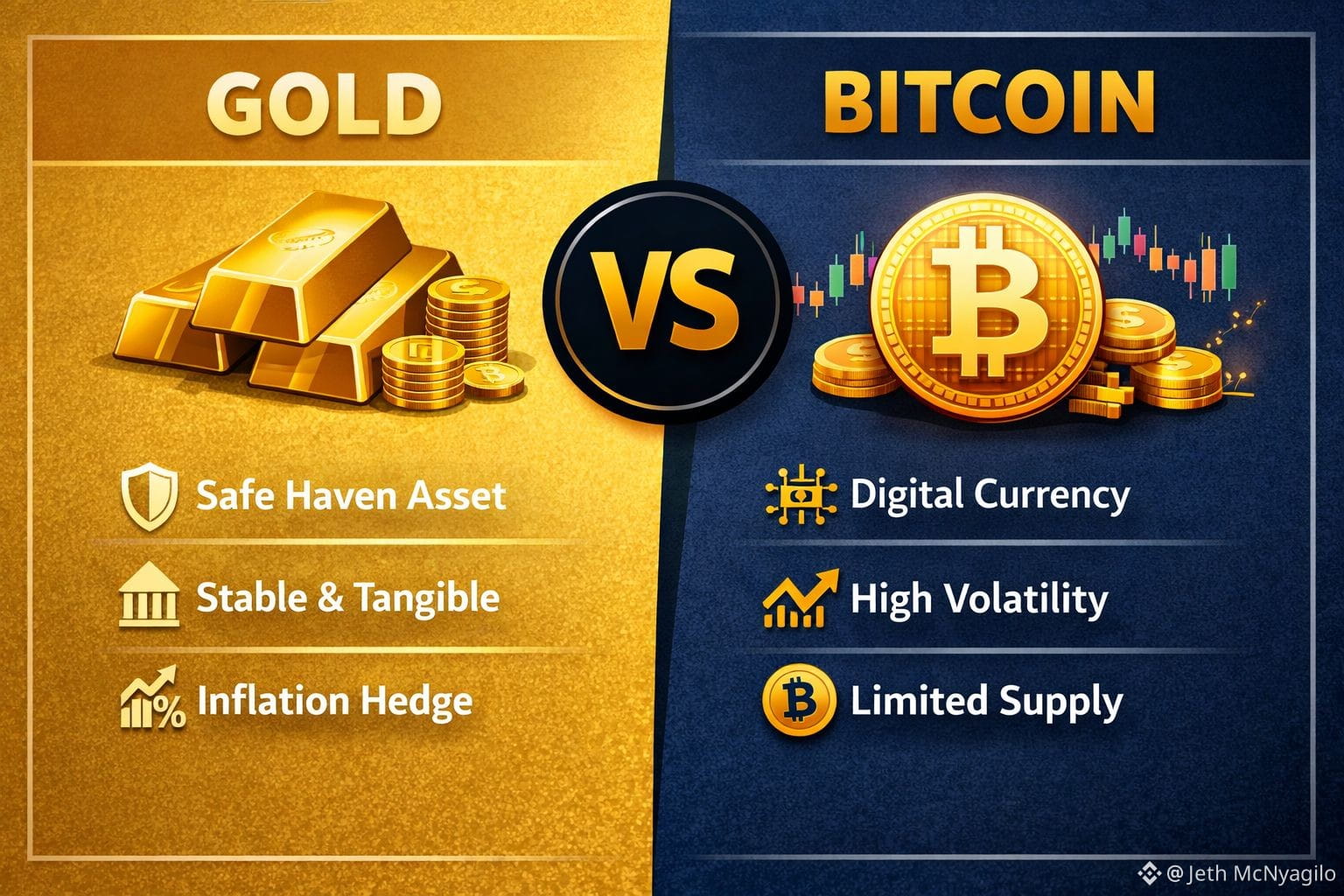
On Binance, Bitcoin prices are determined by real-time supply and demand. Traders place buy and sell orders continuously, and the interaction of these orders determines Bitcoin’s market price. Factors such as trading volume, investor sentiment, regulatory news, inflation data, and global economic events significantly affect Bitcoin’s price movements. Because Binance operates 24 hours a day, Bitcoin reacts instantly to global developments, making it highly volatile.
Gold prices, while not directly traded as physical gold on Binance, are reflected through tokenized gold assets and price correlations followed by traders. These digital gold tokens are backed by physical gold and track the global gold spot price, which is influenced by central bank policies, geopolitical tensions, and currency fluctuations.
Trading patterns on Binance show that Bitcoin sometimes behaves like “digital gold,” especially during inflation fears, while at other times it acts as a high-risk speculative asset. Together, gold and Bitcoin reflect how traditional and digital markets intersect through modern trading platforms like Binance.