

For most of its existence, Bitcoin has lived off a powerful story. It was supposed to be digital gold, a hedge against inflation, a protection against reckless monetary policy, and an alternative to fiat currencies that could be printed endlessly by central banks. That narrative carried Bitcoin from a niche experiment into a trillion-dollar asset class, attracting retail traders, hedge funds, corporations, and even governments.
But in the current market cycle, something uncomfortable is happening. Real gold is stealing the spotlight, and Bitcoin is struggling to defend the role it once claimed for itself.
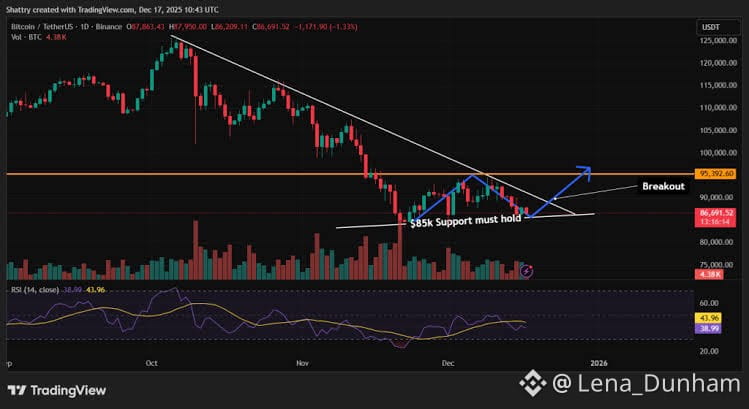
While gold surges to record highs and commodities dominate global markets, Bitcoin is stuck in a frustrating consolidation phase around the $88,000–$89,000 region. The contrast is striking. Traditional safe havens are thriving, while the so-called “digital safe haven” looks tired, indecisive, and increasingly dependent on broader risk sentiment.
This is not just a short-term price story. It is a deeper shift in how markets are treating Bitcoin and what that means for its future.
A Market That Refuses to Choose a Direction
Bitcoin’s recent price action has been defined by hesitation. After briefly pushing above $89,000, BTC slipped back below $88,500, extending a week of choppy, low-conviction trading. On Binance, spot volumes have remained moderate, futures funding rates have cooled, and open interest has flattened all classic signs of a market waiting for a catalyst that never quite arrives.
Ether has shown similar behavior, hovering near the $3,000 zone but failing to establish a sustained trend. Solana, XRP, BNB and Dogecoin have all posted deeper intraday losses, with many altcoins down between 2% and 4% during the same sessions when gold was setting new highs.
The important detail here is not just that crypto is weak — it is that crypto is being ignored.
In previous cycles, any period of macro uncertainty or monetary stress would almost automatically spark interest in Bitcoin. Inflation fears, banking crises, currency instability all of these once translated into bullish narratives for BTC. Now, those same macro forces are playing out, but capital is flowing into gold, silver, and even copper instead.
Bitcoin is still holding key support near $85,000, which suggests that long-term holders are not panicking. But the inability to break convincingly above $89,000 and $90,000 is psychologically damaging. These round numbers matter. They represent more than technical levels; they reflect confidence. And right now, confidence is fragile.

Gold Is Doing Exactly What Bitcoin Was Supposed to Do
The irony of the current market is hard to ignore. Gold the original store of value is behaving exactly as Bitcoin’s advocates claimed BTC would behave in times of uncertainty.
Gold is near record highs. Silver and copper are elevated after powerful rallies. Central banks continue to accumulate gold at historic rates. Institutional investors are increasing exposure to commodities. The entire metals complex is telling one story: global investors are nervous, distrustful of government finances, and seeking assets that feel real, tangible, and politically neutral.
This is precisely the environment where Bitcoin was supposed to shine.
Instead, Bitcoin is lagging.
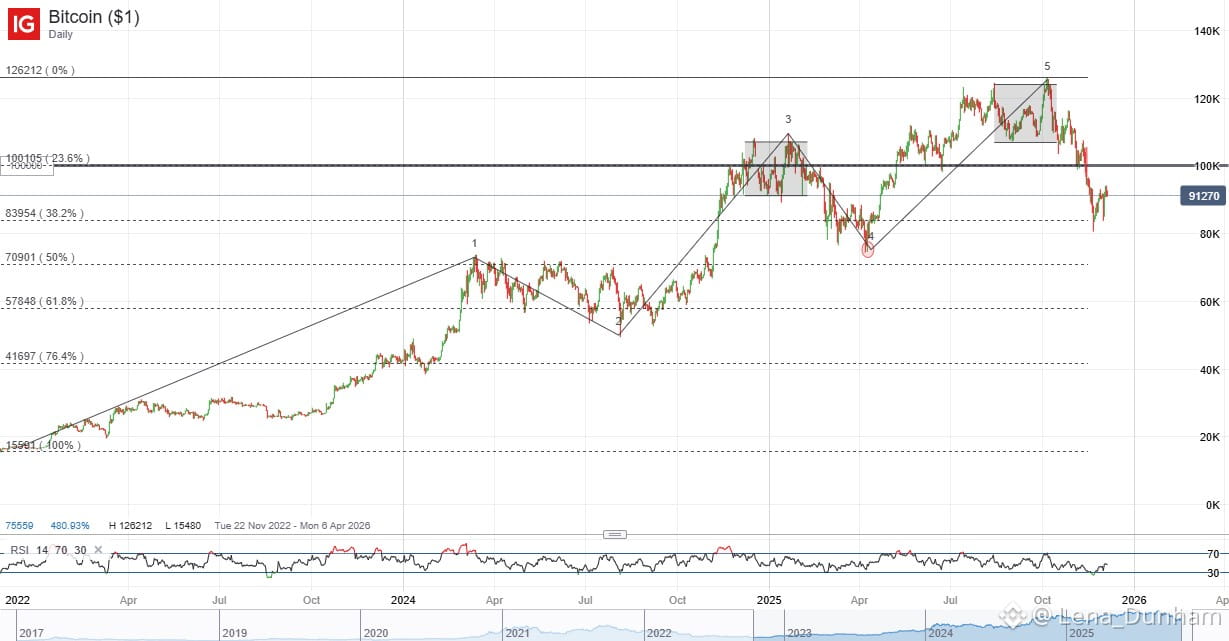
While gold has broken new all-time highs, Bitcoin remains roughly 30% below its recent peak. That gap is not trivial. It suggests that markets no longer view Bitcoin and gold as interchangeable hedges. They are being treated as fundamentally different assets.
Gold is being priced as a macro hedge. Bitcoin is being priced as a risk asset.
That distinction changes everything.
Bitcoin’s Identity Crisis: Hedge or High-Beta Asset?
One of the most important shifts in crypto over the past few years has been the gradual reclassification of Bitcoin in institutional portfolios.
Originally, Bitcoin was framed as:
A hedge against inflation
A hedge against fiat debasement
A hedge against systemic financial risk
But in practice, Bitcoin has increasingly traded like:
A high-beta tech stock
A liquidity-sensitive risk asset
A speculative instrument driven by leverage
This pattern is now hard to deny. When global liquidity improves, Bitcoin rallies aggressively. When the dollar weakens, Bitcoin tends to rise. When risk appetite returns, Bitcoin outperforms most assets.
But when the dollar strengthens, yields rise, or capital rotates into safe havens, Bitcoin usually underperforms.
That is not how a true macro hedge behaves.
In recent months, this relationship has become even clearer. During periods when the dollar softened, Bitcoin surged. During periods when the dollar rebounded sharply like the latest move after U.S. Treasury officials reaffirmed support for a strong dollar Bitcoin immediately lost momentum.
The implication is uncomfortable: Bitcoin’s price is still heavily dependent on global liquidity conditions, not independent of them.
In other words, Bitcoin is not escaping the system. It is plugged into it.
The Federal Reserve Factor: Neutral Policy, Neutral Crypto
The Federal Reserve’s latest decision to leave interest rates unchanged was widely expected. But the tone of the statement mattered. Policymakers signaled that they are not in a rush to cut further and want clearer evidence that inflation is under control.
For crypto markets, this kind of “wait and see” stance is the worst possible outcome.
It does not create panic, which might drive people into alternative assets.
It does not create stimulus, which might fuel speculation.
It simply creates stagnation.
With rates steady and liquidity conditions stable but tight, crypto has no obvious macro tailwind. Meanwhile, commodities continue to benefit from structural demand, geopolitical risks, and long-term concerns about sovereign debt.
So while traditional markets digest earnings reports and bond yields, crypto remains stuck in limbo — not bearish enough to collapse, not bullish enough to break out.
This is exactly the kind of environment where attention drifts elsewhere.
And attention is everything in crypto.
Why Bitcoin Is Losing the Narrative War
Markets are driven by stories as much as by numbers. And right now, Bitcoin is losing the narrative battle to gold.
Gold’s story is simple and emotionally powerful:
Governments are in debt.
Geopolitics is unstable.
Currencies are being diluted.
Physical assets feel safer.
Bitcoin’s story, by contrast, has become complicated:
It is a hedge but only sometimes.
It is decentralized but traded on centralized exchanges.
It is anti-fiat but priced entirely in dollars.
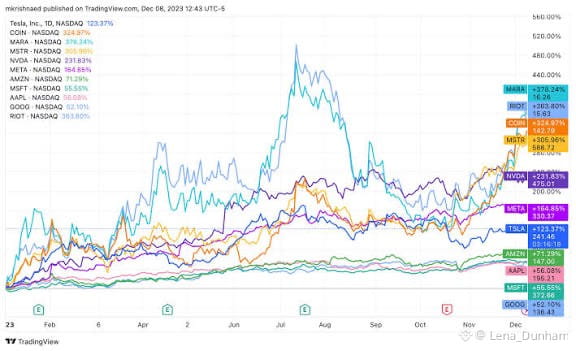
It is independent but moves with Nasdaq.
That cognitive dissonance is starting to matter.
When investors feel uncertain, they want clarity, not complexity. Gold offers clarity. Bitcoin currently offers ambiguity.
This does not mean Bitcoin is “failing.” But it does mean its identity is evolving and not necessarily in the direction early adopters expected.
The Technical Picture: A Market in Compression
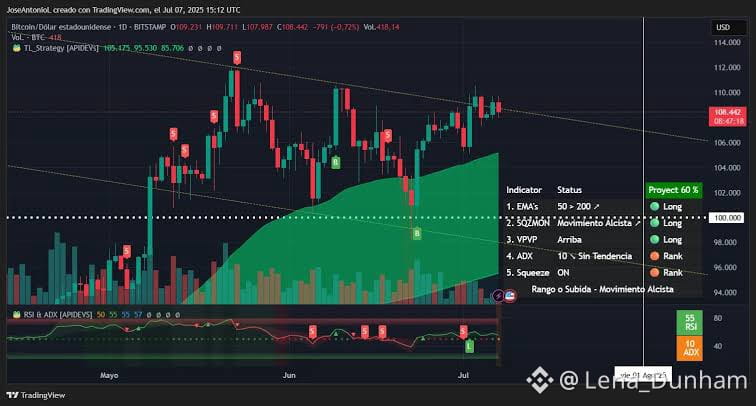
From a purely technical standpoint, Bitcoin is trapped in a compression zone.
Support around $85,000 has held multiple times, suggesting strong demand from long-term holders and institutions. Resistance near $89,000–$90,000 has rejected price repeatedly, creating a tight range that reflects equilibrium between buyers and sellers.
This kind of structure usually resolves with a large move. But the direction of that move depends entirely on macro catalysts.
If liquidity improves, yields fall, or the dollar weakens again, Bitcoin could easily break above $90,000 and enter a new momentum phase.
But if the dollar continues strengthening and commodities remain dominant, Bitcoin risks slipping below $85,000 and entering a deeper consolidation or even a correction.
The danger is not a crash. The danger is irrelevance.
Sideways markets kill interest. They drain attention. They reduce volatility, volumes, and participation. And in crypto, attention is a form of liquidity.
Altcoins Are Feeling the Pressure Even More
If Bitcoin is struggling, altcoins are struggling more.
Ethereum remains stuck below major resistance levels, with on chain activity growing slowly and narrative momentum fading. Solana, once a favorite for high-beta traders, has lost its explosive character. Meme coins like Dogecoin still attract bursts of speculation, but those moves are increasingly short-lived.
The broader altcoin market reflects a familiar pattern: when Bitcoin hesitates, altcoins bleed.
This is partly structural. Most altcoins depend on speculative capital flowing down from Bitcoin. When Bitcoin lacks direction, that capital stays sidelined.
It is also psychological. Traders are less willing to take risk in smaller assets when even the largest crypto cannot break out.
The result is a market that feels heavy, defensive, and cautious the opposite of what a “bull market” is supposed to feel like.
Institutional Behavior: Quiet Accumulation or Silent Exit?
One of the big unknowns right now is what institutions are actually doing.
Spot Bitcoin ETFs were a major source of demand earlier in the cycle, driving sustained inflows and legitimizing Bitcoin in traditional finance. But recent data suggests those inflows have slowed, and in some cases reversed.
That does not necessarily mean institutions are dumping Bitcoin. But it does suggest that aggressive accumulation has paused.
Institutions behave very differently from retail traders. They do not chase narratives. They allocate based on correlations, portfolio construction, and risk models.
And from that perspective, Bitcoin currently looks more like a volatile tech asset than a stable hedge.
In a world where gold is rising, bonds are stabilizing, and equities are near all-time highs, Bitcoin does not offer a clear diversification benefit. It offers volatility and not always in the right direction.
That makes it harder to justify large allocations.
The Psychological Shift: From Revolution to Asset Class
Perhaps the most profound change happening beneath the surface is psychological.
Bitcoin is no longer viewed primarily as a revolution. It is increasingly viewed as an asset class.
That sounds like success — and in many ways, it is. But it comes with a cost.
Revolutions are fueled by belief.
Asset classes are priced by models.
Belief creates parabolic moves.
Models create ranges.
As Bitcoin becomes more integrated into traditional finance, it loses some of the narrative power that made it extraordinary. It becomes measurable, comparable, correlated, and constrained.
That does not kill Bitcoin. But it normalizes it.
And normal assets do not dominate headlines the way revolutionary ones do.
What Happens Next?
Bitcoin is at a crossroads.
One path leads to a renewed narrative where inflation resurges, monetary policy shifts, and investors rediscover Bitcoin as a hedge against systemic risk.
The other path leads to full financial integration where Bitcoin becomes another macro-sensitive asset, trading alongside equities, bonds, and commodities as part of the same liquidity cycle.
Right now, the market is leaning toward the second path.
Bitcoin is not being priced as an escape from the system. It is being priced as part of it.
And until something breaks — either in the economy, in monetary policy, or in the financial system — gold will likely remain the dominant macro hedge, while Bitcoin remains stuck in a high-beta identity crisis.
The real question is not whether Bitcoin will survive.
The question is whether it will ever again be feared, desired, and believed in the way it once was.
Because markets do not move on code alone.
They move on conviction.
And at this moment, the world believes in gold more than it believes in Bitcoin.
