
Engineers create most Layer-1 blockchains for other engineers. Vanar approaches things differently. It begins with a straightforward query: If a blockchain were developed first for gamers, companies, creators, and regular users rather than for speculators, how would it seem? Vanar presents itself as an infrastructure layer concerned with actual adoption rather than theoretical performance indicators from its design to its product plan.
Vanar is a Layer-1 blockchain made to be easy to use for most people. The team behind it has experience in gaming, entertainment, and brand partnerships, which greatly influences the network's design and marketing. Vanar focuses on sectors where Web3 already exhibits demand—gaming economies, virtual worlds, branded digital experiences, and AI-powered applications—rather than pursuing the newest narrative. The long-term goal is simple: to get the next three billion people on Web3 without making them learn about the complexity of blockchain.
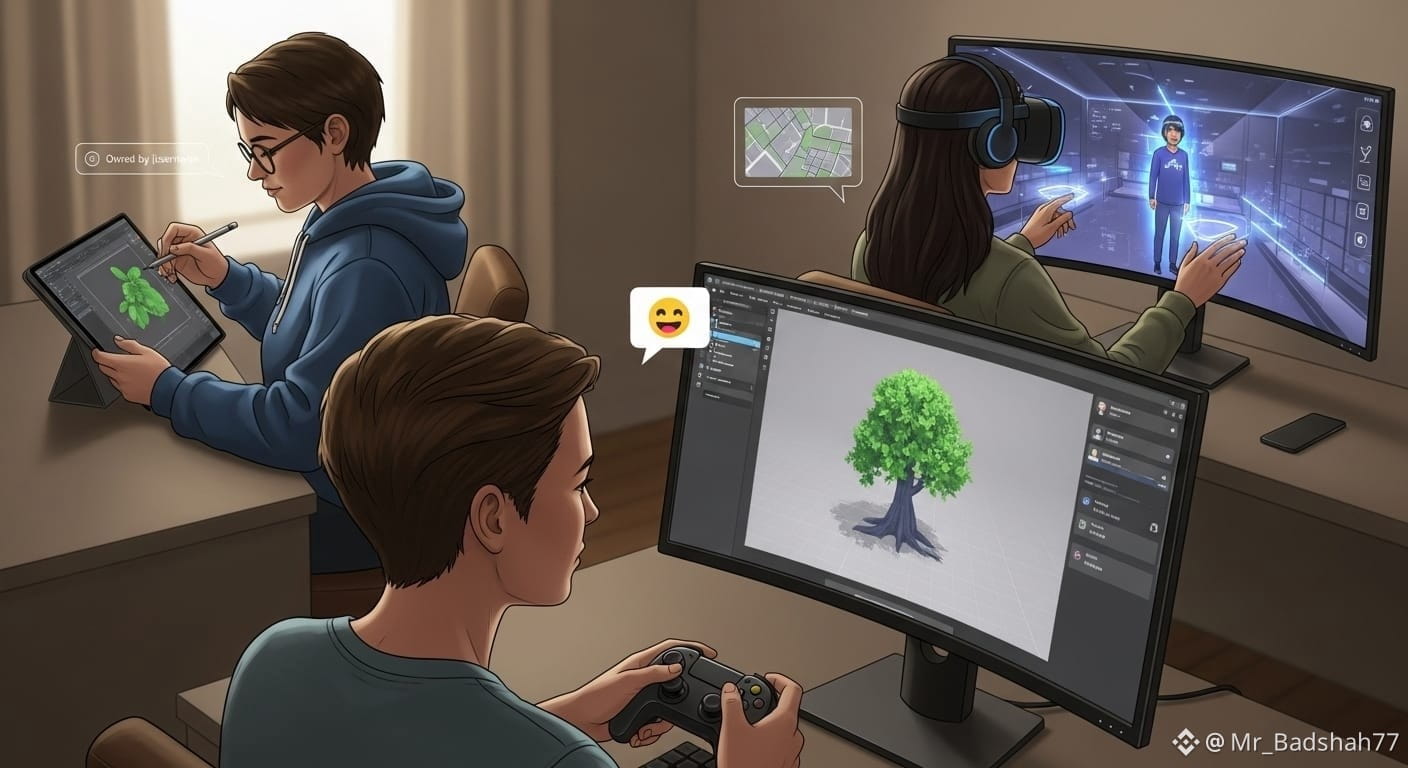
Vanar stresses intellect and setting over mere speed at a technological level. Native AI-oriented elements added by the network seek to improve the user friendliness and adaptability of distributed applications. Vanar includes semantic data processing and reasoning directly into its stack instead of seeing artificial intelligence as a separate add-on. This method lets apps save more detailed data on-chain and interact with users more naturally, human-like, hence lowering barrier for non-technical users.
Vanar's story is made stronger by the fact that it is not just an empty structure waiting for developers. Live, customer-facing items abound in the ecosystem now. As a key illustration, Virtua Metaverse provides immersive digital worlds where ownership, identity, and engagement are grounded on-chain. The VGN games network also aims to bring together blockchain-powered games under one platform so that assets, progress, and player economies can be shared. These goods show that Vanar is truly testing its technology under real-world circumstances instead of depending just on publications.
Vanar's plan also gives brands and businesses a lot of attention, which is another crucial thing. While many blockchains discuss corporate adoption, few build their architecture around brand requirements including scalability, user experience, data interpretation, and compliance-friendly connectors. Vanar locates itself as a link between conventional digital platforms and decentralized infrastructure, enabling companies to explore Web3 without requiring consumers to engage in crypto-native behavior. This is particularly true in entertainment and gaming, when users value experience above all else and technology second.
Recent changes to networks strengthen this direction even more. Vanar has been developing its protocol to enhance developer tools, smart contract flexibility, and performance. These advancements are viewed not only as technical milestones but also as enablers for more sophisticated uses including AI-driven logic, more sophisticated game mechanics, and large-scale customer experiences. Following these changes, rising builder and infrastructure participant confidence is implied by node participation and ecosystem activity increases.
Tying the ecosystem together relies much on the VANRY token. It is meant to enable participation, value exchange, and transactions throughout Vanar's network events and products. VANRY is presented as the engine driving games, metaverse interactions, and on-chain services rather than merely a speculative asset. Whether token use develops naturally with user activity rather than brief market cycles would be the litmus test for this approach.
From a more general market point of view, Vanar is at the crossroads of a number of powerful stories: gaming, metaverse, artificial intelligence, and brand adoption. Its distinctiveness lies in actually constructing where they overlap rather than in simultaneously claiming all of them. AI adds intelligence and personalization, brands bring distribution, gaming offers engagement, and the blockchain layer guarantees ownership and interoperability. If these components line up, the outcome is a next-generation digital platform more than a crypto infrastructure feels.
There will still be obstacles, naturally. Vanar, like other Layer-1 networks, has to demonstrate long-term scalability, decentralization, and consistent developer interest. User development, everyday activity inside Virtua and VGN, and actual network economic use will count more than statements. Whether Vanar can go beyond niche adoption will depend on how open the network metrics, tool maturity, and ecosystem incentives are.

Even so, Vanar's direction is noteworthy in a packed blockchain environment. It is not trying to be everything for everyone. Instead, it looks at how people really use digital products now and questions how blockchain could fit into that reality rather than replace it. Platforms like Vanar are probably going to be very important if Web3 acceptance will seem familiar rather than strange.
Vanar is carefully developing around people, products, and experience in a world usually driven by transient trends. Whether it is successful on a large scale will rely on how it is implemented. However, the groundwork it is creating reveals a clear grasp of what actual adoption in the real world calls for.