When gold breaks, crypto corrects - but the structure remains intact

When markets are shaken, the most important question is not which asset drops the most, but which asset refuses to collapse after the shock. In recent sessions, gold - the traditional symbol of safety - suffered a sharp, system-level sell-off.
Meanwhile, the crypto market, represented by the Top 10 market capitalization, only corrected in a controlled manner and quickly stabilized its structure.
This is not a coincidence. It is a signal worth reading carefully.
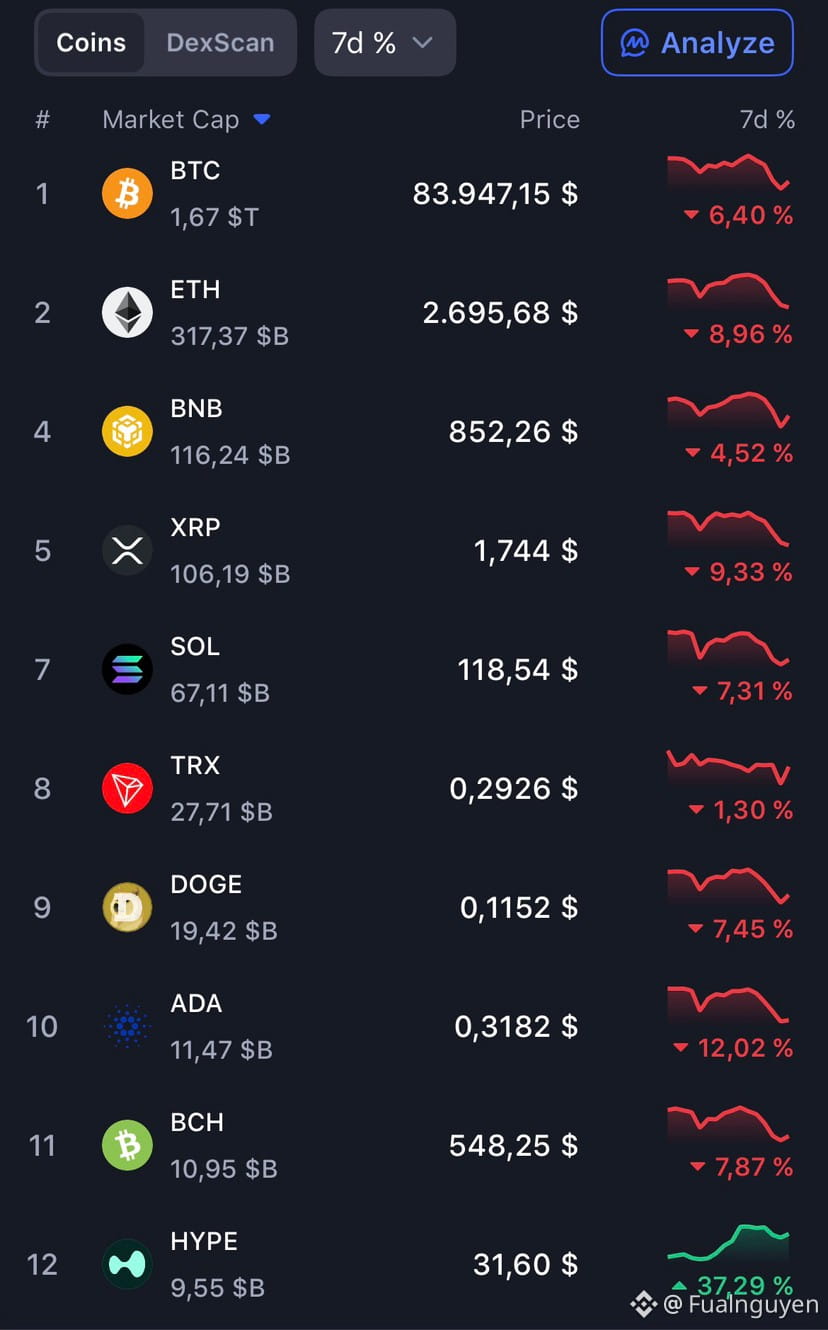
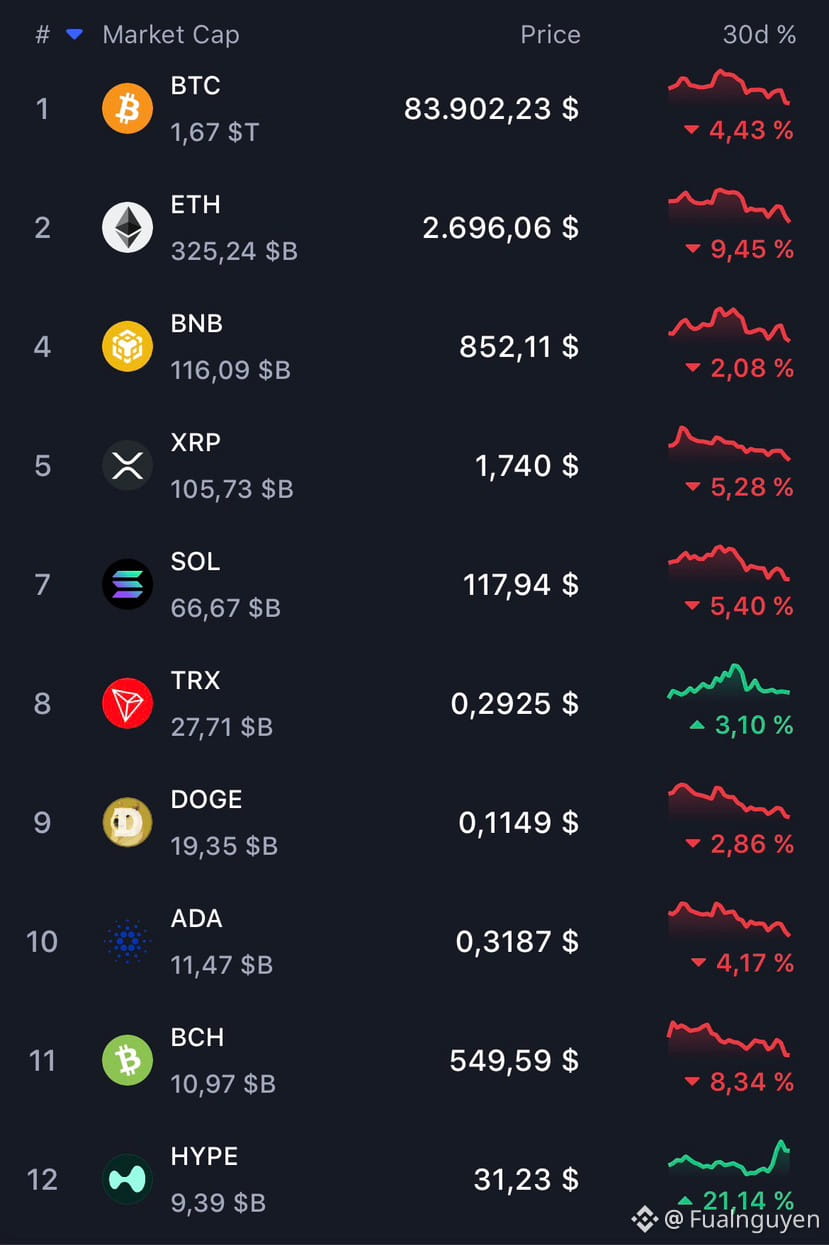
A. Top 10 market cap: correcting, not breaking
Looking at the 7-day and 30-day data for the Top 10:
BTC, ETH, BNB, SOL, and XRP all posted declines
But no cascading sell-off occurred
No evidence of broad capital flight out of the market
Some assets, such as TRX and HYPE, even remained green - a clear sign that capital is not leaving crypto, but rather being selectively reallocated.
Crypto is no longer reacting in a simplistic “risk-on / risk-off” manner. The market is digesting risk, not rejecting it.
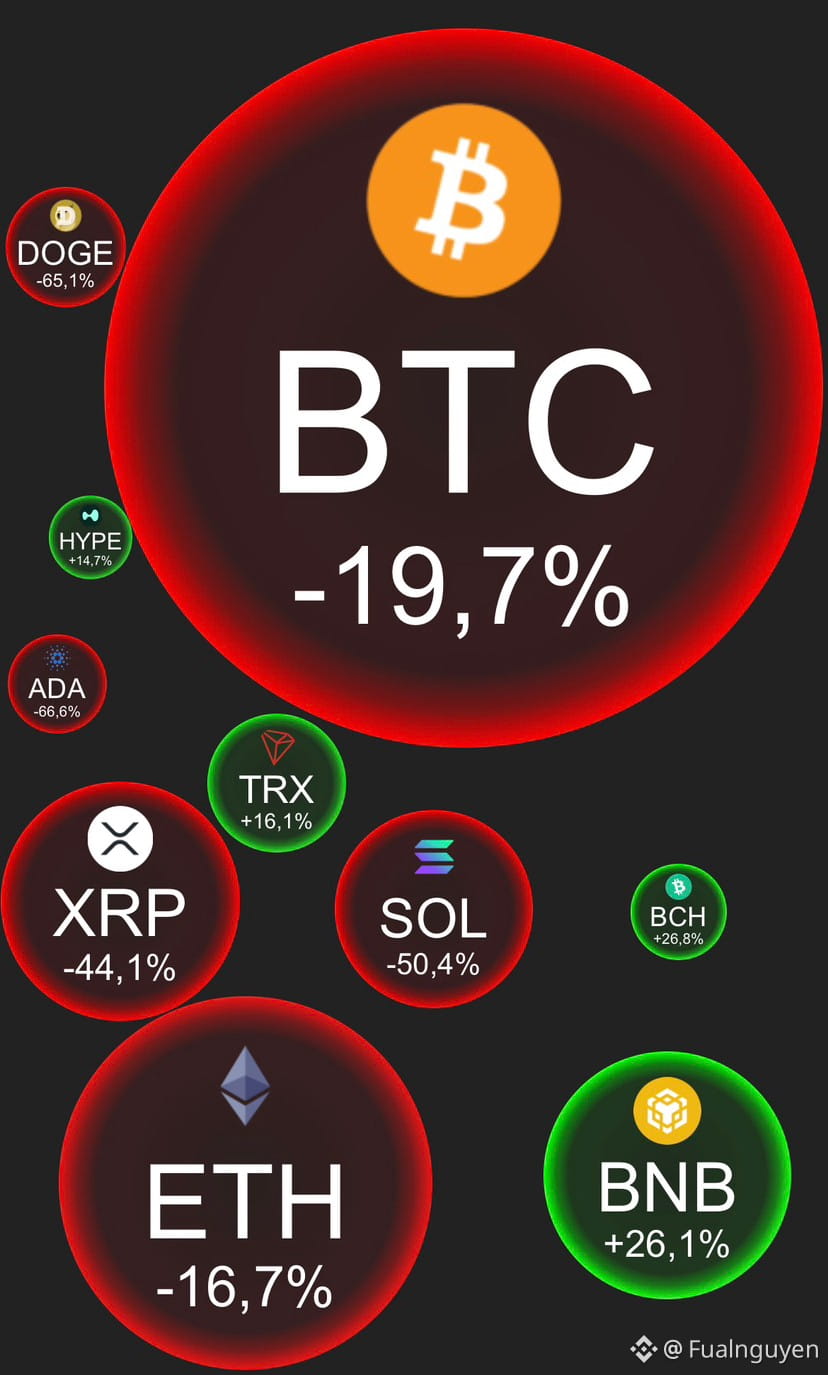
B. The falling wedge in Top 10 market cap has been broken
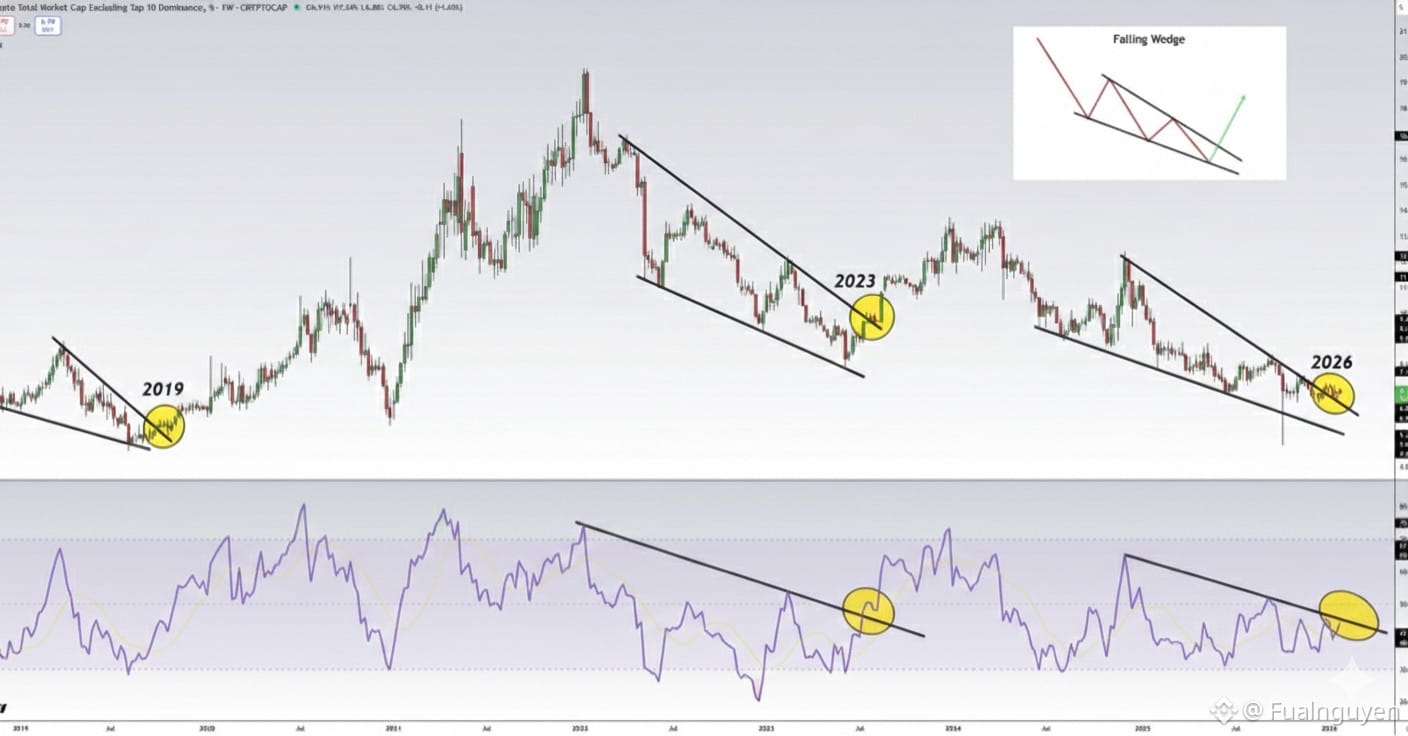
On the higher timeframe, the Top 10 crypto market cap formed a long-term falling wedge - a structure typically associated with:
Prolonged corrections
Gradually weakening selling pressure
Contracting downside momentum
Most importantly: This falling wedge has now been broken to the upside.
Historically:
2019: wedge breakout → beginning of recovery
2023: wedge breakout → confirmation of a medium-term bottom
Today, a similar structural setup is emerging again. This is not a signal for an immediate rally, but a sign that the downcycle has largely completed its function.
C. When gold collapses, crypto does not
The 7–30 day data highlights a crucial contrast:
Crypto’s pullback remains largely technical
Gold’s decline was sharp, rapid, and disorderly
Gold’s move reflects:
Deleveraging
Forced selling
Stress originating from the traditional financial system
Crypto, by contrast, did not move in lockstep.
D. The inverse correlation between gold and Bitcoin is narrowing
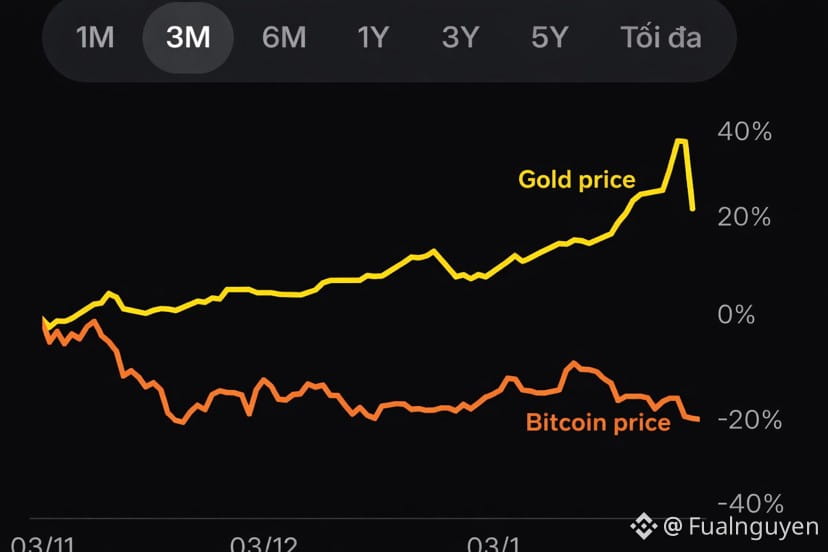
Historically, gold and Bitcoin were often viewed as opposites. This time, however:
Gold fell sharply
Bitcoin did not rally as a substitute safe haven
But it also did not collapse alongside gold
This suggests that the inverse correlation between gold and Bitcoin is weakening.
Bitcoin is increasingly driven by:
Global liquidity cycles
Its own market structure
The growing maturity of the crypto ecosystem
Rather than acting as a derivative of gold or equities.
E. Reading the market through what doesn’t collapse
Putting all the pieces together:
Gold broke down
Crypto corrected but preserved its structure
Top 10 market cap held firm
The long-term falling wedge was broken
Capital remains inside the ecosystem
The market is sending a clear message.
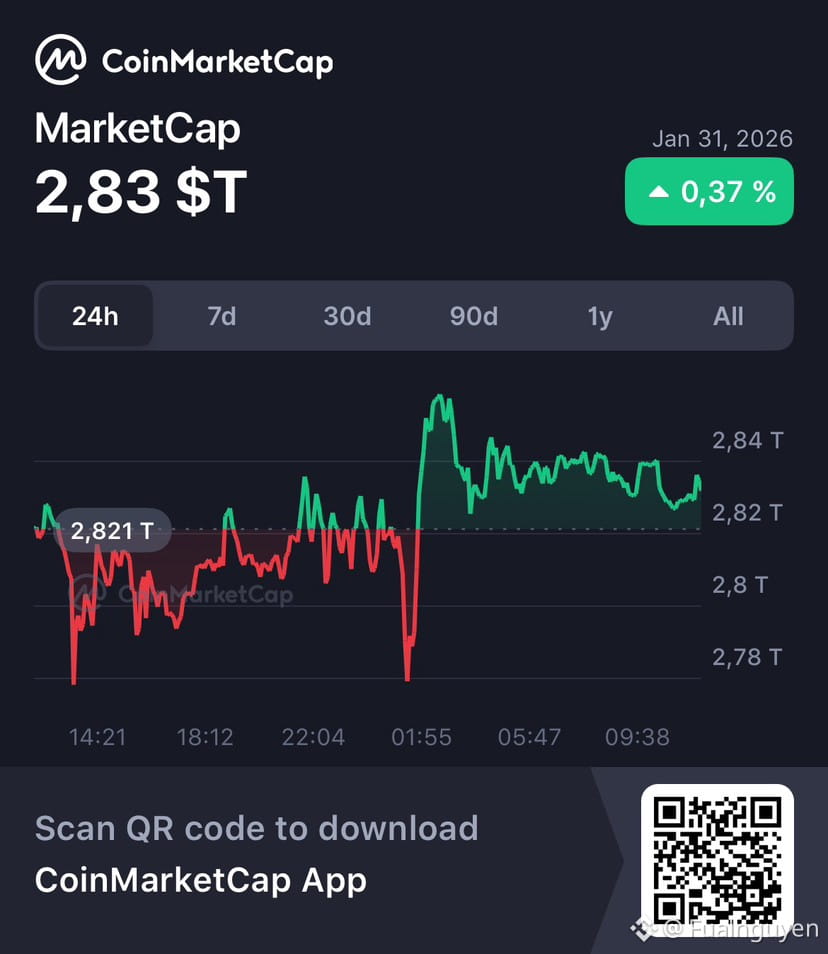
“What doesn’t collapse after a major shock is precisely what deserves the closest attention”
Because that is often where:
Risk has already been priced in
Selling pressure has been absorbed
And smart money is quietly staying put
Crypto may not yet be accelerating upward, but it is no longer behaving as a direct victim of macro shocks. And many major cycles in the past have begun from exactly this kind of environment.
#Fualnguyen #LongTermAnalysis #LongTermInvestment