
Blockchains changed how value moves on the internet, but they never truly solved how data lives on it. Images, videos, AI datasets, game assets, and application files still depend heavily on centralized servers. This creates a silent contradiction: decentralized applications that rely on centralized infrastructure to function.
Walrus Protocol was designed to remove that contradiction. Instead of treating storage as an afterthought, Walrus treats data as first-class infrastructure. It provides a decentralized, verifiable, and economically sustainable way to store and serve large amounts of data while remaining deeply integrated with blockchain logic.
Built on the Sui Blockchain, Walrus focuses on scale, reliability, and real usability rather than theoretical decentralization alone.
Why Walrus Exists
Most blockchains are optimized for consensus, not capacity. Storing large files directly on-chain is slow and expensive, while relying on centralized cloud providers reintroduces trust assumptions and censorship risk.
Walrus solves this by acting as a dedicated data availability and storage layer. Applications use the blockchain to coordinate ownership, permissions, and payments, while Walrus ensures the underlying data remains accessible, tamper-resistant, and distributed across independent operators.
The result is an architecture where applications can finally be decentralized from front end to backend.
Architectural Philosophy
Separation of Concerns
Walrus does not attempt to turn a blockchain into a hard drive. Instead, it separates coordination from storage. The blockchain handles logic, while Walrus handles data. This separation allows each layer to do what it does best.
Sui smart contracts manage storage agreements, staking, and verification, while Walrus nodes handle the heavy lifting of storing and serving data.
Efficient Storage Through Encoding
At the heart of Walrus is an erasure coding system known as Red Stuff. Rather than copying entire files across many machines, Walrus encodes each file into smaller pieces and distributes them across the network.
Only a subset of these pieces is required to reconstruct the original file. This dramatically reduces storage costs while maintaining resilience. Data remains recoverable even when multiple nodes fail or go offline.
Incentives Over Trust
Walrus assumes that not all participants are honest. Instead of relying on trust, it relies on incentives and penalties.
Storage nodes must continuously prove they still hold the data they committed to store. Failure to do so results in penalties. Honest behavior is rewarded, dishonest behavior is punished, and the network remains reliable without needing centralized oversight.
Security and Availability
Walrus is designed to operate in adversarial conditions. Nodes are randomly challenged to prove data availability, and the system tolerates Byzantine faults, meaning it can continue functioning even when some participants act maliciously.
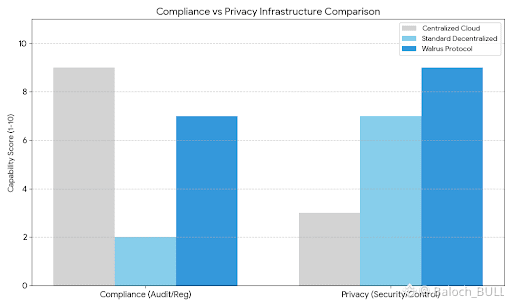
This makes Walrus suitable for critical applications such as financial data, AI datasets, and long-term digital archives where reliability is non-negotiable.
The WAL Token Explained
The WAL token is the economic engine of the Walrus network. Every meaningful action within the protocol is tied to WAL, ensuring that the network remains self-sustaining and aligned.
Storage Economics
Users pay WAL to store and retrieve data. Pricing mechanisms are designed to remain predictable and usable for developers, avoiding extreme volatility that would make planning impossible.
Staking and Network Health
Node operators stake WAL to participate in the network. Token holders can delegate their WAL to these nodes, sharing in rewards while helping secure the protocol. This delegated model lowers barriers to participation while maintaining strong security guarantees.
Governance and Protocol Evolution
WAL holders collectively shape the future of Walrus. Governance decisions cover parameters such as staking rules, penalties, and network upgrades. This ensures Walrus evolves according to the needs of its users rather than a centralized authority.
Supply Dynamics
Walrus incorporates mechanisms where certain penalties and fees may be permanently removed from circulation. Over time, this can reduce total supply and reinforce long-term network sustainability.
Tokenomics Snapshot
Walrus has a capped supply of approximately five billion WAL tokens. Roughly one and a half billion tokens are currently circulating, with the remainder allocated to staking rewards, ecosystem growth, and long-term development.
WAL is actively traded, and market conditions fluctuate regularly. Users should always consult live data sources for the most current information.
From Testnet to Mainnet
Walrus moved from testnet experimentation to a full mainnet launch in early 2025. This transition marked a shift from theory to production, with real applications storing real data on the network.
Since launch, development has focused on stability, performance improvements, and tooling for developers rather than short-term marketing cycles.
Funding and Institutional Confidence
The Walrus Foundation has raised approximately 140 million dollars from major institutional investors including Standard Crypto, Andreessen Horowitz, Electric Capital, and Franklin Templeton Digital Assets.
This backing signals confidence that decentralized storage is not a niche feature but a core requirement for the next phase of blockchain adoption.
Expanding Ecosystem
Walrus is increasingly used as infrastructure rather than a standalone product. NFT platforms rely on it to store media and metadata without centralized risk. AI projects use it for verifiable datasets. Developers integrate Walrus as a backend for decentralized applications that require large files.
Its role is subtle but foundational, similar to how cloud storage powers Web2 applications behind the scenes.
Practical Use Cases
Walrus supports a wide range of real-world needs, including decentralized application backends, NFT media storage, AI training data, decentralized websites, video and content platforms, and long-term archival systems.
As data-heavy applications become the norm, decentralized storage moves from optional to essential.

