
For a long while, I considered all “AI blockchains” as basically the same. If a blockchain mentioned AI in its plans, I thought it was ready for what’s coming. But after I spent some time looking at chains that added AI versus those designed for AI from the start, my thinking changed completely. The difference is clear.
Chains that add AI are often general-use blockchains first. Later, when AI gets a lot of buzz, they tack it on. It might be an AI agent system, a plugin, or a partnership. It might seem good at first glance. But the network still works how it always did, with limited speed, problems when busy, and fees that jump around. AI becomes just a feature, not built into the base.
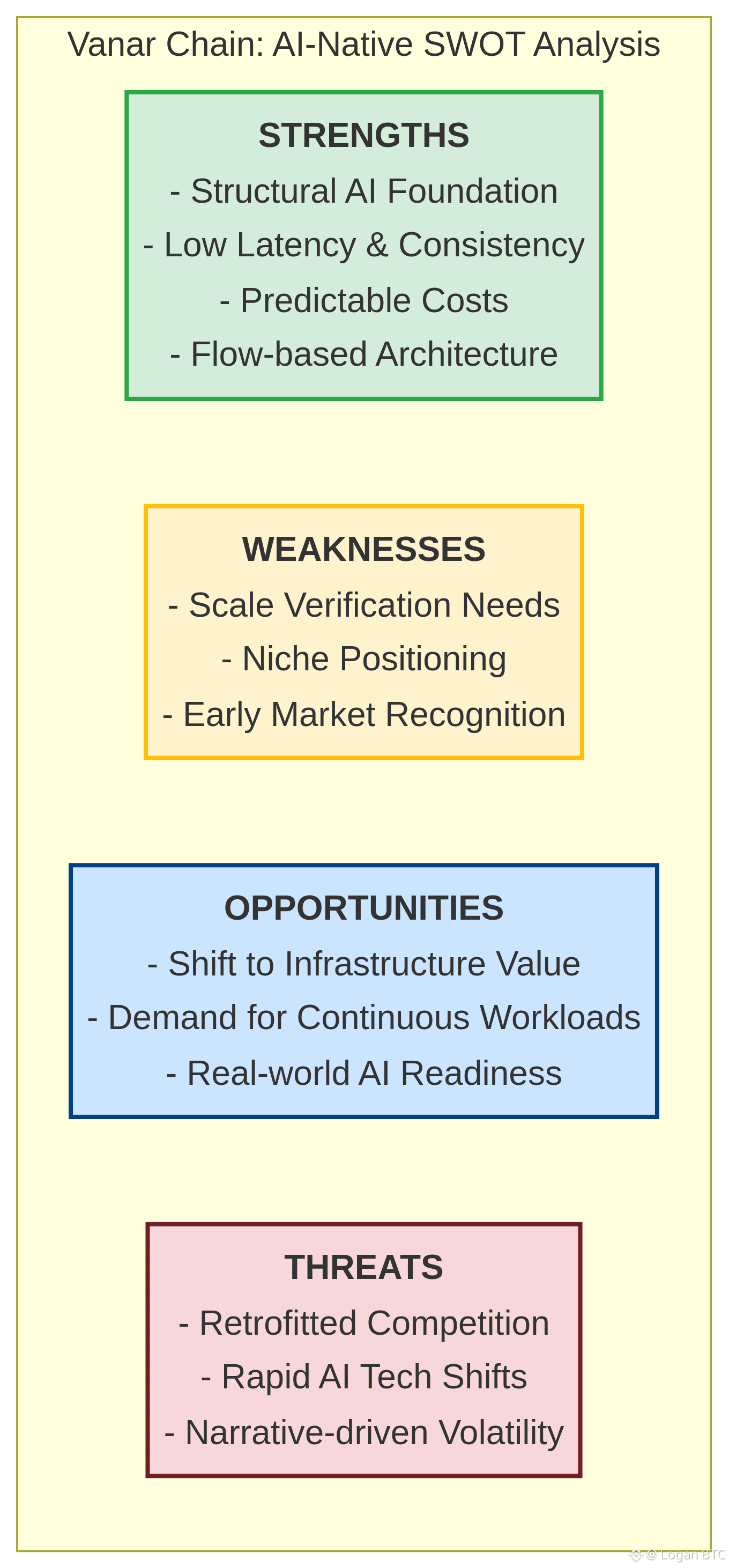
That's why I started to pay attention to Vanar Chain.
What I noticed fast was that Vanar doesn’t just add AI; it starts with AI in mind. AI systems don’t act like normal DeFi transactions. They're always on, use a lot of data, and need to be fast. They don’t just “run once and end.” They run all the time. If the base isn’t made for that, problems will show up quickly.
When I compared them, chains that added AI struggled when used in real scenarios. When many agents worked together, costs went up. Delays became longer. Things didn’t happen when they should. Developers had to work around the network instead of counting on it. That’s a bad sign. The base should just work without needing constant care.
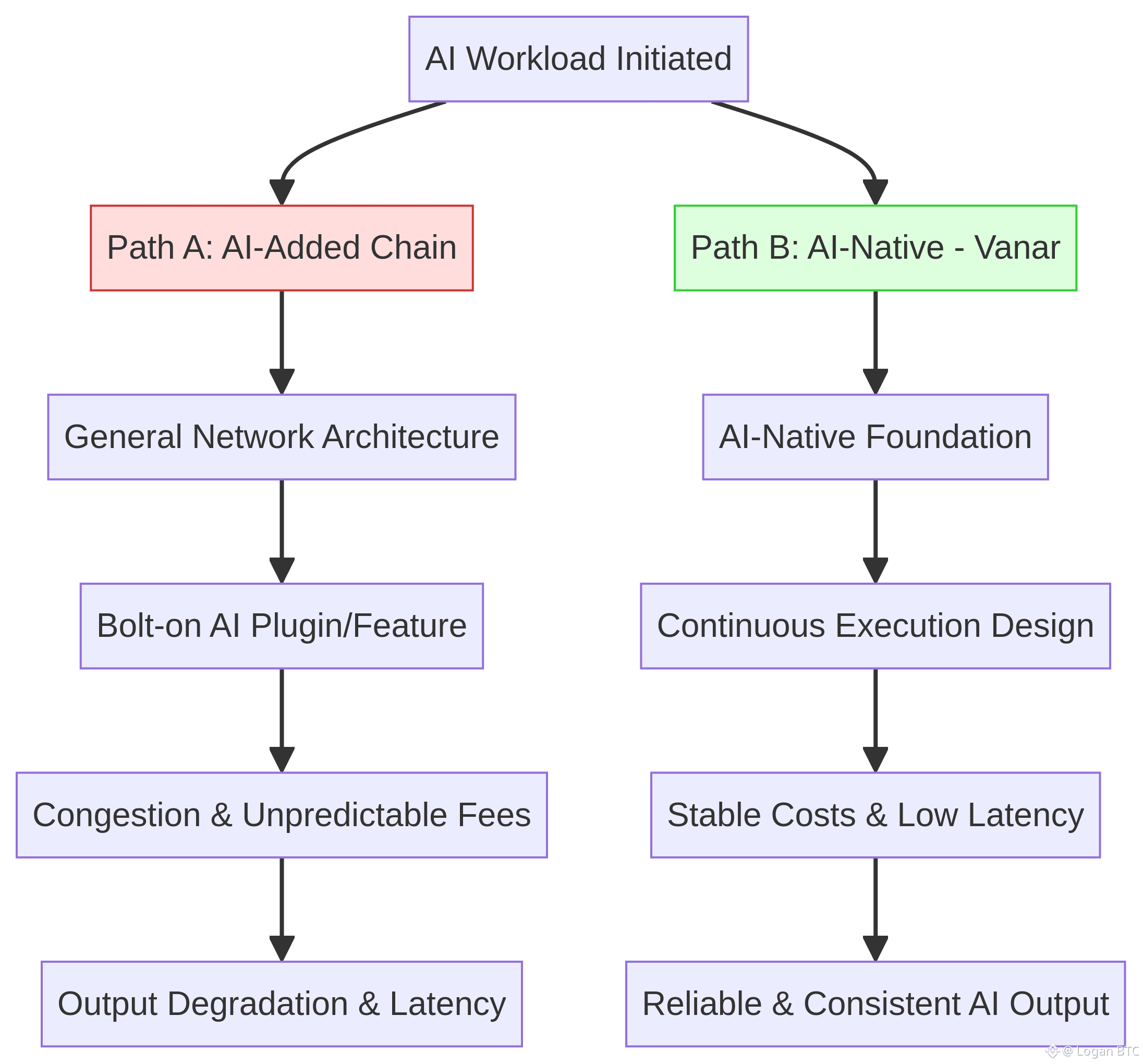
Vanar was different because it was made for performance first. Low latency isn’t a plus here; it’s expected. Costs that stay the same aren’t a bonus; they’re part of how it's designed. This is important because AI systems don’t handle changes well. If timing is off or things change, the results get worse. Vanar’s stability makes AI workloads feel doable instead of just experimental.
I also realized that AI-native chains think past transactions. They think in terms of continuous flows. AI agents talk, change, and react in real time. Vanar’s design allows this kind of activity without forcing everything into a slow line. You can't just add that later.
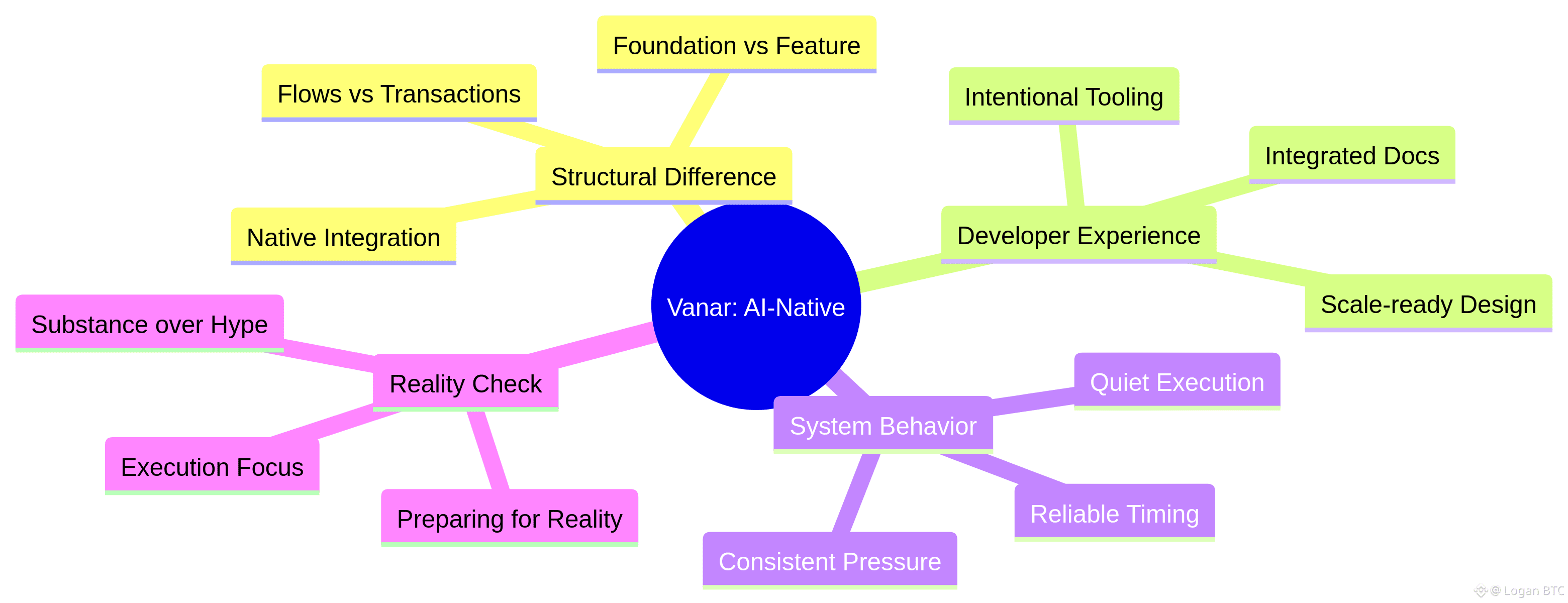
The experience for developers also showed a clear picture. On chains that added AI, documentation is often all over the place. AI features are added on top of older tools that weren’t made for them. On Vanar, the experience feels like it was planned. People building things aren’t told to just “add AI.” They’re told to build systems that expect constant activity, real users, and use at scale.
What surprised me most was how much this changes things. Instead of asking, “Does this chain support AI?” it's better to ask, “Can AI actually work well here?” Vanar answers that question naturally.

After these comparisons, I stopped caring about AI labels. I started looking at what happened when things got busy, how stable the costs were, and how easy it was to use long term. AI-native infrastructure doesn’t need to be loud. It proves itself by staying stable.
That’s the main thing I learned: Chains that add AI are chasing trends. Chains made for AI prepare for what’s coming. Vanar feels like it’s in the second set.