

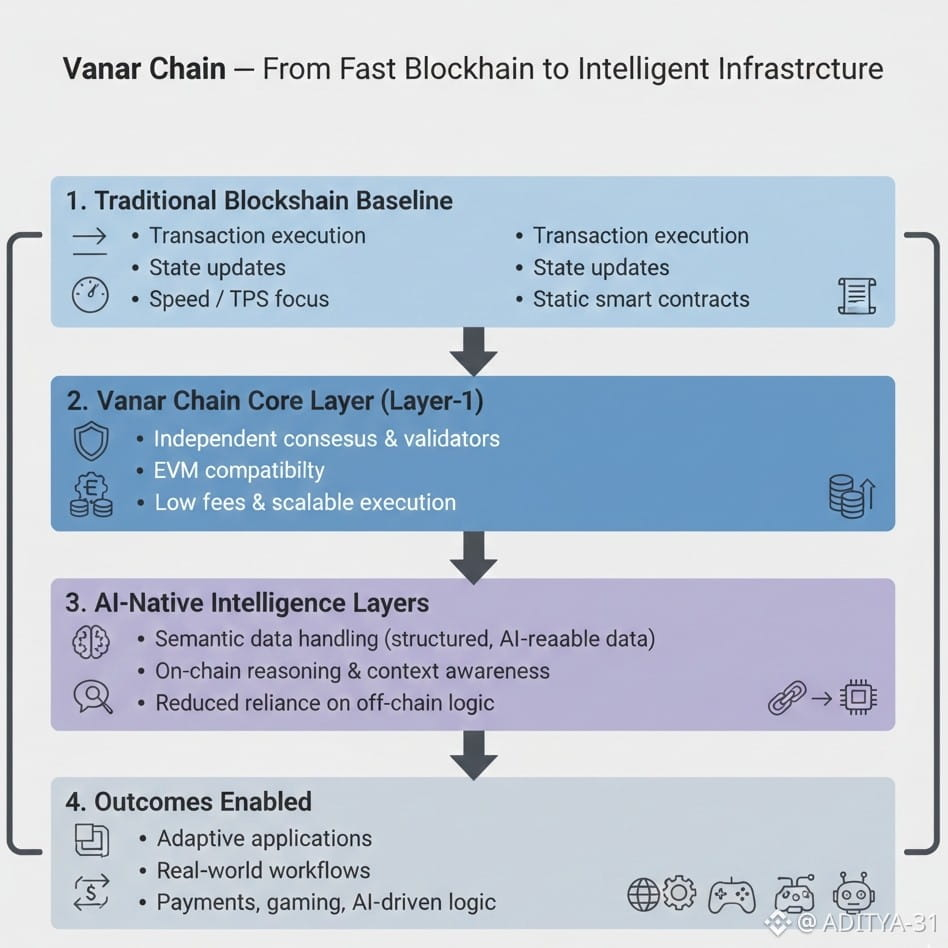
Vanar Chain dheere-dheere ek aise Layer-1 blockchain ke roop me ubhar raha hai jo sirf speed, low fees ya TPS numbers par focus nahi karta. Project ka core idea thoda different hai. Yahan aim ye hai ki blockchain ko sirf transaction processor nahi, balki ek intelligent infrastructure banaya jaye — jo real-world applications, data-heavy workflows aur future-ready Web3 systems ko support kar sake.
Is ecosystem ke centre me Vanry token hai, jo network ke operations, security, governance aur long-term incentives ko power karta hai. Vanar ko samajhne ke liye sirf token ya price dekhna kaafi nahi hota — architecture aur intent ko dekhna zyada zaroori hai.
Is article me hum Vanar Chain ko practical angle se dekhenge:
ye kya solve karna chahta hai, kaise kaam karta hai, Vanry ka role kya hai, aur future me is chain ka potential kis direction me ja sakta hai.
Vanar Chain Kya Hai? Simple Overview
Vanar Chain ek AI-native Layer-1 blockchain hai. AI-native ka matlab yahan marketing buzzword nahi hai. Iska matlab ye hai ki data handling, logic aur reasoning jaise elements chain ke design ka hissa hain — sirf external tools ya off-chain systems par dependent nahi.
Traditional blockchains zyada tar ek hi kaam karti hain:
transaction execute karo, state update karo, aur aage badho.
Vanar is approach se thoda aage jaata hai. Yahan idea ye hai ki applications sirf rules follow na karein, balki context ko samajh kar react kar sakein.
Is wajah se Vanar ka focus sirf speculation ya high-frequency trading nahi hai. Network payments, governance, gaming, entertainment, AI-driven workflows aur real-world use cases ko target karta hai — jahan blockchain ko actually use kiya ja sake.
Vanar ke core pillars roughly ye hain:
AI-first design, jahan data ko meaningful tareeke se process kiya ja sake
EVM compatibility, taaki developers ko naya stack seekhna na pade
Independent Layer-1 setup with its own validators and consensus
Real-world applications par focus, sirf theoretical dApps par nahi
Official documentation me bhi clear message milta hai: Vanar ka goal mass-market accessibility aur developer-friendly ecosystem banana hai, jahan entry barriers kam ho.
Technology: Vanar Sirf Transactions Se Aage Kyon Jaata Hai
AI-Native Logic aur Semantic Data
Vanar ka sabse interesting aspect ye hai ki AI-related logic ko baad me add nahi kiya gaya, balki foundation se hi design ka hissa banaya gaya hai. Chain me aise layers hain jo raw data ko structured, AI-readable format me convert kar sakti hain, aur on-chain reasoning engines jo sirf fixed rules par nahi, balki context par based decisions le sakte hain.
Ye traditional blockchains se clear difference create karta hai. Aaj ke zyada tar networks intelligent behaviour ke liye external oracles ya off-chain services par rely karti hain. Vanar ka approach ye dependency kam karna hai, taaki logic aur automation zyada native ho sake.
Iska use compliance workflows, adaptive financial logic, aur complex decision-based systems me kaafi relevant ho jata hai.
EVM Compatibility aur Developer Experience
Vanar fully EVM-compatible hai. Iska matlab ye hai ki jo developers Ethereum ecosystem ke saath already comfortable hain — Solidity, MetaMask, Hardhat jaise tools — unke liye Vanar par build karna frictionless hota hai.
Naya language seekhne ya completely different tooling adopt karne ki zarurat nahi hoti. Ye factor adoption ke liye kaafi important hota hai, kyunki developers usually wahi build karte hain jahan learning curve manageable ho.
Is compatibility ki wajah se Vanar Ethereum ecosystem ke tools aur workflows ke saath naturally integrate ho jata hai.
Independent Consensus aur Security
Vanar koi sidechain ya dependency-based network nahi hai. Ye apna khud ka Layer-1 hai, jahan validators, consensus aur block production network ke andar hi handle hota hai.
Iska matlab ye hai ki security, decentralization aur performance ka control Vanar ke paas khud ka hai. Ye chain directly dusre Layer-1s ke saath compete karti hai, sirf supportive layer ban kar nahi rehti.
Vanry Token: Sirf Trade Asset Nahi
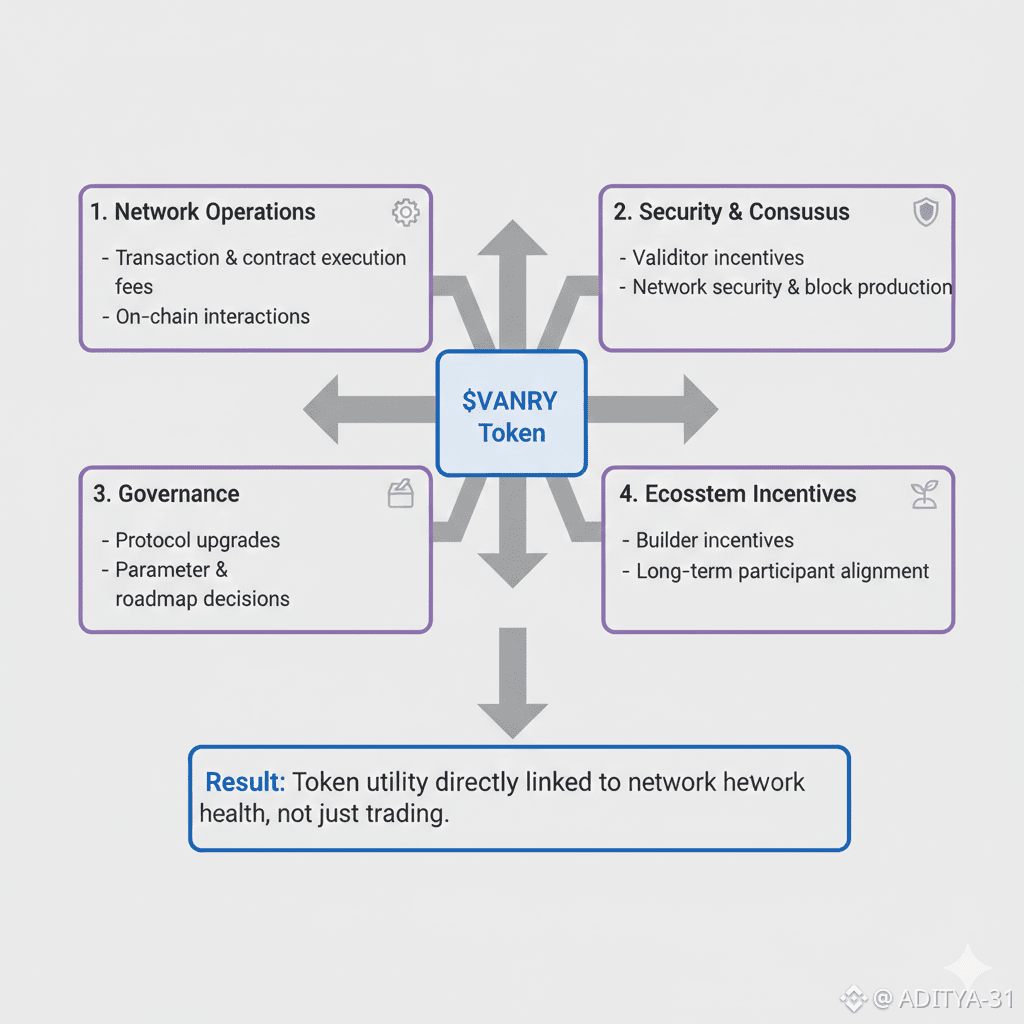
Vanry ko sirf ek tradable token ke roop me dekhna incomplete picture hogi. Ye Vanar ecosystem ka operational backbone hai.
Iske main roles hain:
Transaction aur smart contract fees
Network par execution aur interactions ke liye Vanry use hota hai.
Validator incentives
Validators jo network secure karte hain aur blocks produce karte hain, unhe rewards Vanry me milte hain.
Governance participation
Token holders protocol upgrades aur decisions me participate kar sakte hain, jisse community involvement real hota hai.
Ecosystem incentives
Builders, contributors aur long-term participants ko align karne ke liye token-based incentives ka use hota hai.
Is structure ka aim ye hai ki token sirf speculation ke liye nahi, balki actual network health ke saath linked rahe.
Real-World Use Cases: Theory Se Aage
Vanar ka positioning clearly generic DeFi ya NFT use cases se aage jaata hai.
PayFi aur Payment Rails
Low-cost aur efficient transaction design ki wajah se Vanar digital payments aur Web3-based financial flows ke liye suitable infrastructure ban sakta hai. Ye approach wallets aur real usage ke beech ka gap kam karta hai.
Gaming aur Entertainment
Gaming aur interactive platforms ke liye scalability, low latency aur microtransactions important hote hain. Vanar ka infra in environments ke liye naturally fit hota hai, jahan high-frequency actions common hote hain.
Tokenized Real-World Assets aur Adaptive Logic
AI-native design ki wajah se certain financial aur compliance workflows zyada smoothly handle ho sakte hain. Ye tokenized assets aur regulated use cases ke liye relevant ho jata hai, jahan static logic kaafi nahi hota.
Ye sab ek broader trend ko reflect karta hai: Web3 sirf finance tak limited nahi rehna chahta, balki intelligent digital systems banana chahta hai.
Market Signals aur Adoption Context
Market perspective se dekhein to Vanry roughly $0.006–$0.008 range me trade karta raha hai, multi-billion circulating supply ke saath. Price volatility early-stage Layer-1 projects ke liye common hoti hai, aur Vanar bhi isse immune nahi hai.
Important baat ye hai ki token active exchanges par trade ho raha hai aur ecosystem development parallel me continue ho rahi hai. AI-native stack aur semantic data layers jaise features rollout ho rahe hain, jo long-term narrative build karte hain.
Yahan focus short-term price movement se zyada infrastructure maturity par hona chahiye.
Challenges Jo Ignore Nahi Kiye Ja Sakte
Vanar ke saamne challenges bhi hain:
AI + blockchain ka combination developers ke liye learning curve create karta hai
Layer-1 space already kaafi crowded hai
Market volatility sentiment ko affect karti hai
Ye sab normal hurdles hain. Difference execution se aata hai — kitni fast aur effectively ecosystem real usage generate karta hai.
Aage Kya?
Vanar ka future is baat par depend karega ki developers is AI-native architecture ko kaise use karte hain. Jaise-jaise Web3 evolve ho raha hai, un chains ki value badhegi jo sirf data store nahi karti, balki data ko samajh bhi sakti hain.
Agar infrastructure growth aur real adoption saath-saath chalte rahe, to Vanar ek promising experiment se nikal kar meaningful Layer-1 ban sakta hai.
Final Take
Vanar Chain ek generic Layer-1 nahi hai. Ye intelligence, adaptability aur practical utility ko blockchain ke core me lana chahta hai. Vanry token is vision ka economic aur operational glue hai.
Risk aur uncertainty crypto me hamesha hoti hai, lekin Vanar ka approach hype-driven nahi lagta. Direction zyada foundational aur future-oriented hai — jo long term me Web3 ke next phase ke liye relevant ho sakta hai.