
Finality arrived without drama. The committee threshold was met, the block settled, and Moonlight kept the view exactly where it was meant to stay. Inside scope, everything looked ordinary almost dull. The kind of boring that regulated systems aspire to. Nothing spilled, nothing flickered, nothing required explanation. On-chain, the transaction was done.
Then the message came from outside the fence.
“Send what you saw.”
It wasn’t a request for a transaction hash. They already had it. It wasn’t a request for confirmation of finality either that part was public, readable, indisputable. What they wanted was the piece that ends conversations. The part that prevents a follow-up tomorrow, or a meeting next week. They wanted the reason it cleared, packaged in a way that could be forwarded without pulling you back into the chain of accountability.
You opened the ticket.
There was almost nothing there. A single close-out line. An attestation reference anchored on Dusk. “Cleared within scope.” No narrative. No justification. Nothing you would want to defend once it left the room. It was technically complete and practically useless.
Three people began typing at once. Nobody sent a message.
“Eligibility matched.”
“No anomalies.”
“Within policy.”
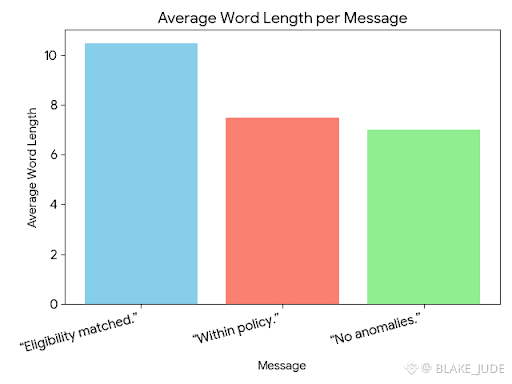
Each fragment was safe, accurate, and survivable in isolation. Each one was also dangerous. Everyone in the thread understood the risk: the moment a scoped, credential-bound fact turns into a portable sentence, it stops belonging to the system that made it true. Nobody wanted to be the person whose phrasing turned into tomorrow’s liability.
The caller didn’t want fragments. They wanted something defensible.
They asked again, sharper this time. “What rule made it okay?”
The cursor blinked in the close-out template. The “classification / rationale” field remained empty, not by accident but by design. The actual “why” existed, but it lived inside Moonlight’s settlement slice bound to what was admissible in that window, visible only to those entitled to see it. One person on the thread knew the logic. Another controlled who could access it. A third owned disclosure and would have to sign anything that widened circulation. That signature wasn’t coming just to make a write-up feel complete for a transaction that had already cleared.
The silence that followed wasn’t confusion. It was constraint.
Someone tried anyway. Two lines appeared, then one disappeared. What survived was the only sentence that could: “Cleared within scope,” followed by the attestation reference. Then, almost apologetically, “Technically yes.”
No one pushed for more. Asking for more would have meant asking for authority, and authority leaves a trail.
The caller forwarded the sentence to legal.
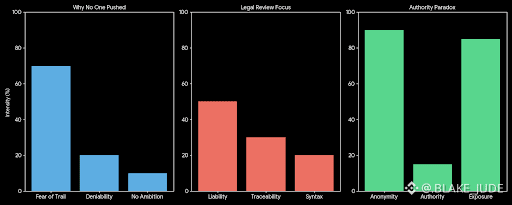
Not the Moonlight view. Not the missing rationale. Just the thin line and the on-chain reference, now sitting in a room that hadn’t been part of the original disclosure set. You watched the reply count climb while the information content stayed exactly the same.
Two messages later came the predictable question. “Can you add us to the viewer set?”
You didn’t type much. You couldn’t make “yes” cheap, and “no” would read as obstruction. So you sent the safest possible answer, fully aware it would satisfy no one.
Nothing moved on-chain. Finality was final.
But the release clock kept ticking.
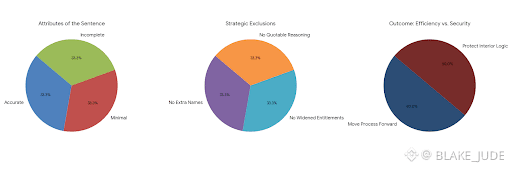
Eventually, the disclosure owner stepped in with a sentence carefully shaped to survive circulation. Accurate, minimal, and deliberately incomplete. No extra names. No widened entitlements. No reasoning that could be quoted later without dragging disclosure into every future conversation. It was enough to move the process forward and not enough to leak the system’s interior logic.
The caller replied with the only question left.
“So we’re just supposed to believe you?”
You didn’t answer right away. Fast answers travel too far, and this system isn’t built on belief. It’s built on scoped visibility, attestations that fail when forwarded, and reasons that remain valid precisely because they don’t circulate freely.
The close-out template was still open.
The “classification / rationale” field was still empty.
Waiting not for better words, but for words you were actually allowed to let escape the slice.
That tension is the point.