
Dusk is often described as slow, quiet, or late to the party. But that framing misses something fundamental. Dusk was never trying to arrive early. It was trying to arrive correct. In systems where real money, real liabilities, and real rules exist, speed without precision is noise. Dusk was designed with the assumption that correctness has a cost, and that cost is worth paying.
Most blockchains are built to reward momentum. Agreement is flexible, deadlines are forgiving, and if something arrives slightly out of bounds, social consensus smooths the edges. Dusk rejects that entire posture. Its consensus does not care how strongly participants agree if that agreement arrives outside the execution window. Attestations are only meaningful in the moment they are expected. Once that moment passes, they are no longer wrong or invalid; they are simply irrelevant. The chain does not complain, halt, or dramatize the failure. It just moves on. Settlement either happens on time, or it does not happen at all. That restraint is intentional. In regulated finance, deadlines are not suggestions, and late consensus does not retroactively become truth.
This strictness flows directly into how transactions work on Dusk. A transaction is not just proof that something changed. It is proof that the change was permitted under defined conditions at that exact moment. The network confirms not only what happened, but why it was allowed to happen. That distinction is invisible in speculative environments, but essential in institutional ones. Financial systems cannot rely on explanations that live off-chain, in PDFs, emails, or internal databases. When the justification for a transfer is external, the ledger becomes forgetful. Dusk embeds justification into execution itself, ensuring that state changes are both valid and accountable.
Privacy on Dusk follows the same disciplined logic. It is not built to hide everything, nor to broadcast everything. It is built to separate visibility from verifiability. Validators can confirm correctness without seeing sensitive information. Institutions can satisfy audits without exposing customer data to the public. This is not privacy as secrecy. It is privacy as scoped access. You see only what you are entitled to see, no more and no less, while the system remains provably correct even when critical details stay hidden. That balance is difficult, expensive, and unglamorous. It is also exactly what compliance-driven environments demand.
Token design makes more sense when viewed through this lens. Dusk’s token is not engineered to create constant excitement or emotional yield. It exists to pay for security, reward correct behavior, and slowly test whether patience is real. Emissions support validators, ecosystem growth, and long-term stewardship, but the core question is not supply or inflation schedules. It is alignment. If rewards exist only because new tokens are printed, staking becomes an inflation tax disguised as yield. If rewards increasingly come from fees generated by real usage, the system begins to support itself. Dusk is built for the second outcome, even if that path is uncomfortable for speculators.
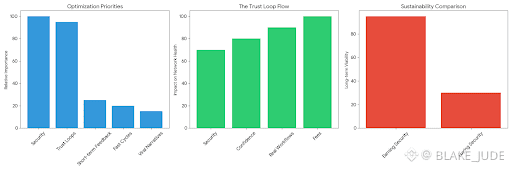
That discomfort is deliberate. Dusk does not optimize for fast cycles, viral narratives, or short-term feedback loops. It optimizes for trust loops. Security creates confidence. Confidence attracts users with real workflows. Those users generate fees. Fees reinforce security. If that loop never closes, no APR can save the network. If it does close, rewards can shrink and the system can still function. That is the difference between buying security and earning it.
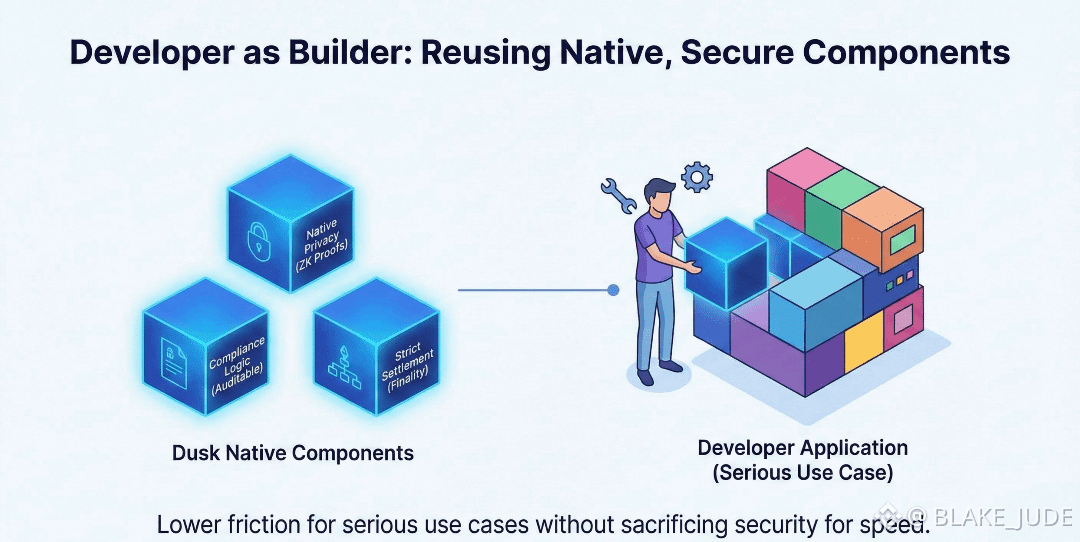
Developers are treated accordingly. Dusk does not court tourists. Its modular design allows builders to reuse native privacy and compliance components instead of reinventing them from scratch. This lowers friction for serious applications while avoiding the usual trade-off between speed and safety. Meaningful activity can emerge slowly, without needing to look impressive on day one. The network does not demand spectacle. It demands correctness.
What ultimately ties everything together is consistency. The refusal to accept late attestations is the same refusal to accept weak assumptions. The strict timing that frustrates operators is the same discipline that protects finality. The privacy model that limits visibility is the same model that enables compliance. And the token design that resists hype forces the project to earn relevance through usage rather than storytelling.
Dusk is not trying to be everywhere. It is trying to be correct where correctness is expensive. That choice makes it quieter, harder to market, and slower to reward impatience. But as regulation tightens and trust becomes something measurable rather than performative, those constraints begin to look less like weaknesses and more like filters.
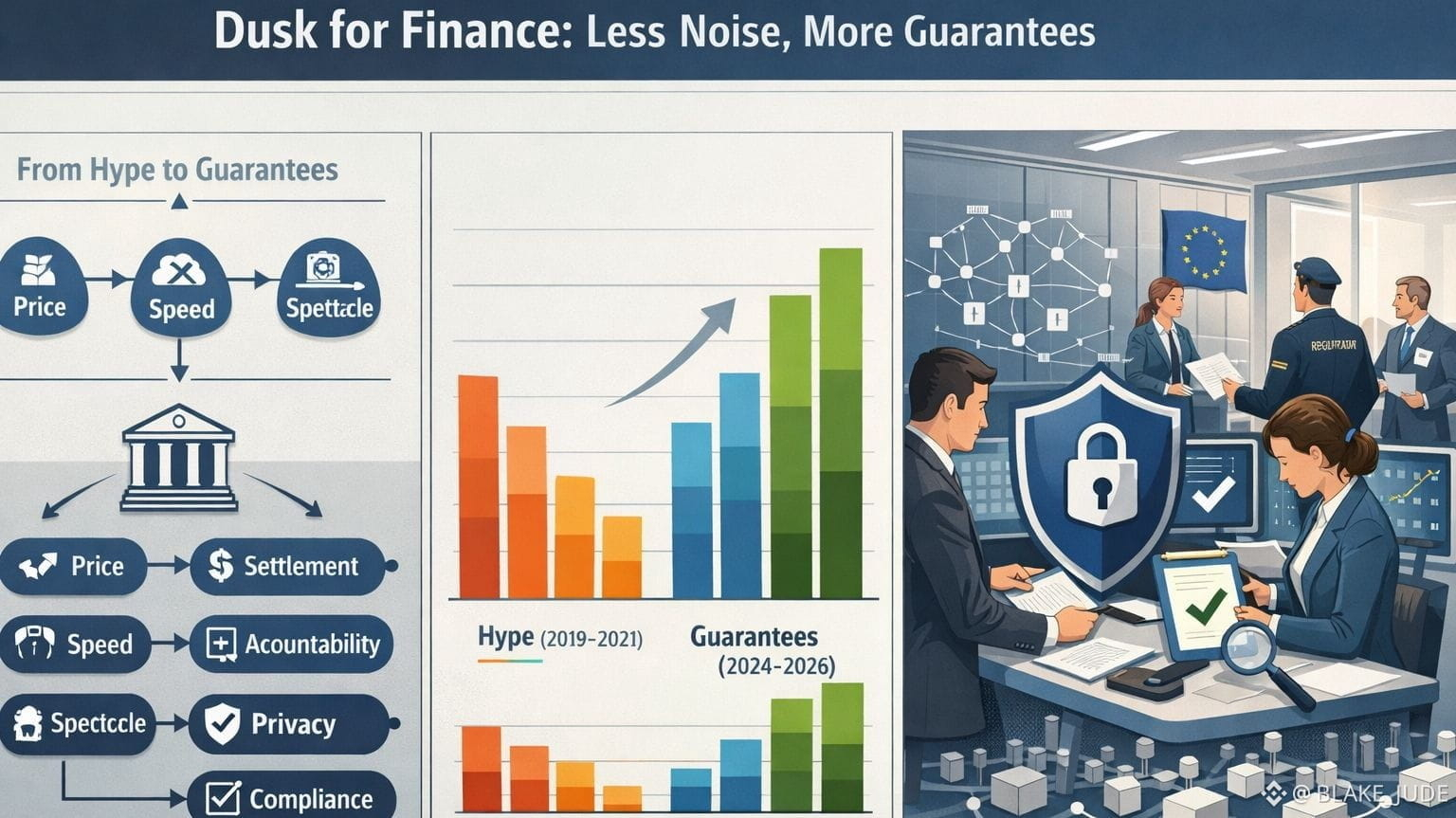
The real question is not whether Dusk moves fast enough or whether its rewards look attractive today. The question is whether a system can say no without hesitation. When agreement arrives late, Dusk says no. When privacy conflicts with compliance, Dusk refuses to sacrifice either. When incentives fade, Dusk asks whether real demand remains. Chains that can answer those questions without flinching do not need to shout. They just keep executing, window by window, while others argue about what should have counted.