
Bitcoin Drops After US Treasury Department Signals No Support
Bitcoin (BTC-USD) fell 2% on Wednesday, trading around $73,000, after Treasury Secretary Scott Bessent indicated that the US government had no plans to intervene to support the cryptocurrency.
During a House Financial Services Committee hearing, Bessent was asked whether the Treasury Department had the authority to purchase bitcoin or other digital assets.
Bessent replied, "I don't have the authority to do that, and as chairman of the Federal Reserve System (FSOC), I don't have that authority either."
The decline was also exacerbated by the general market downturn and a warning from prominent investor Michael Burry, who warned that a prolonged Bitcoin decline could trigger a "death spiral" and lead to significant losses.
Bury, known for his predictions of the 2008 financial crisis, commented on his Substack, "Bitcoin has proven to be a speculative instrument and does not serve as a hedge against currency debasement like gold and other precious metals."
This latest decline adds to ongoing selling pressure on Bitcoin, with the cryptocurrency plummeting 13% over the past week.
Last weekend, Bitcoin experienced a sharp decline, hitting its lowest point since April of the previous year and posting its fourth consecutive month of losses.
This latest decline coincided with President Trump's announcement on Friday that he would nominate Kevin Warsh to replace Jerome Powell as Federal Reserve Chair when Powell's term ends in May—a move widely seen as a signal of tighter monetary policy.
Other cryptocurrencies, including Ether (ETH-USD), also experienced declines.
"Market Sentiment and Technical Analysis"
According to strategists at 10X Research, the next significant support level for Bitcoin is at $73,000, and recent trading activity indicates a significant shift in investor sentiment.
Their analysis of market flows and positioning suggests that investors are not yet ready to "buy the dip."
"Although sentiment and technical signals are approaching extreme levels, the overall downtrend remains intact," the strategists noted. "Without a clear trigger, there is little motivation for buyers to enter."
They added that traders are currently more focused on reducing leverage and closing positions, rather than preparing for a rebound as usual.
The weakness in digital assets reflects broader instability in the crypto sector. Aside from a brief rally last month, Bitcoin has faced continued challenges since October, when large holders engaged in massive selling and forced liquidations hit the market.
Key Support Levels and Outlook
Sean Farrell, head of digital assets at Fundstrat, identified the mid-$70,000s as a crucial support area, noting that $74,000 was the intraday high in March 2024 and the low during the tariff-driven selloff in April 2025.
In his latest note, Farrell wrote, "Given the levels reached over the weekend and the level of capitulation that has occurred, the near-term risk/reward profile has become more attractive."
He suggested that this pullback may warrant a cautious re-entry, but cautioned that the overall trend remains negative, with significant risks in traditional markets that could impact crypto.
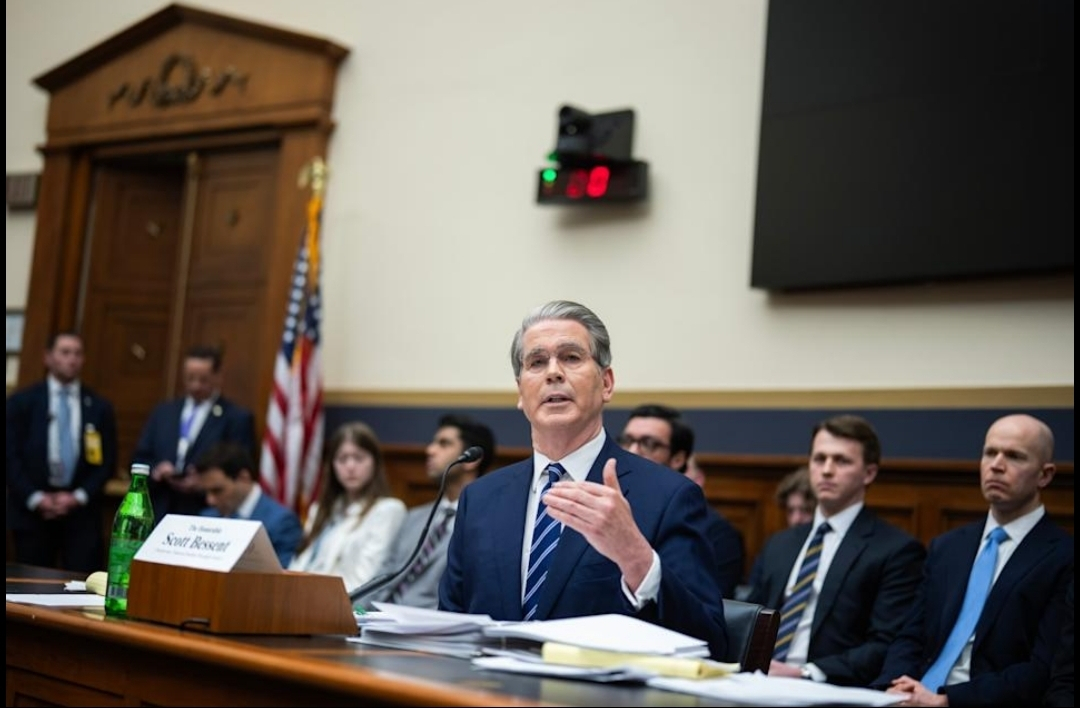
"Treasury Secretary Scott Bessent testifies before the House Financial Services Committee, February 4, 2026" (Photo: Tom Williams via Getty Images)