
 For most of crypto’s history, usage has been shaped by human behavior. People log in, make a decision, execute a transaction, then leave. Activity clusters around moments of attention. Market opens. Incentive launches. News cycles. When attention fades, so does usage. This pattern has repeated across multiple waves, even as blockchains became faster and cheaper.
The question has never really been about capability. Blockchains have been capable for years. The deeper issue has been continuity. What creates activity that does not depend on hype, rewards, or constant re engagement?
AI introduces a structural shift in how demand can form.
Unlike humans, autonomous systems do not participate occasionally. They operate continuously. They monitor, evaluate, adjust, and act as long as their objectives exist. If the environment supports them properly, they generate interaction as a byproduct of function, not motivation. That distinction matters.
This is where Vanar Chain enters the picture.
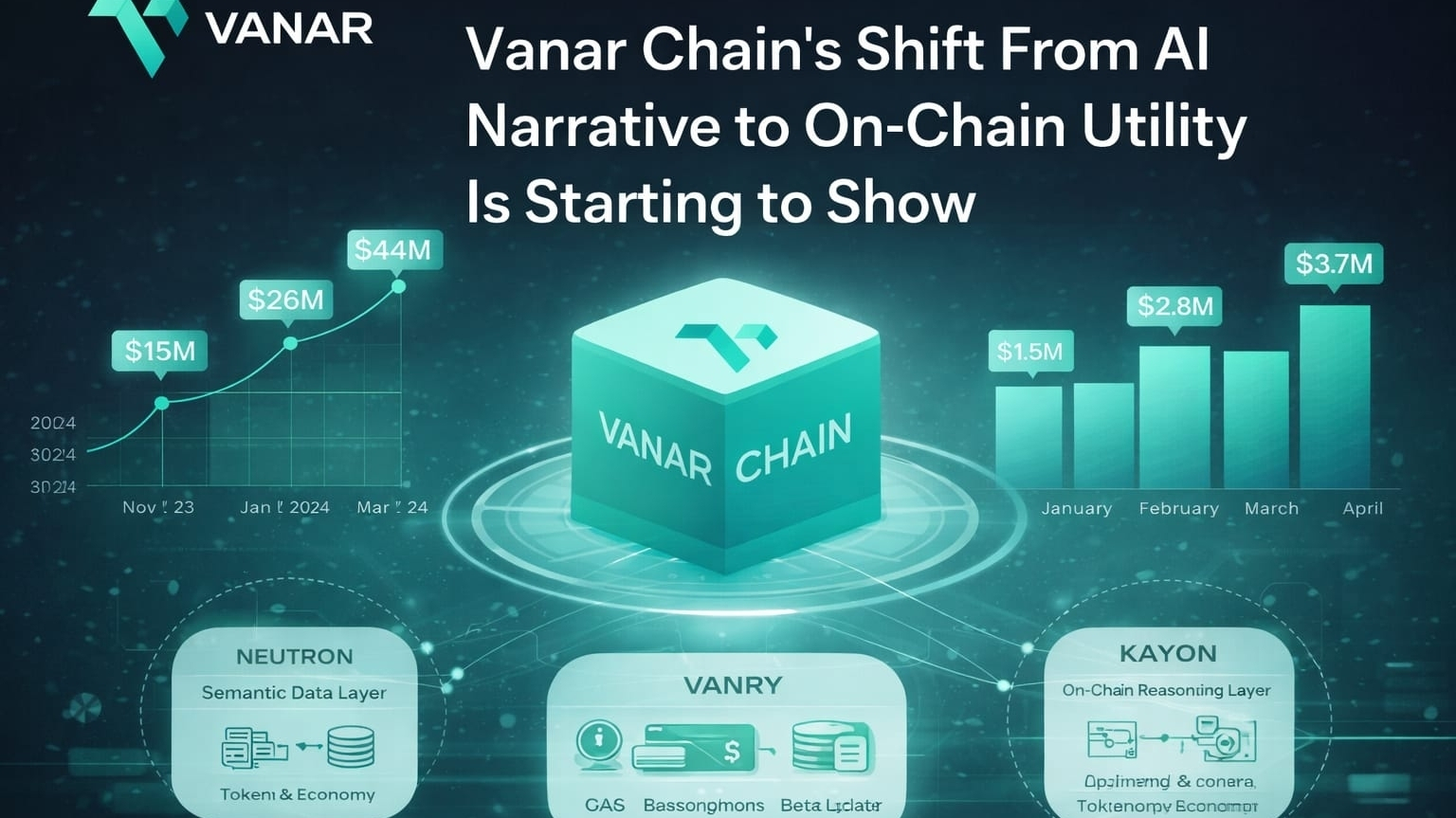
Rather than treating AI as an application layer trend, Vanar approaches it as a primary user class. That framing changes everything. Design decisions stop revolving around short term throughput metrics or visual complexity. They center on persistence, execution reliability, and the ability to maintain context over time. These qualities are not flashy, but they are essential for systems that never stop operating.
When infrastructure aligns with autonomous behavior, usage stops being episodic and becomes habitual.
Continuous systems produce continuous activity. An AI agent managing liquidity does not wait for market excitement. A compliance agent does not pause between cycles. A coordination agent does not stop because incentives ended. These systems act whenever conditions change. The result is a steady stream of small but necessary operations.
Individually, these actions may appear modest. At scale, they redefine demand. Thousands of agents performing routine tasks quickly translate into millions of daily interactions. Importantly, this activity is not speculative churn. It is operational work. That makes it resilient across market conditions.
Infrastructure that supports this pattern becomes embedded rather than sampled.
Another critical factor is memory. Autonomy without memory is shallow. Systems that cannot reference past states, evaluate historical outcomes, or preserve identity across time are limited to reactive behavior. Persistent memory enables learning, strategy, and trust between actors.
When agents can rely on an environment to store and retrieve context, they can operate over long horizons. Strategies evolve. Performance is measured. Relationships form. Economic behavior stabilizes. Vanar’s emphasis on durable data and consistent execution supports this continuity, allowing agents to behave less like scripts and more like participants.
For builders, this changes how applications are designed. Instead of assuming frequent human intervention, developers can create flows that run on their own. Predictable execution reduces edge cases. Modeling costs and performance becomes easier. This clarity is especially important for institutions, where uncertainty compounds rapidly at scale.
Specialization plays a role here. General-purpose networks aim to serve every possible use case, but that breadth can dilute optimization. By focusing on the requirements of autonomous systems, Vanar narrows its mission. That focus helps tools, standards, and communities align around shared assumptions. Over time, this coherence strengthens network effects.
None of this excludes humans. In fact, it often benefits them. When agents handle complexity in the background, user facing experiences become simpler. Automation absorbs friction. Humans interact with outcomes rather than processes.
Perhaps most importantly, reliance creates stickiness. Once agents depend on a network for memory, execution, and coordination, switching becomes costly. Histories must be migrated. Logic must be revalidated. Trust must be rebuilt. This natural friction increases retention and deepens economic density.
This is how platforms emerge rather than spike.
The shift toward AI-driven activity represents a meaningful evolution in blockchain demand. Networks that adapt to this reality are positioning themselves for usage that is steady instead of cyclical, functional instead of promotional.
Vanar’s bet is that when infrastructure is designed for autonomy, demand does not need to be manufactured. It appears quietly, through the everyday work intelligent systems perform.
And demand built that way tends to last.When Software Never Logs Out: How AI Centered Chains Turn Infrastructure Into Habit
Crypto has spent years chasing activity by improving surface-level mechanics. Faster blocks. Lower fees. More expressive execution. Each improvement made networks more capable, yet none solved the underlying problem. Usage still arrived in bursts. People showed up, did something, then disappeared. Demand depended on attention, and attention is fragile.
What is changing now is not the technology alone, but the type of participant using it.
AI systems do not behave like people. They are not motivated by curiosity, rewards, or narrative cycles. They operate because they are designed to operate. If conditions are met, they act. If objectives persist, they continue. This simple difference reshapes what demand looks like.
In that light, Vanar Chain is not trying to attract usage in the traditional sense. It is designing for entities that generate activity as a consequence of function rather than choice.
That distinction matters more than it seems.
Human-driven networks inherit human rhythms. There are quiet hours and busy hours. Bull markets and bear markets. Attention spikes and long periods of dormancy. Infrastructure built around those rhythms must constantly fight entropy. Incentives are added to restart motion. Campaigns are launched to revive engagement.
Autonomous systems do not require that stimulation. They exist to execute logic. They monitor inputs, evaluate conditions, and respond whenever thresholds are crossed. If the network supports them properly, interaction becomes continuous.
This changes how demand forms. Instead of peaks and valleys, activity becomes a baseline. Instead of excitement driven surges, there is repetition. Repetition is underrated in crypto, but it is the foundation of sustainability.
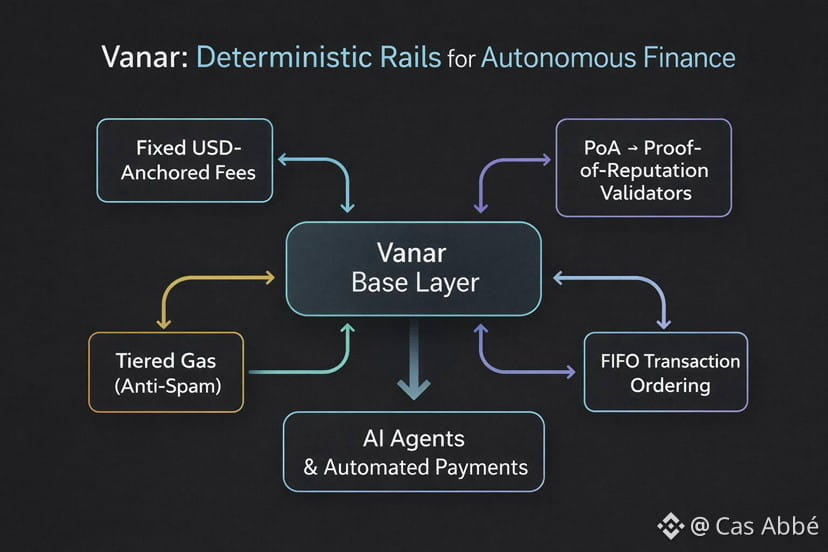
For autonomous systems, execution reliability matters more than headline performance. An agent does not care how impressive a benchmark looks. It cares whether outcomes remain consistent. Small deviations introduce cascading errors. Therefore environments that behave predictably are preferred, even if they are less dramatic.
Vanar’s orientation reflects this priority. It treats the chain not as a stage for one-off transactions, but as an environment where processes unfold over time. Actions are not isolated. They belong to sequences. That framing allows AI systems to operate with less supervision and more confidence.
Memory plays a crucial role here. Without persistent context, autonomy collapses into reaction. Systems that cannot reference their own history cannot refine behavior or assess performance. Durable memory allows agents to learn, adjust, and coordinate with others. Over time, this creates stability that benefits the entire network.
When agents rely on memory and consistent execution, their activity becomes sticky. Leaving the environment is no longer trivial. State must be reconstructed. Context must be rebuilt. Trust must be re-established. This friction is not imposed artificially. It emerges naturally from long-term operation.
Developers building in this environment also benefit. When applications are designed for continuous actors rather than sporadic users, assumptions simplify. Flows can run automatically. Edge cases decrease. Maintenance becomes more predictable. As systems scale, these differences compound.
Specialization strengthens this effect. Instead of trying to serve every possible workload, Vanar aligns itself around the needs of autonomous software. That clarity allows tooling, standards, and expectations to converge. Participants know what kind of environment they are entering. Over time, this shared understanding becomes a competitive moat.
Humans are not removed from the picture. They interact at higher levels of abstraction. Agents handle monitoring, optimization, and coordination beneath the surface. Users experience outcomes rather than mechanics. Complexity is absorbed by software.
 The result is a different kind of network growth. Less dramatic. More durable. Activity that persists because something needs to be done, not because someone was convinced to do it.
This shift may not dominate headlines, but it alters the economics of blockchains fundamentally. When usage is driven by continuous systems, demand stabilizes. Metrics become less volatile. Value accrues through repetition rather than spikes.
Vanar is positioning itself for that world. One where infrastructure is not visited occasionally, but inhabited constantly by software that never logs out.
And demand that never logs out tends to endure.