
1. What Plasma is
@Plasma is a Layer-1 blockchain purpose-built for stablecoins, designed specifically for payments, remittances, and global money movement rather than general-purpose DeFi or NFT ecosystems.
This positioning is important:
Plasma is trying to become payment infrastructure, not another Ethereum competitor in the traditional sense.
That strategic focus is similar to what:
• Tron did with USDT
• Solana attempted with payments
• Stellar tried in remittances
But Plasma is designing everything from the ground up specifically for stablecoins.
2. Core Design Philosophy
Most chains optimize for:
• DeFi
• Smart contracts
• Apps
Plasma optimizes for:
• Stablecoin transfers
• Low friction UX
• Global payment scale
This is a different design philosophy and could become a strong narrative if stablecoin adoption keeps growing.
3. Technology Breakdown
PlasmaBFT Consensus
Plasma uses PlasmaBFT, derived from Fast HotStuff, designed to process thousands of transactions per second with fast settlement.
Implications:
• High throughput
• Quick finality
• Suitable for payments instead of speculation-heavy DeFi
This type of consensus is similar in philosophy to:
• Aptos / Sui design goals
• Modern high-performance chains
EVM Compatibility
Plasma allows Ethereum smart contracts to be deployed without modification.
Why this matters:
• Developers can migrate easily
• Liquidity bridges easier
• Lower developer friction
This is almost mandatory for any new chain in 2026.
Native Bitcoin Bridge
Plasma plans a trust-minimized bridge to bring BTC onto the network.
Strategic significance:
• BTC liquidity is massive
• Stablecoin + BTC rails together = strong payments narrative
This could become a key differentiator if executed well.
4. Stablecoin-Native Features 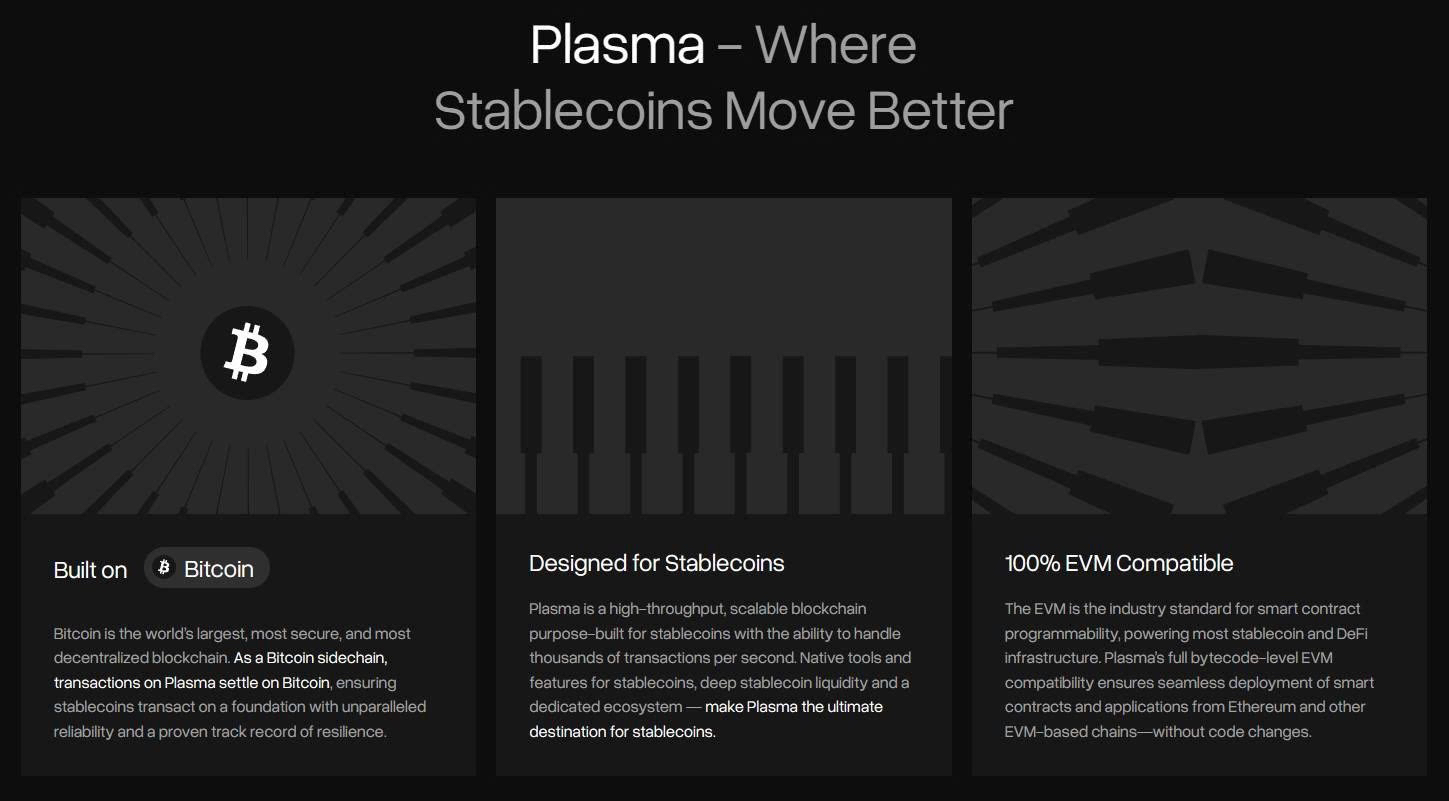
These features are where Plasma tries to stand out.
Zero-fee USDT transfers
Users can send USD₮ without paying fees or holding a gas token.
Mechanism:
Protocol-level paymaster sponsors gas.
This solves a major UX problem:
Normal users don’t understand gas tokens.
Custom Gas Tokens
Fees can be paid in assets like:
• USDT
• BTC
This significantly improves onboarding and adoption.
Confidential Payments
Transactions can hide details while remaining compliant.
If implemented properly, this is powerful:
• Payments need privacy
• But institutions need compliance
Balancing both is difficult but valuable.
5. Performance & Scale Targets
According to the project:
• Thousands of TPS
• Block time under ~12 seconds
For payments, latency matters more than TPS marketing numbers, so finality speed will be the real metric to watch.
6. Market Positioning
Plasma is competing in a very specific niche:
Stablecoin settlement infrastructure
Main competitors conceptually:
• Tron (dominates USDT transfers)
• Solana (cheap payments)
• Stellar (remittance focus)
• Base / L2s (cheap transfers)
Plasma’s differentiation:
• Designed only for stablecoins
• Gas abstraction at protocol level
• Payment-first UX
7. Strengths of the Project
Strong Narrative
Stablecoins are one of the fastest-growing crypto sectors:
• Remittances
• Dollarization markets
• On-chain payments
A chain optimized for this is a logical evolution.
UX Focus
Removing gas friction is extremely powerful:
Most new users fail at:
• Buying gas token
• Understanding wallets
Plasma directly targets this bottleneck.
Infrastructure Timing
Regulated stablecoins and RWAs are trending narratives in 2026.
Plasma fits directly into:
• Fintech rails
• Payment infrastructure
• Digital dollars
8. Risks and Challenges
Network Effects Are Everything
Payments are winner-take-most:
• Tron dominates USDT
• Ethereum dominates liquidity
Breaking network effects is very hard.
Distribution Problem
Technology rarely wins alone.
Adoption requires:
• Exchanges
• Wallet integrations
• Payment processors
Execution matters more than tech here.
Monetization Question
Zero-fee transfers sound great, but long-term:
Who pays?
• Validators
• Infrastructure
Tokenomics will be crucial.
9. The Big Strategic Bet
Plasma is betting on one macro thesis:
Stablecoins will become global payment rails.
If that thesis plays out:
This type of infrastructure could become extremely valuable.
If not:
It risks becoming another underused L1.
10. My Strategic Insight (Important)
This is not a “DeFi chain”.
This is closer to:
• Visa infrastructure layer
• SWIFT alternative rails
• Digital dollar highway
That’s a very different valuation model.
Final Verdict
Plasma is interesting not because of technology alone, but because of positioning.
In 2026, the real battle may not be:
• NFTs
• DeFi
• Gaming
It may be:
Who owns stablecoin settlement.
Plasma is clearly aiming at that battlefield.