
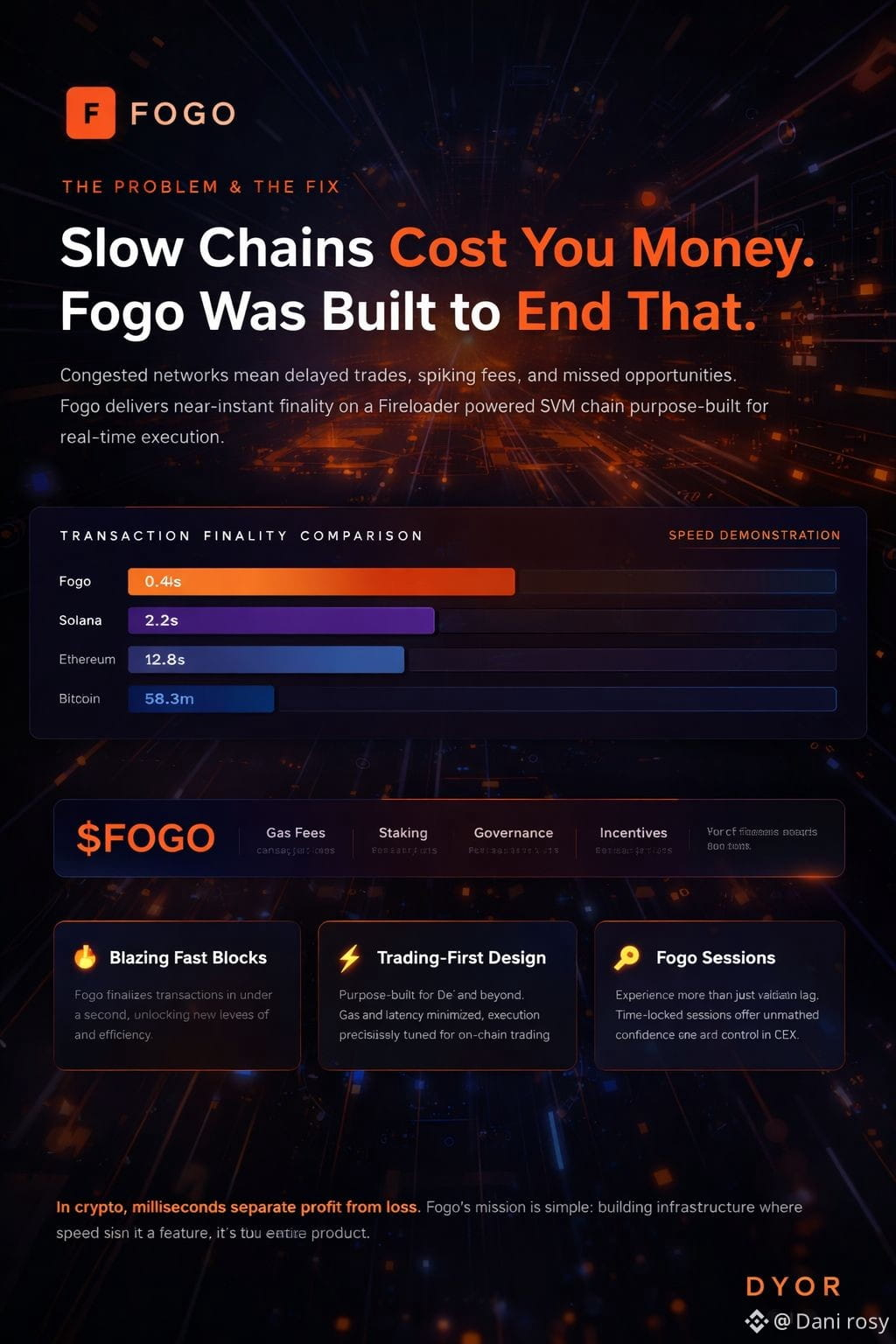
There’s an uncomfortable reality in crypto that most Layer-1 communities don’t like discussing. When a network feels slow, it’s rarely because the engineers failed. More often, it’s because the design quietly assumes distance doesn’t matter. But distance always matters.Physics doesn’t care about branding, roadmaps, or performance claims. Light travels at its own fixed speed. Even inside fiber optic cables, signals move at roughly 200,000 kilometers per second astonishingly fast, yet still limited. A message traveling between Tokyo and New York needs around 60–70 milliseconds just for the round trip. And that’s before validation, execution, or agreement even begins. No optimization can remove that baseline delay.Most Layer-1 discussions focus on throughput numbers, faster compilers, redesigned mempools, and execution upgrades. Those improvements matter, but they don’t address the deeper constraint: machines are located somewhere. Validators aren’t floating abstractions; they are physical computers connected by physical cables across continents.What impressed me about Fogo is that it starts with that physical reality instead of treating it as an afterthought. Instead of asking, “How do we make the code faster?” it asks, “How fast can information actually move between the machines responsible for consensus?”That shift changes everything.Consensus isn’t defined by the fastest participant. It’s bounded by the slowest communication path. Globally scattered validator sets look decentralized on paper, but during peak activity, latency differences become more pronounced. Under stress, performance doesn’t average out it stretches toward the weakest link.Fogo’s Multi-Local Consensus model approaches this differently. Rather than spreading active validators evenly across the globe, it forms geographically optimized clusters where communication latency stays extremely low often just a few milliseconds between nodes. By reducing physical distance inside the consensus loop, the system tightens the feedback cycle.The outcome is practical: block production around 40 milliseconds, maintained even under heavier load. Not a theoretical best-case number, but a structural result of minimizing distance inside the decision process.There is a clear tradeoff here. Concentrating validators geographically introduces debate about decentralization distribution. That concern is valid. However, decentralization that cannot consistently deliver timely finality creates a different kind of risk unpredictability. For users, reliability matters as much as ideological purity.Fogo doesn’t hide from this balance. It sets performance standards across the network and replaces components that fail to meet latency requirements. The goal isn’t centralization; it’s consistency. Financial settlement infrastructure has to prioritize dependable confirmation times.Another strategic advantage is compatibility with the Solana Virtual Machine.Yet it runs independently. If Solana experiences congestion spikes, Fogo’s block production remains steady because it maintains its own state and consensus layer. Shared execution environment does not mean shared bottlenecks.That architectural separation is subtle but powerful.I used to focus heavily on execution speed metrics. Now I pay closer attention to validator geography and what happens to finality under network stress. How far apart are consensus participants? How does latency behave when usage surges? Many projects don’t clearly address those questions.Fogo stands out not because it overcomes physics that’s impossible but because it designs around physics instead of ignoring it. It accepts that the planet is large and builds accordingly.Infrastructure built with real-world constraints in mind tends to endure.That difference in philosophy is what makes Fogo compelling.$FOGO @Fogo Official #fogo