


When I opened Vanar’s Kickstart page, I wasn’t looking for inspiration. I was looking for structure.
What I found wasn’t a grant announcement or a token farming campaign. It was a categorized perks system built around lowering operational friction for early-stage teams.
That’s a different design choice.
Most Layer 1 ecosystems compete through capital distribution: grants, liquidity mining, retroactive rewards, token-based incentives. The result is predictable. Teams deploy something minimal, collect funding, and often migrate once incentives dry up.
Kickstart doesn’t center funding.
It centers operational leverage.
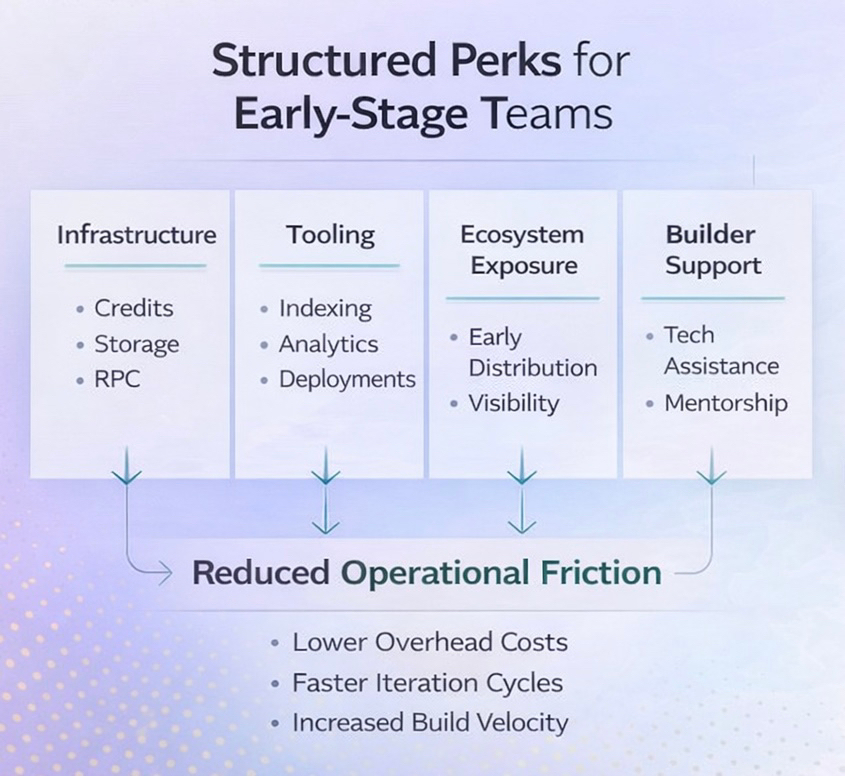
The page outlines structured partner-backed perks across infrastructure, tooling, ecosystem exposure, and builder support. These are not speculative rewards. They directly reduce the real costs of launching on a new chain: infrastructure credits, deployment overhead, technical stack access, distribution pathways.
That changes builder economics.
Launching on a new network is rarely blocked by vision. It’s blocked by overhead. Storage. Indexing. RPC stability. Tool integration. Visibility. Early distribution. Every one of those is a friction point that increases burn rate.
Kickstart lowers burn instead of inflating upside.
That distinction matters.
If a team receives token incentives, the benefit is front-loaded. If a team receives infrastructure leverage, the benefit compounds with usage. The more they build, the more value they extract from the stack.
And that connects directly to Vanar’s architecture.
Projects building through Kickstart interact with Neutron for persistent memory objects, Kayon for structured reasoning, and MCP-enabled query layers for programmable access. That activity isn’t cosmetic. It generates operational cycles inside the network: Seed creation, retrieval calls, reasoning requests, infrastructure execution.
Usage creates load.
Load creates infrastructure demand.
Infrastructure demand ties back to $VANRY through network interaction, not emissions.
This is where Kickstart becomes structural rather than promotional.
Instead of engineering attention spikes, Vanar is engineering retention loops. If early teams depend on operational tooling embedded in the Vanar stack, migration becomes expensive. Dependency increases stickiness.
That is not the same as airdrop retention.
Airdrops create volatility.
Operational dependency creates stability.
There is also a second-order effect that’s easy to miss.
Kickstart partners are categorized rather than randomly listed. That structure encourages interconnection between projects rather than isolation. When early builders share infrastructure layers and distribution channels, micro-ecosystems form faster. Shared tooling reduces fragmentation.
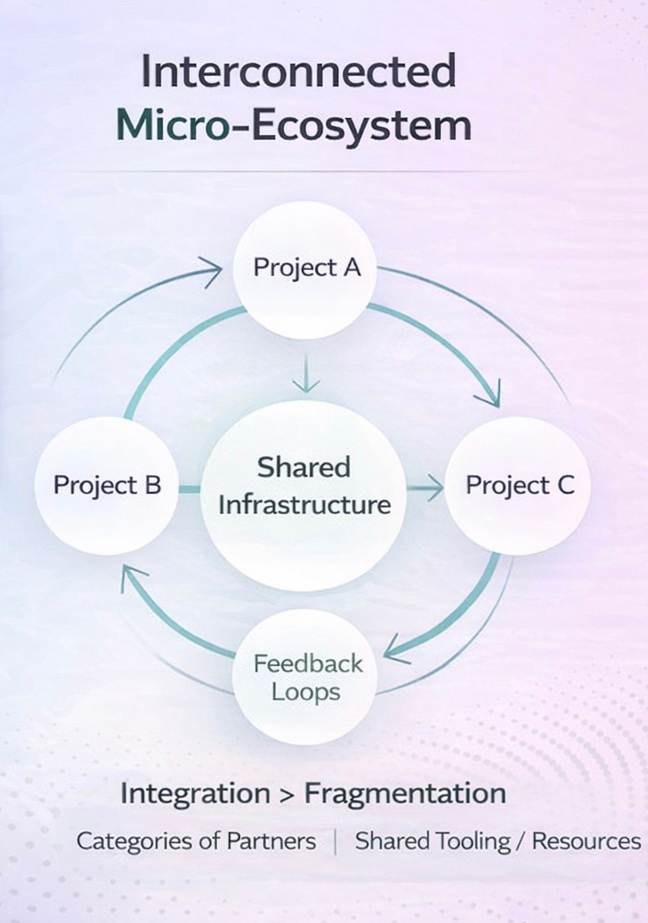
Fragmentation kills new chains.
Integration sustains them.
The timing is also relevant. In the current market phase, capital efficiency matters more than speculative upside. Builders are selective. Liquidity is cautious. Chains promising emissions without infrastructure depth struggle to retain teams beyond the first cycle.
Kickstart acknowledges that.
It does not promise upside.
It reduces downside.
That’s a subtle but powerful positioning shift.
Of course, this model only works if the perks translate into measurable cost reduction. Decorative partner logos do not create retention. Real infrastructure access does. The effectiveness of Kickstart will ultimately depend on whether teams experience tangible operational savings.
But structurally, the direction is coherent with Vanar’s broader architecture.
Vanar is positioning itself as AI-native infrastructure. For that narrative to hold, builders must not only deploy contracts — they must actively use Neutron memory layers, Kayon reasoning cycles, and MCP interfaces. Kickstart creates an entry funnel into that usage.
It is not a marketing funnel.
It is an infrastructure funnel.
Most ecosystems buy attention.
Vanar appears to be subsidizing builder survival.
If early projects entering through Kickstart remain active a year from now — interacting with Neutron, querying through Kayon, generating repeat infrastructure cycles — then the retention mechanism worked.
And in Web3, retention — not launch headlines — determines which ecosystems endure.
The real test isn’t how many teams apply this quarter.
It’s how many are still building on Vanar after incentives elsewhere become louder.
That’s the difference between distribution strategy and infrastructure strategy.
Kickstart is clearly aiming for the second.