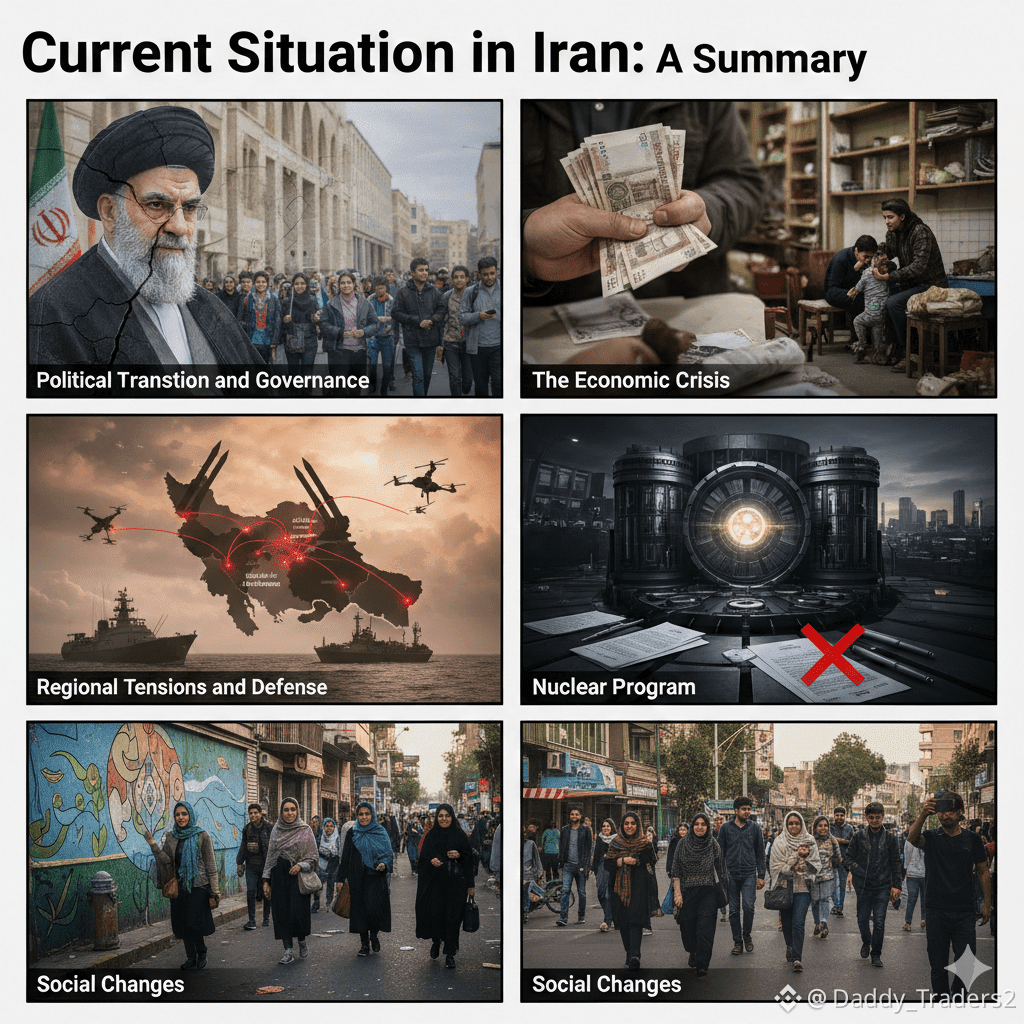
Political Transition and Governance
Iran is currently focused on maintaining internal stability under its leadership. After the shifts in the past couple of years, the government is trying to manage the gap between the strict views of the ruling establishment and the younger generation's desire for more social and political openness.
The Economic Crisis
The biggest challenge for the people of Iran is the economy. High inflation has made basic goods, like food and housing, very expensive. Because of international sanctions, the country struggles to sell its oil easily or participate in global trade, which has led to a continuous drop in the value of their currency (the Rial).
Regional Tensions and Defense
Iran is heavily involved in Middle Eastern geopolitics. There is a high level of tension, particularly with Israel and the United States. Iran continues to support its regional allies (often called the "Axis of Resistance"), which keeps the risk of military conflict a constant concern in the region.
Nuclear Program
The disagreement over Iran’s nuclear program is still not resolved. While there have been occasional talks, no major "deal" has been reached to lift sanctions. This keeps the relationship between Iran and Western countries very strained.
Social Changes
On the streets, especially in big cities like Tehran, there is a quiet but steady change in society. Many people are pushing for more personal freedoms. While there aren't massive protests every day, the "undercurrent" of demand for social reform is still very much alive and remains a challenge for the government to manage.#MarketRebound #Irannews