
When me and my friend did a WAL transaction hit the Walrus Protocol, it wasn’t flashy. Nothing exploded, nothing glitched. Just a ledger entry quietly ticking, almost polite. But there was an edge I hadn’t felt before a small hesitation in the network, a pause that asked a question I didn’t know how to answer.
And that question stuck in over mind, How Data moved, but it wasn’t just data. It carried intent, responsibility, a presence you could almost feel. Privacy-preserving transactions don’t announce themselves. They don’t scream compliance. They whisper through the chains, quietly testing whether everyone involved is paying attention, whether someone will notice if a fragment drifts or a signature is slightly delayed.
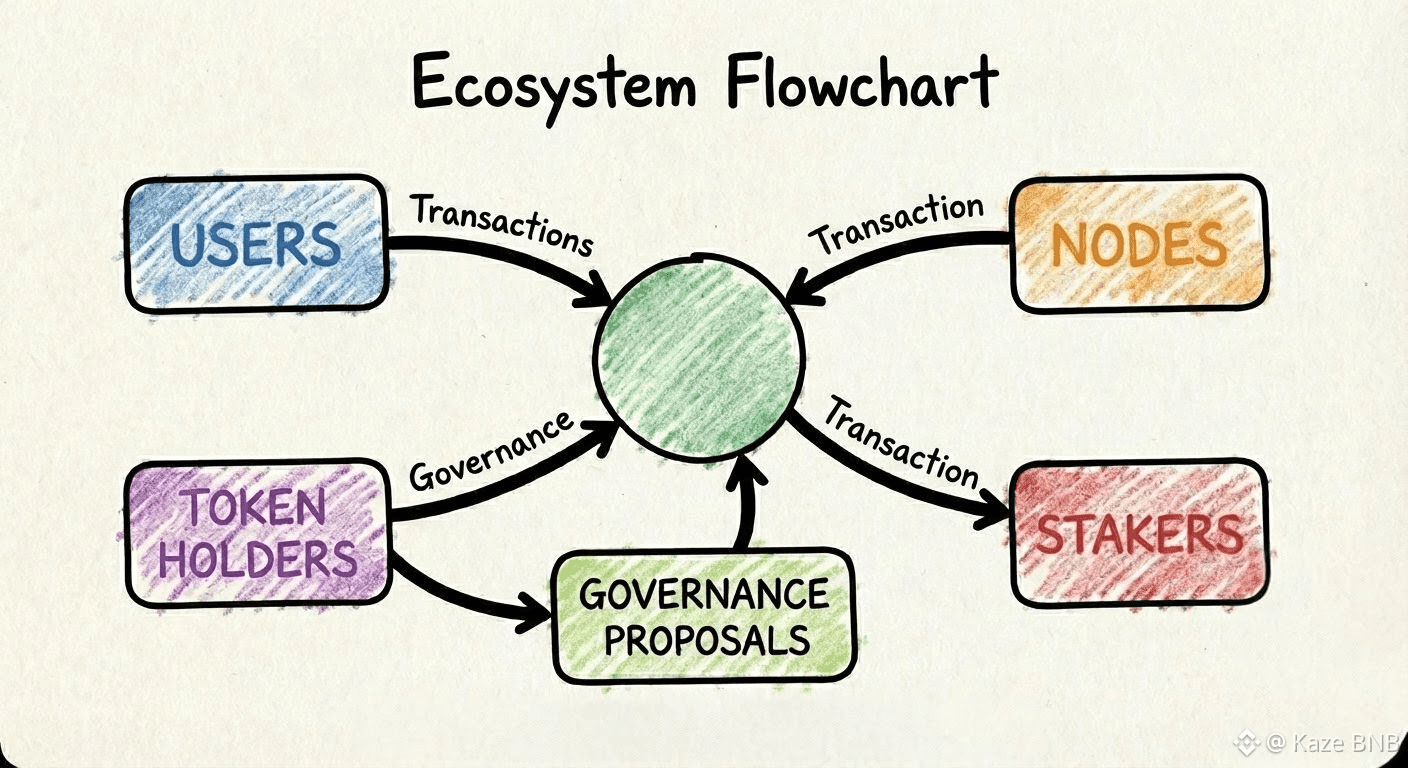
I missed but My friend noticed it during a routine check. A contract tried to trigger a private transfer. The on-chain confirmation came back clean. Technically flawless. Yet something hung in the air, a small latency, barely measurable, but enough to make the system feel alive. It wasn’t an error. It was accountability pressing against time.
“The system always notices,” a colleague said once.
And it does. WAL doesn’t lecture. WAL doesn’t explain. It registers responsibility, and quietly reminds everyone involved that ignoring it has a cost. One delay here, a missed validation there, and the network nudges you. Not loudly, not angrily but undeniably.
Yesterday Night at 3:13 o'clock On that time Walrus (WAL) working but not over mind, we are confused but Nodes across the protocol hum with pressure. Every validator participating in a private transaction carries invisible weight. If one falters, the data doesn’t vanish. But the rhythm changes. Reconstructing privacy isn’t just computation; it’s attention, timing, coordination that you feel more than see. A missed heartbeat somewhere in the network makes the ledger hesitate in the subtlest way.
I was shocked, Brain stop working, and body was shaking because I watched a batch of private transfers under unusual load. Multiple requests stacked, fragments of encrypted data weaving through validators. Nothing broke. Nothing failed. Yet every completion carried the faint signature of stress. The network absorbed it silently, distributing pressure as if to say: you can’t hide from what you asked for.
In your Pov where sits Walrus (WAL) ? In my POV Walrus (WAL) sits at the center of it, invisible but insistent. Not as a reward or a token, but as a persistent presence enforcing rhythm. Stake, governance, transaction costs they aren’t numbers on a sheet. They’re subtle reminders that the system is watching, and waiting, and nudging. Responsibility is not optional.
Sometimes it’s a whisper. Sometimes it’s a quiet heartbeat stretching under load. Validators move pieces, shards, signatures. They don’t announce themselves. They just act. The protocol doesn’t promise perfection. It promises presence, attention, and friction.
I asked a friend, a developer quietly observing the chain, “Do you feel the network when it hesitates?” He laughed softly. “It’s like gravity. You don’t notice it until you try to ignore it.”
And there it was. Every privacy-preserving transaction carried weight, every WAL-mediated action a subtle echo of unseen coordination. Not instructions. Not guarantees. Pressure. Friction. Responsibility you couldn’t delegate.
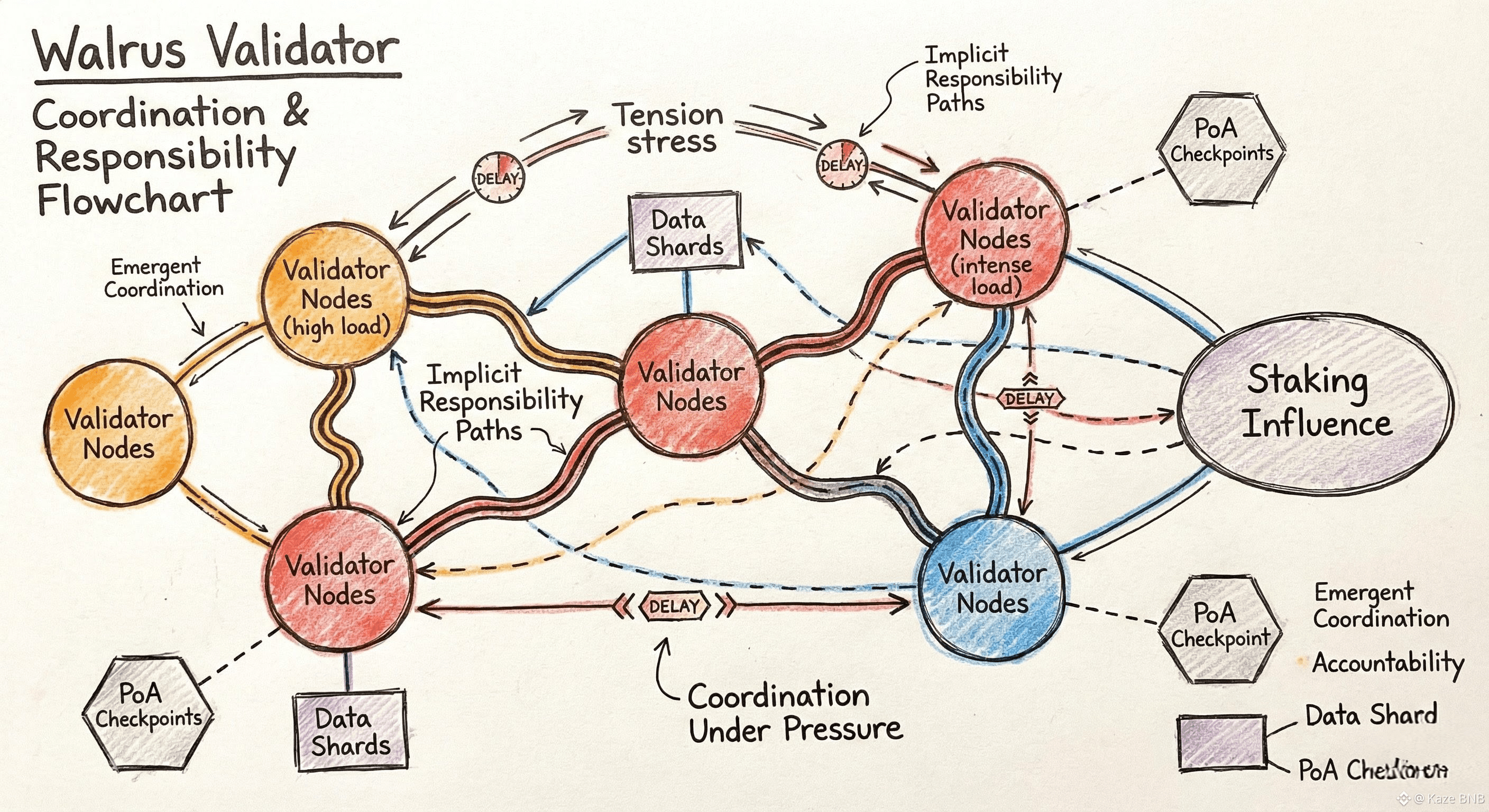
The network doesn’t forgive oversights. It doesn’t apologize for delays. It surfaces them, shows them to you in how long a transaction takes, in how quietly a validator responds, in how perfectly reconstructible yet silently tense the data remains.
A quote lingered in my mind as I watched the next round of transactions settle:
“You don’t own what you can’t verify, and you don’t verify what ignores time.”
And somewhere, in the flow of encrypted messages, staked tokens, and private commitments, the system asked the question again, quietly:
Should everything that moves through Walrus feel this accountable?
No answer came. Not yet.

