

Hello Square Family #MavisEvan — today I want to talk openly, thoughtfully, and honestly about a project that many people are mentioning, but very few are actually understanding. I spent time reading, researching, and mentally stress-testing the Walrus project, and what I found goes far beyond the usual surface-level descriptions. Walrus is not just another crypto narrative. In my view, it is a signal of where blockchain infrastructure is quietly heading.
When I first read about Walrus, I didn’t approach it as “another DeFi token.” I approached it as an infrastructure experiment. We often talk about decentralization, but most of what we use daily still depends on centralized storage. NFTs store metadata off-chain. Games store assets on private servers. Even many DeFi dashboards rely on traditional cloud providers. In my knowledge, this is one of the biggest contradictions in crypto, and Walrus exists specifically to address that contradiction.
As I researched deeper, what stood out to me is that Walrus doesn’t treat data as a byproduct of transactions. They treat data as the core asset. Instead of asking “how do we store data cheaply,” they ask “how do we make data durable, censorship-resistant, and economically aligned with the network?” That mindset already separates them from many older storage networks that focused mainly on replication and slogans.
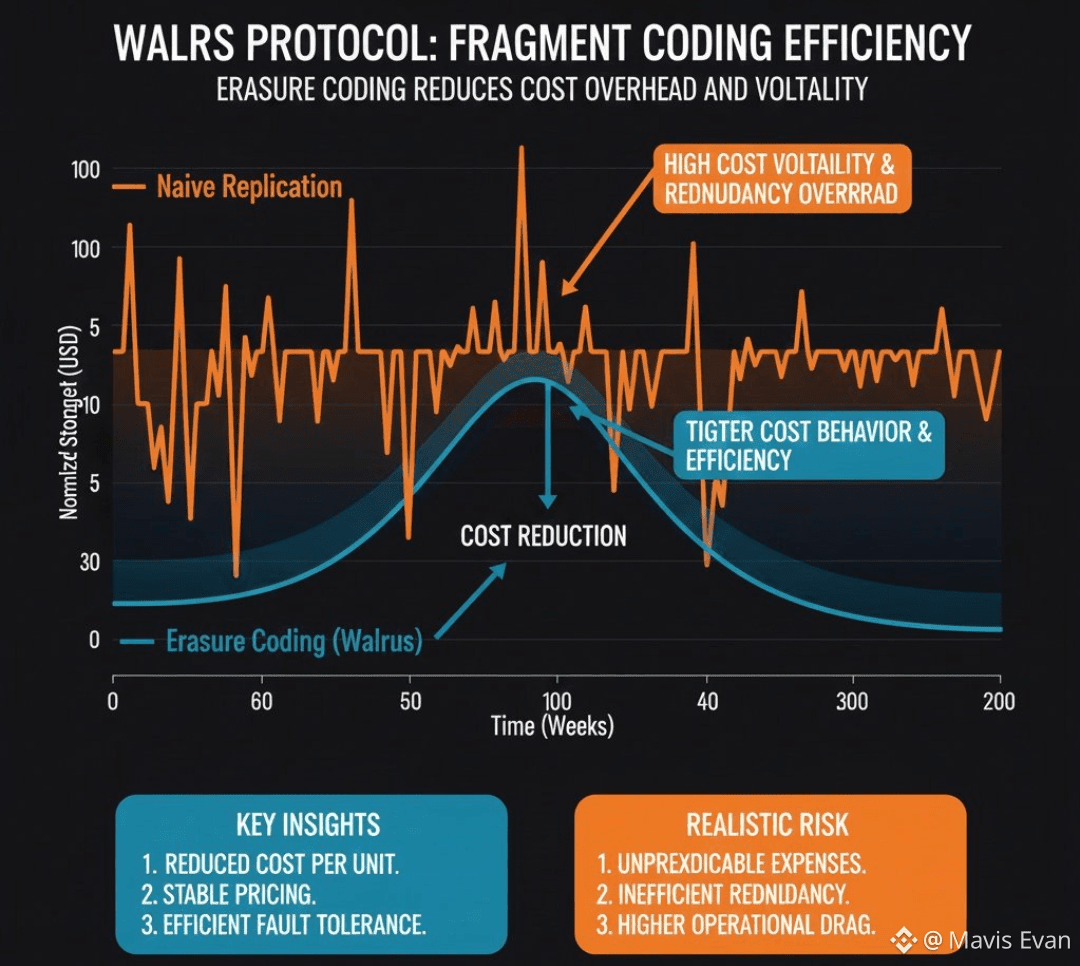
I want to be clear about something we often miss. Storage is not neutral. Whoever controls data availability controls applications, user history, and even governance memory. Walrus understands this, which is why they built around blob storage and erasure coding. In simple terms, data is broken into fragments, spread across many independent storage providers, and can only be reconstructed when enough honest participants are online. I tell you honestly, this is not just technical elegance. It is economic defense.
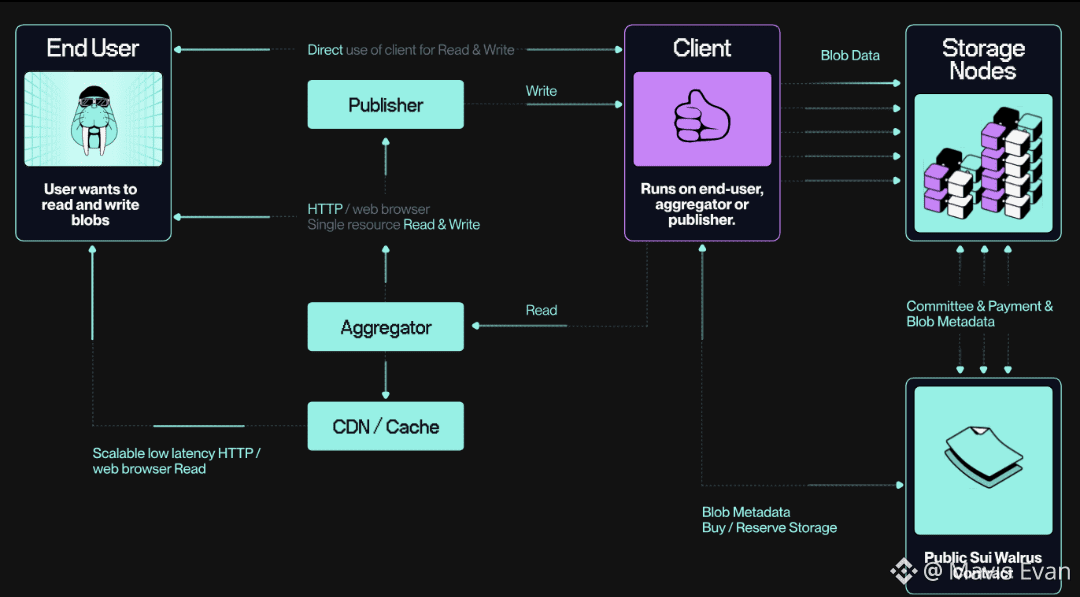
What I also noticed is how deliberately Walrus chose to build on Sui blockchain. This wasn’t about hype or ecosystem rotation. Sui’s object-based model allows Walrus to reference large data objects without forcing them into consensus. In practice, this means Walrus can scale data-heavy use cases without bloating the chain or pricing users out. From my research, this is one of the cleanest on-chain/off-chain integrations I’ve seen.
Now let me talk about privacy, because this is where many people misunderstand Walrus. They assume privacy means secrecy. That’s not what Walrus is doing. They are enabling selective visibility. Data can be encrypted, access-controlled, and still provably available. In my experience reading enterprise blockchain discussions, this is exactly what real institutions want. They don’t want everything public. They want guarantees, auditability, and control. Walrus quietly delivers that without marketing noise.
When we talk about the WAL token, I think it’s important to drop the usual price speculation mindset. WAL is not designed to exist without usage. Storage providers stake it. Users spend it. Bad actors lose it. I tell you straight: this is how tokens should work. The value of WAL is directly tied to whether people trust the network enough to store important data on it. That creates pressure for long-term behavior, not short-term hype.
I also want to highlight something subtle but critical. Walrus is not just competing with decentralized storage networks. They are competing with Amazon S3, Google Cloud, and enterprise data silos. That’s a different battlefield entirely. In my view, the real competitors are not crypto protocols, but centralized clouds whose failure modes we’ve already seen: account freezes, silent data loss, price changes, and jurisdictional risk.
As I continued reading, I realized Walrus fits perfectly into the current crypto cycle. We are moving away from purely financial primitives and toward data-heavy systems: AI models, on-chain games, rollups, appchains, and compliance-driven DeFi. All of these require reliable data availability. Without it, they fail quietly. Walrus positions itself exactly at this pressure point.
Of course, I won’t pretend there are no risks. Token volatility can distort incentives. Governance can be captured. Storage providers could collude. But in my research, what impressed me is that Walrus does not deny these risks. They design around them using staking, slashing, and cryptographic proofs. That honesty tells me the team understands real-world adversarial behavior, not just whitepaper theory.
Let me say this clearly to the Square Family. Walrus is not loud. It is not flashy. It does not promise overnight miracles. But the projects that survive are rarely the loudest ones. They are the ones that quietly become necessary. In my opinion, Walrus is building something that applications will rely on without users even realizing it.
When I step back and connect all the dots, I see Walrus as part of a larger shift. Crypto is growing up. We are moving from narratives to infrastructure, from speculation to durability, from hype to responsibility. Data permanence is not exciting until it disappears. Walrus is betting that the next phase of crypto will reward systems that simply do not break.
So I tell you this not as a promotion, but as a professional observation. If decentralized systems are going to replace centralized ones, they must take data seriously. Walrus takes data seriously. And in my knowledge, that alone makes it a project worth understanding deeply, not just trading.

