

Hello Square Family #MavisEvan
Today I’m sharing what I’ve written and researched about the Walrus Protocol. While reading and digging deeper into this project, I felt it deserves a proper long discussion, not just a quick post. So here, I’ll walk you through Walrus in a calm, professional, and very human way, exactly how I understand it.
First Look: What Walrus Is Really About
When I first came across Walrus, I didn’t see it as just another crypto name. In my knowledge, Walrus is built around a simple but powerful idea: decentralized data storage that actually works at scale. We often read about blockchains being great for value transfer, but data has always been the harder problem. Walrus steps into this gap by focusing on how large data can live on-chain in a reliable and efficient way.
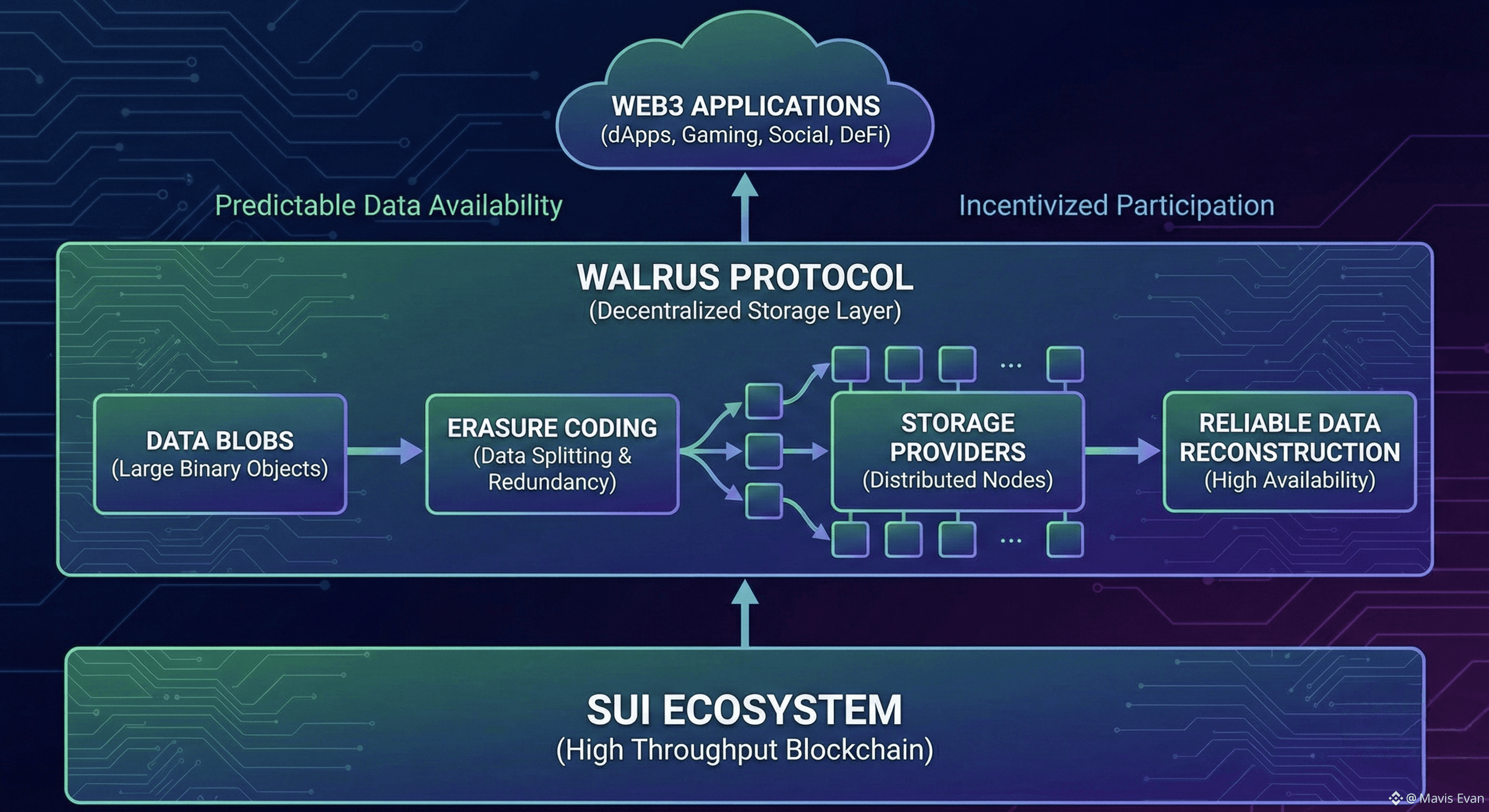
At its core, Walrus is designed to store large binary objects, often called blobs. These blobs can be anything from application data to media files. I like how they are not trying to overload the blockchain with unnecessary logic. Instead, they focus on doing one thing well: making data available, verifiable, and decentralized
The Infrastructure Angle
When we study the infrastructure side, Walrus starts to feel more serious. I researched that Walrus is built within the Sui ecosystem. This matters a lot. Sui is known for its high throughput and object-based model, and Walrus fits naturally into that design.
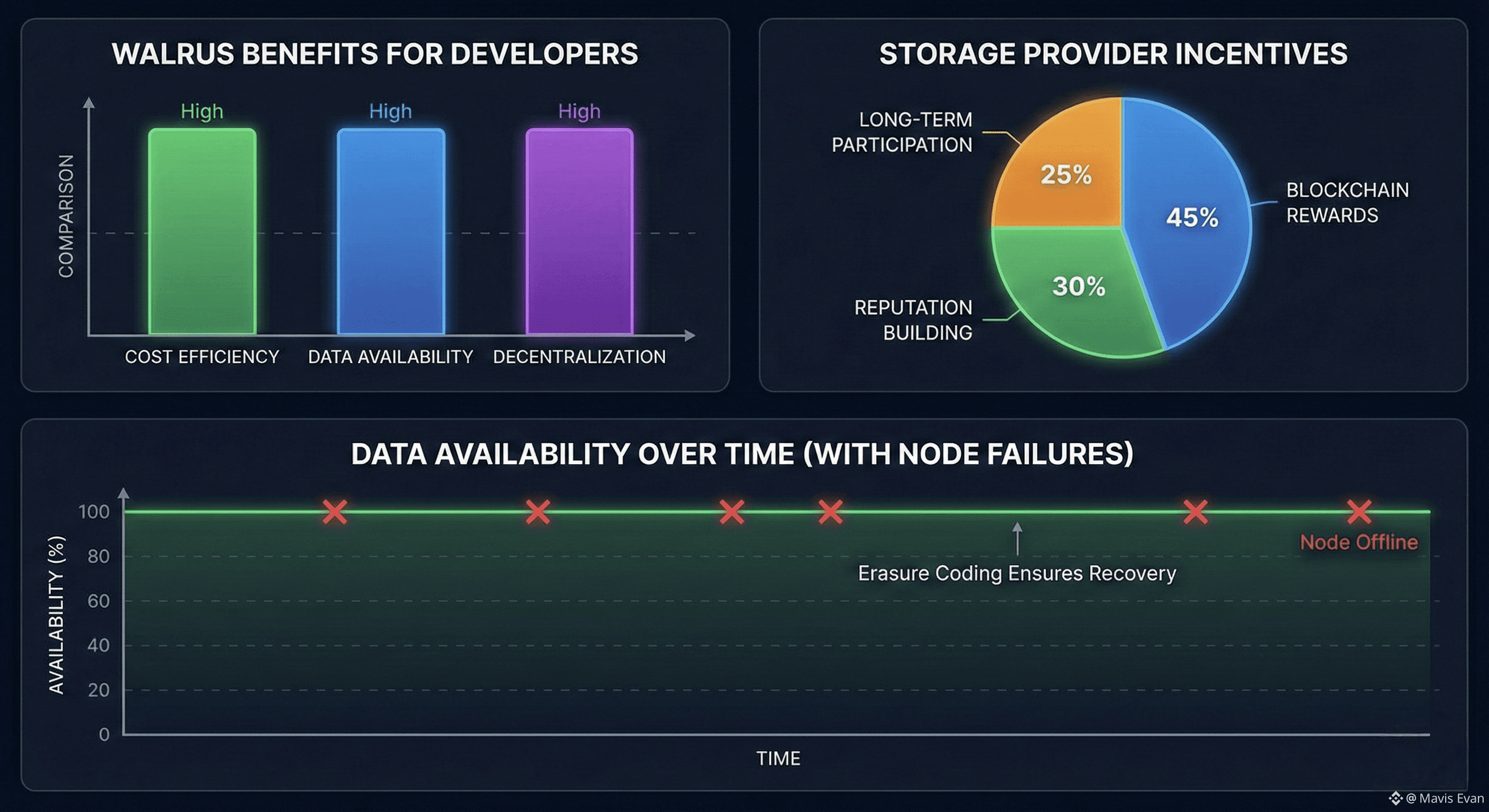
From what I understand, Walrus uses advanced techniques like erasure coding to split data into pieces and distribute it across multiple nodes. We read about decentralization all the time, but here we actually see it applied to data storage in a practical way. Even if some nodes go offline, the data can still be reconstructed. That’s a strong foundation, especially for applications that cannot afford downtime.
Why Developers Care About Walrus
Now let me change the tone a bit and talk like a builder. If I were a developer, Walrus would catch my attention quickly. They are not just offering storage, they are offering predictable data availability. In my research, this is one of the biggest pain points for Web3 applications.
We see many dApps struggle when data becomes too heavy or too expensive to store directly on-chain. Walrus gives them an alternative. Developers can store large datasets without sacrificing decentralization. In my view, this opens doors for more complex applications like gaming, social platforms, and data-heavy DeFi tools.
The Network and the Participants
Another interesting part I noticed is how the network participants are structured. Walrus relies on storage providers who commit resources to keep data available. They are economically incentivized to behave honestly. I tell you honestly, this balance between cryptography and economics is where strong protocols are born.
We often hear promises, but here the design encourages long-term participation. Storage providers are not just passive actors. They are part of a system where reliability directly affects rewards and reputation. That alignment is something I personally respect when analyzing blockchain projects.
How Walrus Fits Into the Bigger Picture
Stepping back, I don’t see Walrus as a standalone idea. In my knowledge, it fits into a much larger Web3 puzzle. As blockchains scale, data becomes the bottleneck. Walrus addresses this without compromising decentralization or security.
We read about rollups, modular blockchains, and data availability layers almost every day. Walrus clearly positions itself in this conversation. It doesn’t try to replace blockchains. Instead, it supports them by handling data in a smarter, more scalable way.
My Closing Thoughts
After researching Walrus properly, I can say this project feels thoughtfully engineered. I’m not saying it’s perfect or finished, but the direction is clear. Walrus focuses on real infrastructure needs, not surface-level hype.
In my view, if Web3 is serious about mass adoption, protocols like Walrus will quietly do the heavy lifting behind the scenes. I wanted to share this long article so we can all look at Walrus with a deeper lens, not just as a name, but as a meaningful piece of blockchain infrastructure.
That’s what I wanted to tell you today, Square Family.

