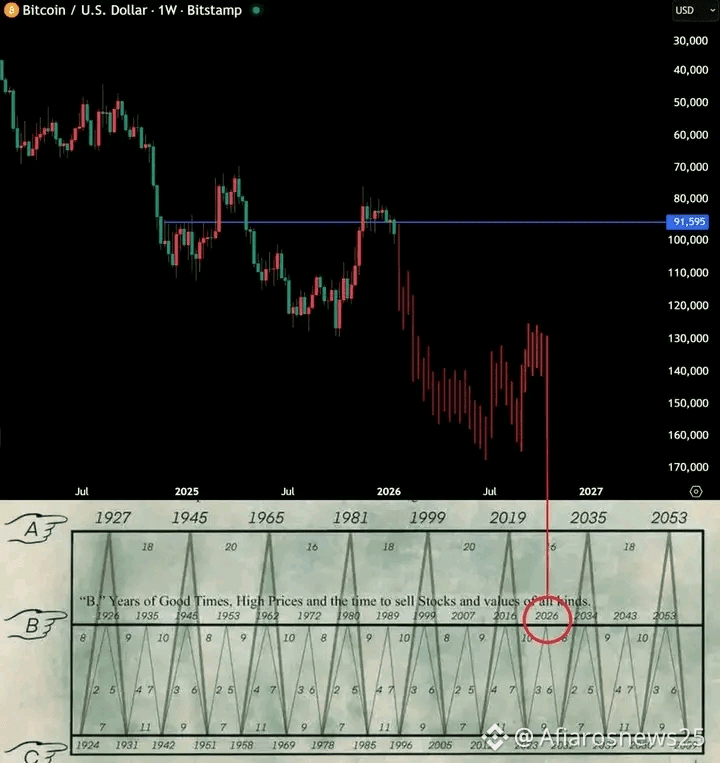
🚨 WHY BITCOIN IS A MACRO BET — NOT A TRADE
This decision has nothing to do with indicators, patterns, or hype cycles.
I didn’t go all-in on Bitcoin because of technical analysis.
I didn’t do it because of the halving.
And I definitely didn’t do it because of headlines.
I did it because of liquidity mechanics.
Over the next 12 months, an estimated $4.7 TRILLION is expected to flow into the U.S. financial system.
Not in one shot — but in structured phases.
Here’s the breakdown that matters:
• Around $1.2 trillion in tax refunds flowing directly into consumer accounts
• Roughly $2.1 trillion in corporate cash repatriation
• Nearly $1.4 trillion unlocked via bonus depreciation incentives
That’s close to 20% of U.S. GDP entering markets within a relatively short time window.
This isn’t opinion.
This is balance-sheet reality.
Markets don’t move based on narratives.
They move based on where capital is forced to go.
When corporations receive excess liquidity, history shows the same playbook every cycle:
• Stock buybacks
• Dividend distributions
• M&A activity
• Accelerated capital expenditure
That’s why asset prices often rise even when economic data looks weak.
Liquidity flows first.
Prices adjust second.
Retail reacts last.
Now zoom out.
Liquidity typically hits equities before it reaches alternative assets.
Risk appetite expands.
Then capital looks for asymmetric exposure.
That’s where Bitcoin enters the picture.
Bitcoin doesn’t respond to growth stories.
It responds to monetary expansion, currency debasement, and excess liquidity.
This isn’t about fixing structural problems.
It’s about pushing money through the system fast enough to sustain confidence.
Yes — this phase is bullish first.
But it carries a long-term cost.
If asset prices rise faster than wages, purchasing power erodes quietly.
Cash becomes the weakest position.
Hard assets reprice aggressively.
That’s why positioning matters before the narrative becomes obvious.
This isn’t a trade.