
Walrus is flipping the script on Web3 governance. Tired of projects that claim to be decentralized, but then hide behind closed doors or inflexible rules? Walrus changes that. It’s not just another storage protocol—it’s a living system, designed to grow and adapt with its community. Built chain-agnostic on Sui, Walrus puts real power in the hands of node operators, stakers, and developers. Everyone gets a say, thanks to proportional voting and rewards tied directly to performance. The result? A network that’s tough, fair, and ready for anything: AI agents, tokenized markets, you name it.
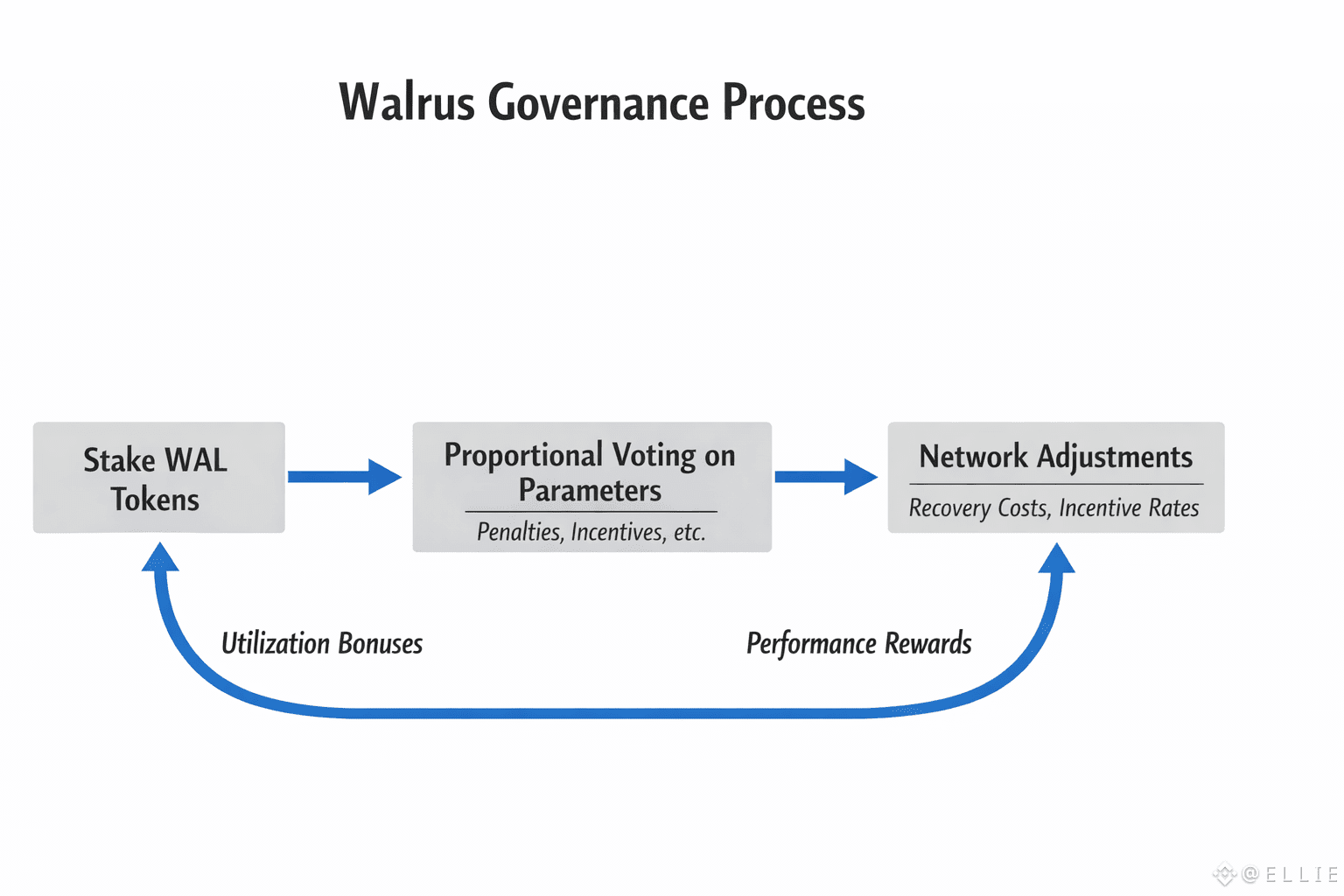
Here’s how it works. Walrus’s governance is all about skin in the game. Storage nodes have to stake WAL tokens to join committees, and their voting power goes up as they contribute more—so folks who keep their nodes running smoothly or invest in more storage get more influence. Uptime bonuses, capacity rewards—real incentives for real effort. No top-down edicts here. Key parameters like penalties or incentive rates get adjusted by the community through on-chain votes, so storage prices stay sharp and security stays tight. And this isn’t just theory—Walrus launched its mainnet on March 27, 2025, and since then it’s rolled out features like blob burning, where users can reclaim fees from unused data with just a CLI command. That means less waste and more efficiency, right out of the box.
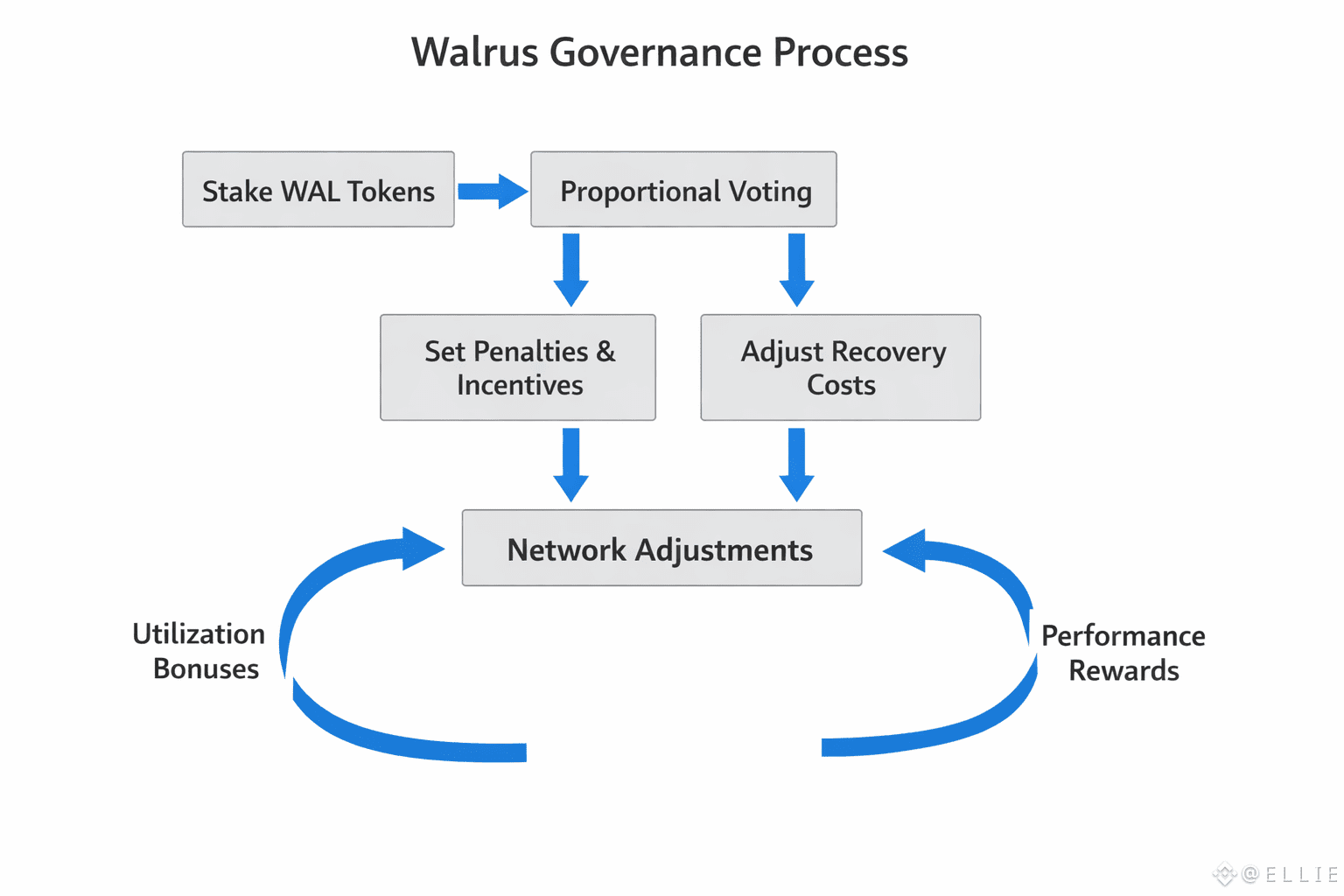
Fairness is baked in, especially when things go wrong. If a node messes up—like not storing data properly—there’s a penalty, but Walrus makes sure no one loses everything. Even if you get slashed, you can still redeem a chunk of your stake (think 5%), so people stay accountable without getting scared off. Assets always stay under the user’s control, too. And with asynchronous challenge protocols running on Red Stuff encoding, anyone can check up on the network, flag fraud, and generate proofs—no need to sync up or wait around. For builders, this means you can trust your data will be written and read correctly, with cryptographic commitments keeping things on track, even if someone tries to game the system.
Developers aren’t just along for the ride—they’re steering, thanks to the Walrus RFP program. Got an idea for a new tool or integration? Propose it. That’s how Walrus is filling gaps, bringing in partners like Itheum for data tokenization or Talus for AI agent support. You can see the results—like hackathon champs now showing off DeepSurge badges, proof that real builders are getting real recognition. Onboarding is a breeze, too. CLI tools let you batch upload, pool blob funding for group projects, and manage archives with no single points of failure. Privacy? Covered. Seal lets you encrypt data and stay compliant with regulations, which is huge for enterprises or anyone dealing with sensitive files or real-world assets.
Rewards aren’t just a gimmick—they’re designed for the long haul. They flex with network congestion, keeping things steady instead of rewarding risky spikes. WAL tokens get burned as people upload and pay, shrinking supply as usage grows. So, as more data markets spin up, the economics tighten, drawing in new nodes for lower latency and more resilience. The network handles epoch transitions by overlapping writes and recoveries, so there’s no downtime—unlike old-school systems that choke under pressure. And for Layer 2s, Walrus makes sure blob data is always available, helping rollups scale without clogging up the chain.
At its core, Walrus is more than just storage—it’s a real, evolving ecosystem. Trade-offs like pre-funded contracts aren’t swept under the rug; they’re tackled head-on and improved over time. Walrus is closing the gap between the dream of decentralization and the reality of actually making it work. Your data isn’t just stored here—it’s sovereign and able to evolve with whatever the future brings. If you’re building for Web3, this is the kind of governance that works for you, not against you.

