
Imagine a protocol that isn’t just surviving the chaos of Web3—it’s outpacing everyone. Walrus has already landed in over 120 projects, powering everything from AI giants to NFT marketplaces and media platforms. This Sui-based developer platform isn’t just another tool; it’s the foundation for an entire wave of innovation. Walrus turns decentralized storage into something programmable, something you can actually build real applications on. No more one-off experiments—this is where developers gather to create data layers you can trust, running everything from on-chain AI bots to platforms that can’t be censored, all while keeping things smooth and affordable.
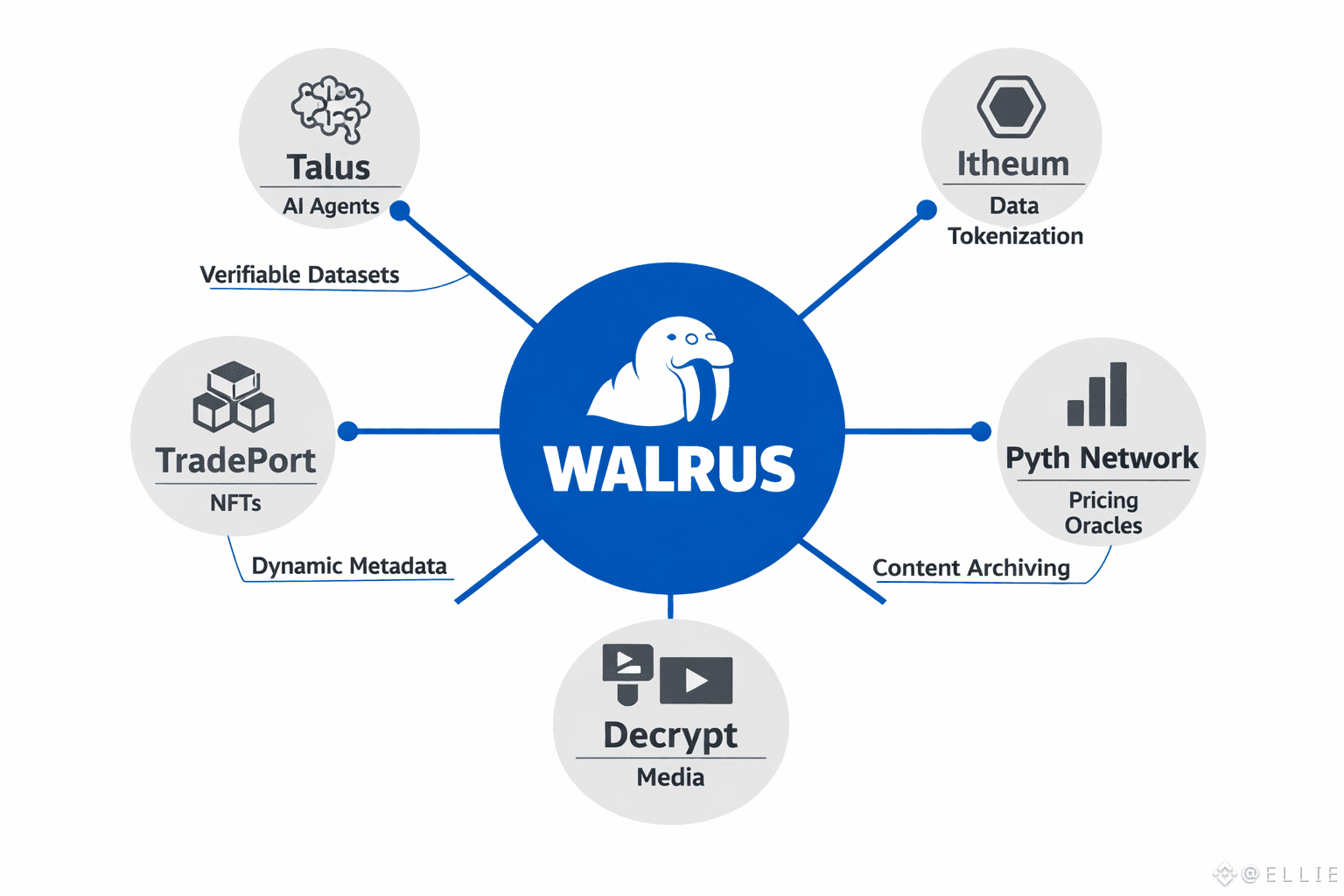
Why does the Walrus ecosystem work so well? It’s chain-agnostic and built on Sui. The team launched on mainnet on March 27, 2025, and came in strong with $140 million from big names like Standard Crypto, a16z crypto, and Franklin Templeton. That funding is fueling their plan to connect with over 100 different blockchains, making Walrus a real interoperability powerhouse. At its core, Walrus moves massive data—4K videos, AI datasets, 3D game files—using Red Stuff erasure coding. It chops data into pieces, backs it up 4.5 times, and keeps everything running even if parts go missing, all with just 5x overhead. It’s efficient, and that’s why so many different projects use it. TradePort’s NFT marketplace relies on Walrus for upgradable metadata, so NFTs can evolve without any central server. Decrypt, a Web3 media leader, keeps articles and videos archived through Walrus for unbreakable access. Even Pudgy Penguins migrated their content to Walrus via Tusky, locking it in for good.
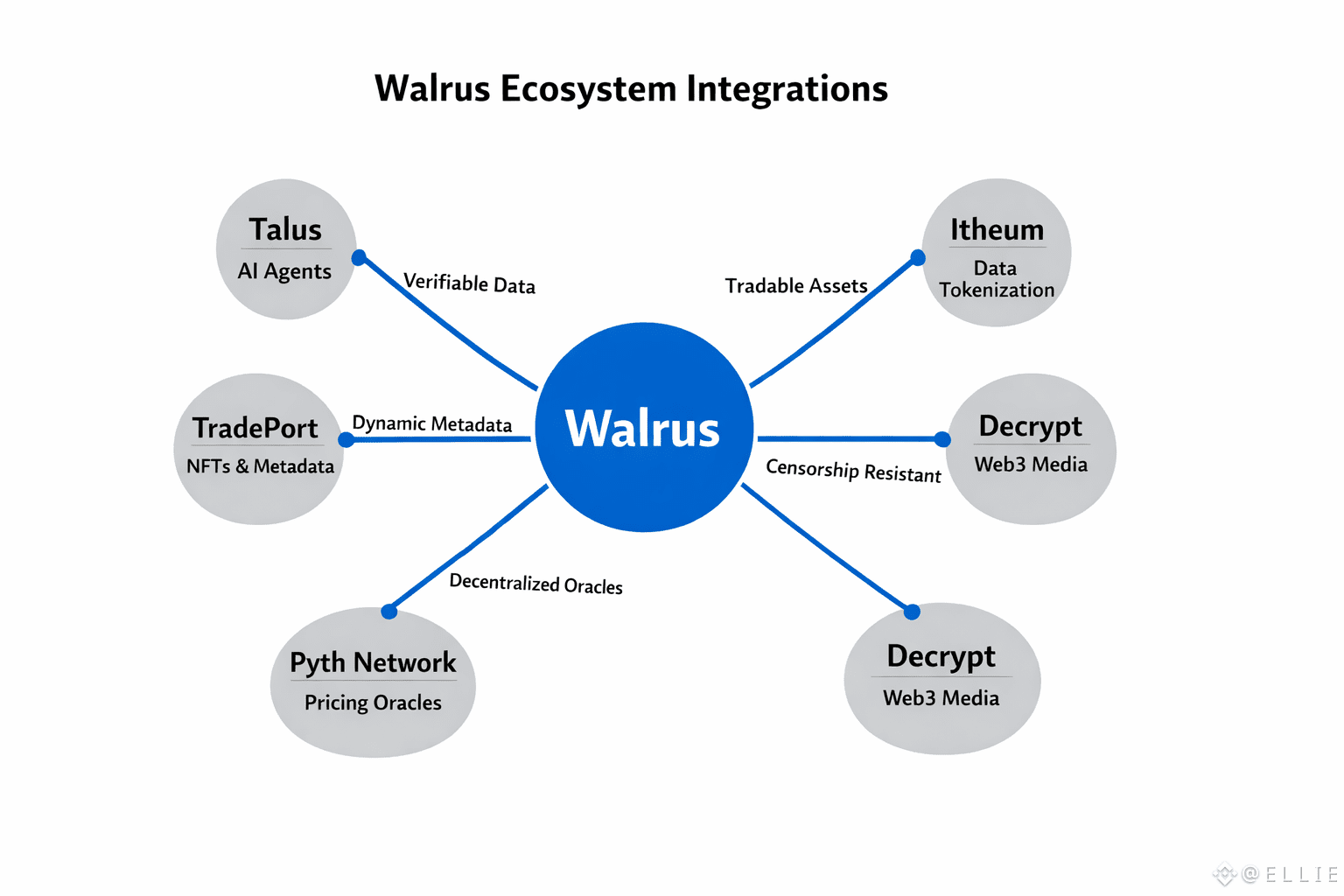
Walrus doesn’t just sit back and wait for builders—it invites them in. Their RFP program is more than a suggestion box; it’s an accelerator for the whole ecosystem. Look at the Haulout Hackathon—teams like Hyvve curated AI datasets, OpenGraph stored model weights, and SuiSQL built a full SQL engine on top of Walrus. These aren’t just demos; they’re live, with winning teams getting recognized on January 19, 2026, and unlocking perks to keep building. Talus uses Walrus as memory for AI agents, letting them store, retrieve, and process data right on-chain, fueling new autonomous economies. Through a partnership with Itheum, data stored as blobs can be tokenized and traded. Pyth Network brings in decentralized pricing, making sure storage is fairly priced across all chains.
What’s driving all this? Walrus gives developers what they actually need. There are TypeScript SDKs and Upload Relays, upgraded on July 30, 2025, that handle big uploads without crashing your front end. Each upload emits BlobCertified events—so you can check status on-chain in minutes. Batch uploads bundle files to save on transactions, shared blobs let communities pitch in for collective storage, and blob burning refunds leftover fees. Security’s locked down—audits confirm no shady metadata changes, unauthorized mints, or code upgrade issues, and everything’s open for anyone to verify. That’s how they attract everyone from AI startups (like Talus, managing private data) to game studios (storing persistent 3D assets) to DeFi projects (verifying transactions without scams).
The ecosystem isn’t limited to protocols—it stretches into wal.app, where decentralized sites like Flatland (for interactive experiences) or Snowreads (for reading) actually run at Web2 costs, but with Web3 resilience. You can move these sites around as Sui objects, even use them without a wallet. Bluefin’s liquidity programs and Scallop’s bigger pools (now up to 18 million WAL) help more people join in, while Pyth’s oracles make pricing dynamic. Out of a 5 billion WAL max supply, about 1.6 billion are circulating, and this utility token keeps everything running. Prepaid leases keep costs steady, burning WAL shrinks supply as activity heats up, and staking locks in node uptime.
Walrus’s ecosystem isn’t just a marketing line—it’s a real magnet for builders. More than 120 projects already prove how flexible it is, from AI to NFTs to media and beyond. Developers get programmable, composable data, trustless verifiable events, and tools that actually help them build faster. In a Web3 world hungry for data, Walrus is where everything connects—and where creators finally get to build without limits.


