
Web3 keeps running into data breaches, privacy scandals, and a lot of skepticism—67% of organizations don’t even trust their own data. But Walrus, with its Seal layer, is changing that. It’s not just another privacy promise. Walrus is actually locking down sensitive info—encrypted game states, tokenized AI datasets, ad impressions you can’t just snoop through. This isn’t hype; it’s working now, powering real apps with access controls that keep out lurkers and let builders get creative on Sui’s network.
Seal isn’t tacked on after the fact. It’s built right into Walrus, stacking programmable encryption on top of decentralized blob storage. Everything gets encrypted right on your device before upload, then access runs through on-chain rules—ownership checks, time-based unlocks, even AI agent approvals. So, developers can tick all the GDPR and HIPAA boxes without dumping everything into some risky centralized database. Plus, data stays unchangeable and recoverable thanks to Red Stuff’s 2D erasure coding—it slices files into pieces, scatters them across different nodes, and uses 4.5x replication to self-heal, all while keeping storage costs reasonable. And this isn’t theory: since Seal’s mainnet launch three months back, it’s handled about 70,000 decryption requests, holding up in real-world environments where privacy isn’t optional.
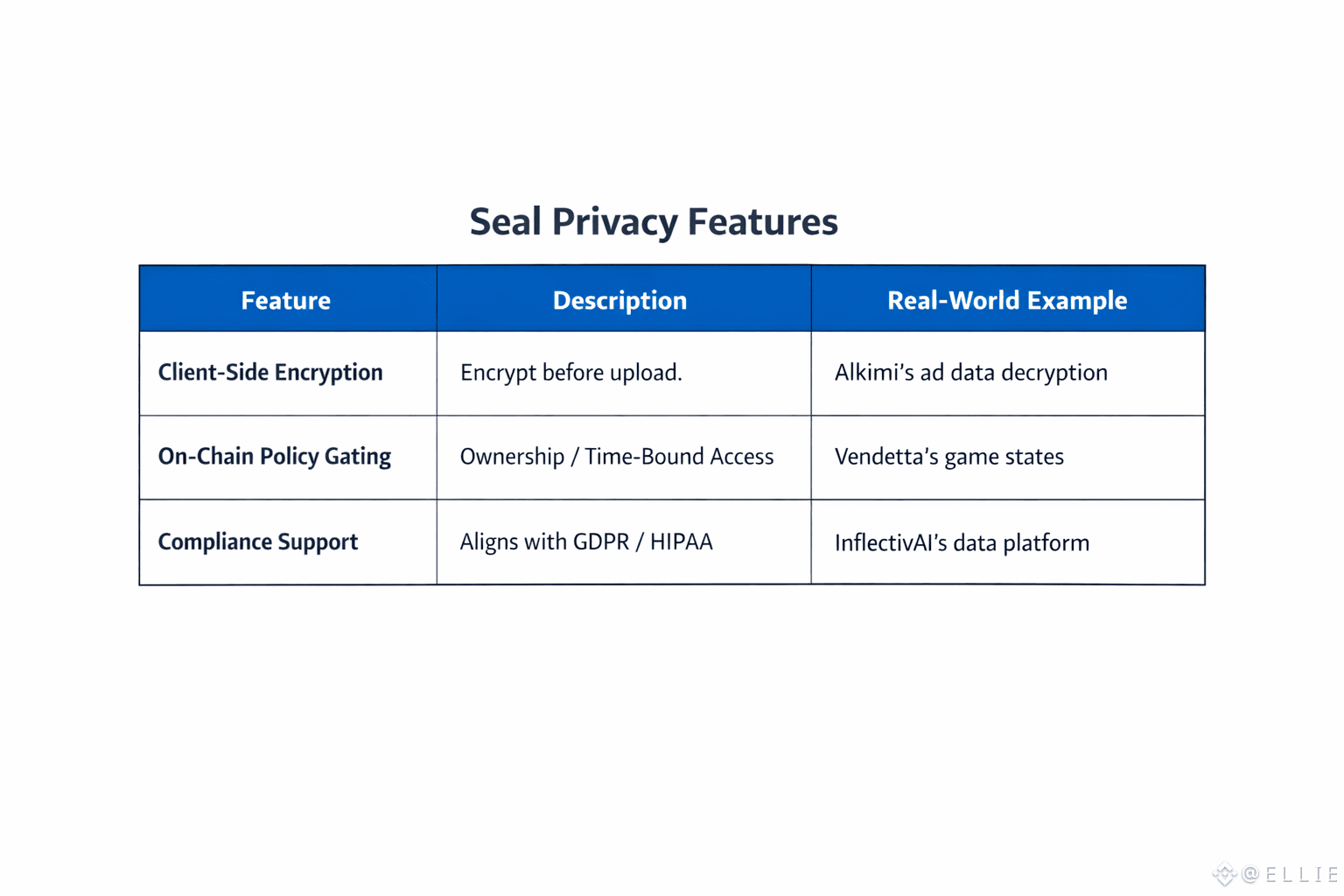
Look at The Vendetta Game—a strategy battler that’s fully on-chain. Game states get encrypted, stored, and verified through Walrus and Seal. Players actually own their progress. No cheating. No leaks. Just honest, trustless PvP that scales without giving away anyone’s playbook. Or check out inflectivAI’s tokenized data platform. It gates high-quality datasets with ownership rules, so contributors keep control, while AI agents can train on clean data. Tensorblock’s doing secure AI infrastructure too, encrypting everything from models to memory to logic—only verified users or agents get access, which means true private AI operations. This isn’t vaporware. These are live projects turning privacy into their secret weapon.
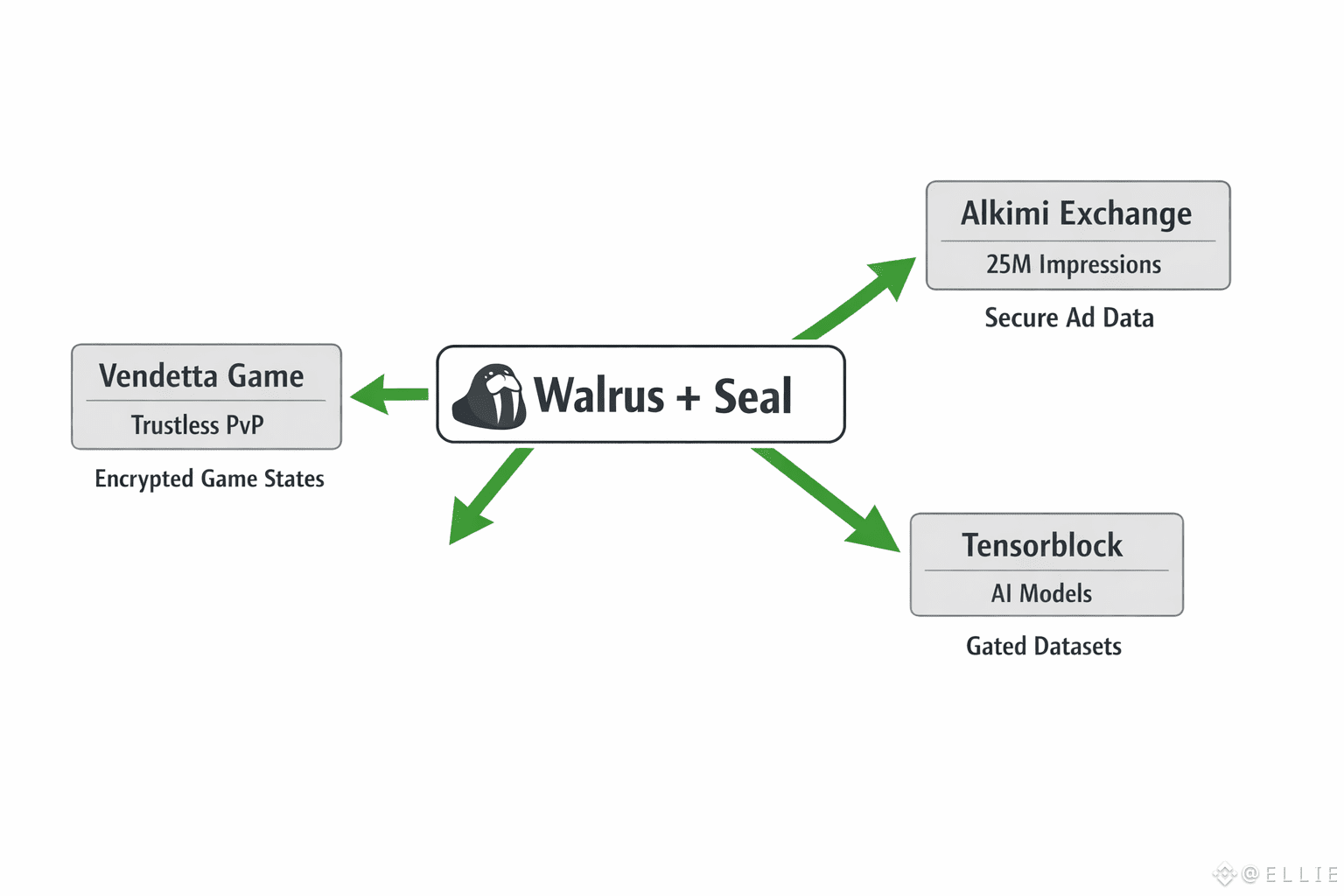
Then you’ve got Alkimi Exchange, shaking up the $750 billion ad industry by processing over 25 million ad impressions on-chain every day. Only clients can decrypt their stored data, so you get privacy along with proof-of-performance—something ad tech desperately needs. THS Studios, a horror film crew, is programming access to their IP, setting viewer permissions and guaranteeing delivery—perfect for tokenized media that actually lasts. And with Walrus Foundation’s $140 million raise from Standard Crypto and a16z crypto, they’re scaling up the network to handle enterprise-level encrypted storage without slowdowns.
What really sets Seal apart is how well it meshes with Walrus’s core features. Asynchronous challenges verify that nodes are honest, with fraud proofs that slash stakes fairly—penalties are balanced with a 5% principal floor to encourage fixing things instead of just bailing. Multi-stage epochs keep the network humming, overlapping updates so encrypted data keeps flowing. For developers, it’s simple: use CLI commands like ‘walrus store’ to upload encrypted data, batch transactions to save on fees, and let communities crowd-fund private archives. Want AI agents to query encrypted data? Integrate with Talus. Looking to tokenize private data into assets? That’s what Itheum’s for—all with cryptographic proof.
Privacy here isn’t just a buzzword. Unchained Pod is keeping its growing media library away from centralized risks, and Humanity Protocol is moving over 10 million verified credentials from IPFS for private, AI-proof identity at scale. Walrus’s RFP program is open for builders to expand Seal’s tools, targeting gaps in programmable controls for sectors like healthcare or finance. In a world where data monetization hit $3.47 billion in 2024, this setup delivers real data ownership: you control your info, decide who gets in, and can actually profit without giving up privacy. Walrus and Seal aren’t just locking down storage—they’re turning Web3 into a private, programmable space, making data leaks a thing of the past.

