
When people first encounter the idea of blockchain scaling, it often feels like a purely technical discussion. How many transactions per second can a network handle. How quickly confirmations arrive. How low fees can go before security is compromised. These questions matter, but they don’t tell the full story. As blockchain systems grow and begin to carry real economic weight, scaling becomes less about performance and more about responsibility. That is the point where Plasma stops being an abstract design and starts to feel like a philosophical stance.
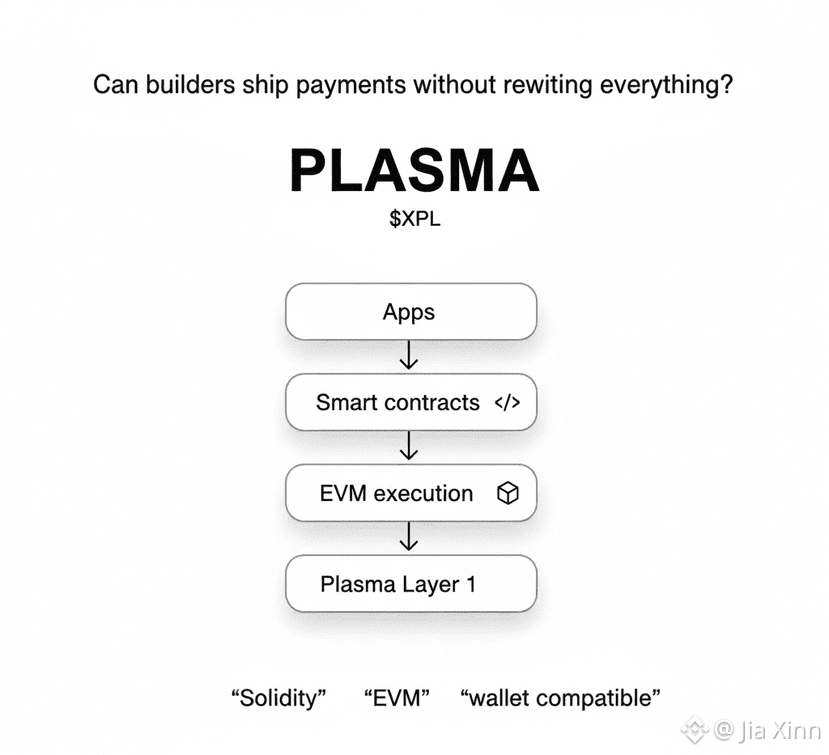
Plasma emerged during a period when blockchains were struggling under their own success. Networks designed for decentralization and security were being pushed beyond their original capacity. Fees rose. Congestion increased. The natural response was to move activity off the main chain. This solved the performance problem, but it quietly introduced another one. When execution happens elsewhere, users are no longer interacting directly with the base layer they trust. Someone else is operating the system. Someone else is responsible for availability and correctness.
Plasma was built around a simple refusal to ignore that risk. Instead of assuming offchain operators would always behave correctly, Plasma asked what happens when they don’t. What happens if an operator goes offline. What happens if data is withheld. What happens if incentives fail. These were not treated as edge cases. They were treated as expected possibilities.
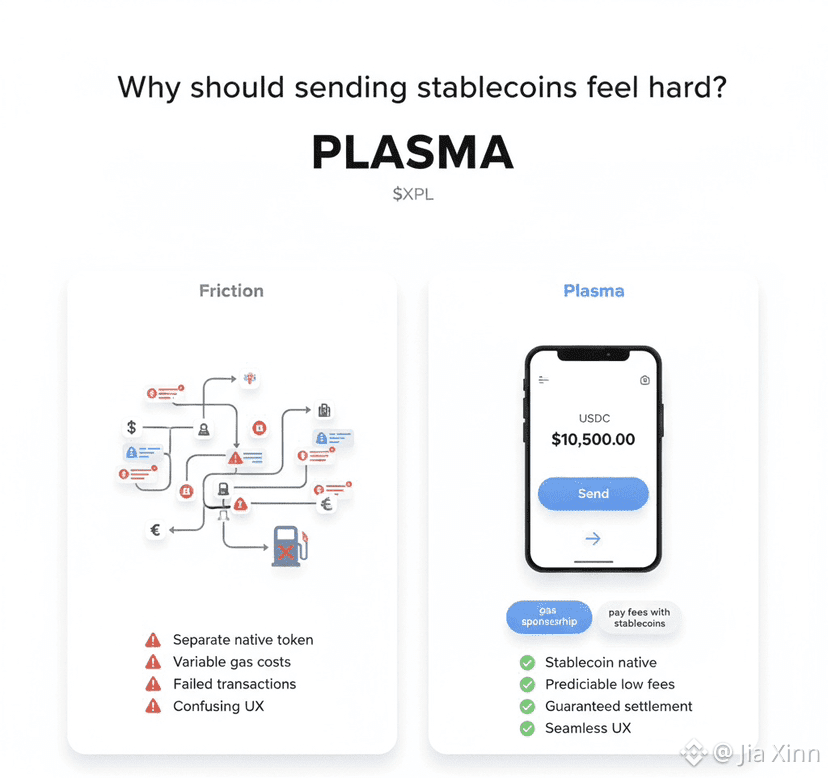
The answer Plasma offered was the exit. No matter where transactions are processed, users must always retain the ability to withdraw their funds back to the base layer using cryptographic proof. This idea sounds technical, but its implications are deeply human. It preserves agency. It ensures that participation in scalable systems is voluntary rather than captive.
I’m seeing how this design choice changes the relationship between users and infrastructure. In many systems, trust is implicit. Users trust that operators will behave well because they are incentivized to do so. Plasma replaces that assumption with enforceable rights. Operators are still incentivized, but they are also accountable. Users are not dependent on goodwill. They are protected by design.
There is a cost to this approach. Exits are not instant. There are challenge periods. Disputes take time to resolve. Plasma accepts this friction because it values safety over convenience. This trade-off is often misunderstood, especially in markets obsessed with speed. But as more value flows through blockchain systems, the cost of being wrong grows larger than the cost of being slow.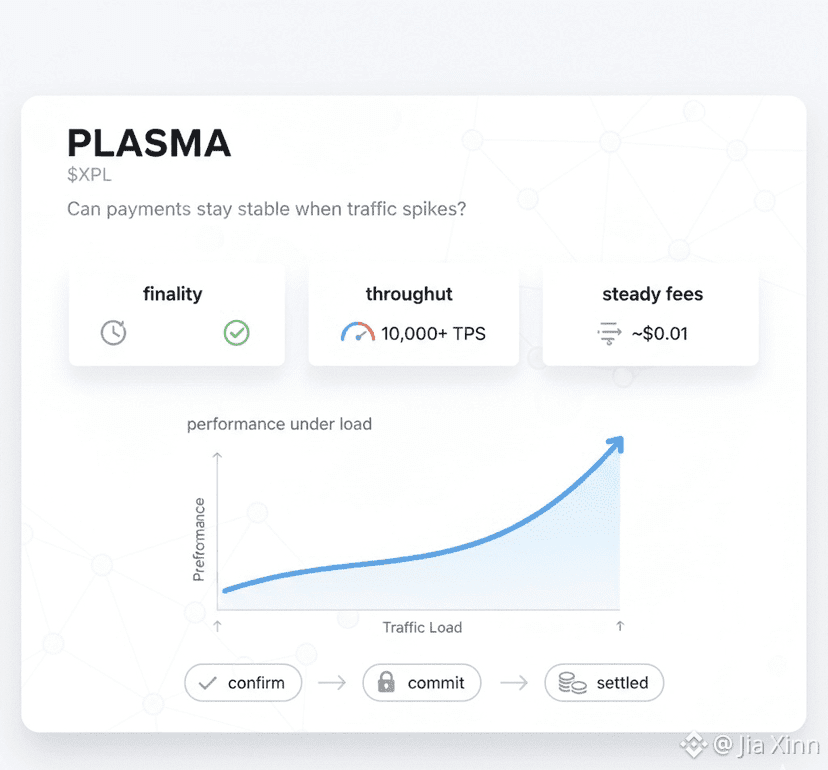
Another important aspect of Plasma is how it treats the base layer. Rather than seeing it as a bottleneck to escape, Plasma treats it as a final authority. The base chain becomes the place where disputes are settled and truth is enforced. This reinforces the role of the main chain as a security anchor rather than something to be bypassed entirely.
Over time, Plasma’s influence has extended beyond its direct implementations. Many modern scaling solutions adopt ideas that Plasma helped popularize, even when they use different architectures. Fraud proofs, dispute resolution, and user-controlled exits are now common topics in scaling design. Plasma shifted the conversation from raw performance to systemic resilience.
I’m also noticing how Plasma’s philosophy becomes more relevant as blockchain matures. Early adopters were willing to accept hidden risks in exchange for low fees and fast execution. As adoption grows, expectations change. Users want clarity. They want to know what happens when something breaks. They want systems that acknowledge failure rather than deny it.
Plasma does not promise that nothing will go wrong. It promises that users will not be powerless when it does. That promise becomes increasingly valuable as blockchain infrastructure moves closer to mainstream use and carries more economic significance.
Looking forward, Plasma represents a reminder that scaling is not just about doing more. It is about doing more without taking away fundamental protections. Efficiency should not come at the cost of sovereignty. Convenience should not silently reduce user rights. Plasma insists that growth and responsibility must scale together.
In a space that often celebrates speed, Plasma stands for restraint. It asks designers to think not just about how systems behave when everything works, but how they behave when something fails. That mindset is what separates experiments from infrastructure.
Sometimes the most important innovation is not making things faster, but making sure people are never trapped.
Plasma was built around that belief, and its relevance only grows as blockchain systems take on more responsibility.

