

A few years ago, I was experimenting with a small side project. Nothing ambitious. Just a lightweight app that mixed social features with simple token rewards. I had already spent years trading and following infrastructure projects, so I assumed the blockchain part would be the easy layer. It wasn’t. Tooling felt awkward, integrations were brittle, and every design decision seemed to leak blockchain complexity straight into the user experience. That was the moment it clicked for me. Most chains are built for people who already live inside crypto, not for developers or users who just want things to work.
The underlying problem is fairly simple. Blockchain stacks are still heavy with concepts that don’t map cleanly to how most software is built today. Gas management, wallet friction, inconsistent performance, and unpredictable costs all pile up. Web2 developers are used to abstractions that fade into the background. End users expect apps to respond instantly and predictably. When the infrastructure itself demands constant attention, adoption stalls. What should feel like a normal digital product instead feels like an experiment you’re participating in.
The analogy that keeps coming back to me is plumbing. In a modern building, nobody thinks about pipes, pressure systems, or filtration when they turn on a tap. The system is there, reliable, and invisible. You only notice it when something breaks. That’s the standard consumer software has been trained to expect. Blockchain hasn’t reached that point yet.
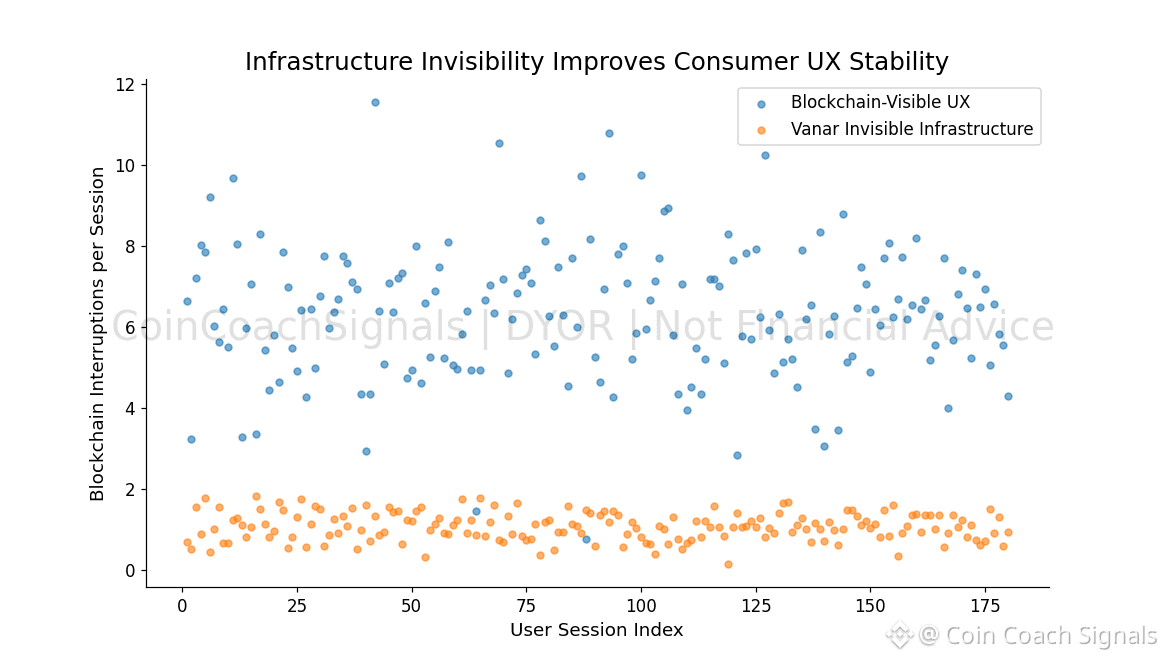
This is where Vanar is trying to position itself. The emphasis isn’t on reinventing decentralization, but on making it disappear from the surface. Vanar is designed as a base-layer chain optimized for consumer-facing applications, with a strong focus on developers coming from Web2 backgrounds. Instead of forcing teams to rebuild their entire stack around crypto primitives, it tries to meet them where they already are.
At a technical level, the approach leans into modularity. Vanar stays compatible with familiar Ethereum tooling, but adds native layers intended to reduce friction. One example is its data compression framework, which condenses documents and metadata into smaller, queryable representations so applications aren’t punished for storing or interacting with information frequently. Another is its onchain processing layer, which allows basic reasoning and logic to happen without constantly pushing computation offchain. The goal isn’t to make developers think about blockchain more, but less.
The VANRY token reflects that philosophy. It exists to pay for transactions, support staking for network security, and participate in governance. It isn’t positioned as a centerpiece narrative. It’s infrastructure fuel. If the chain succeeds, the token works quietly in the background. If it doesn’t, no amount of token design will compensate.
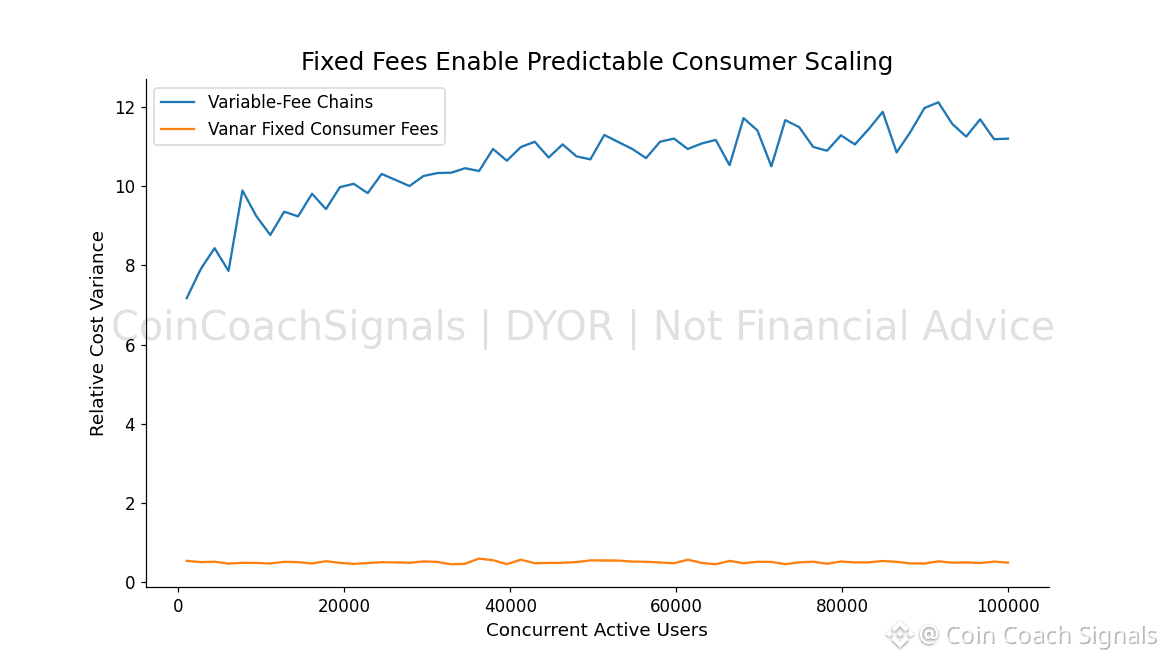
From a market perspective, Vanar is still small. Liquidity exists, but it isn’t commanding attention the way larger ecosystems do. That cuts both ways. Short-term price action is mostly sentiment-driven, especially when AI or gaming narratives flare up. Long-term value, if it shows up at all, depends entirely on whether real applications choose to build and stay.
There are real risks. Established chains already dominate developer mindshare. Scaling consumer workloads without reintroducing congestion is easier to promise than to deliver. There’s also execution risk in features like data compression or onchain processing. If those abstractions fail under real load, the trust they’re meant to create can disappear quickly.
Projects like this tend to be decided quietly. Not by launch hype or short-term charts, but by whether developers keep shipping and users keep showing up without thinking about the chain underneath. If Vanar succeeds, most people using it won’t even know its name. And that, paradoxically, might be the point.
@Vanarchain #Vanar $VANRY
