

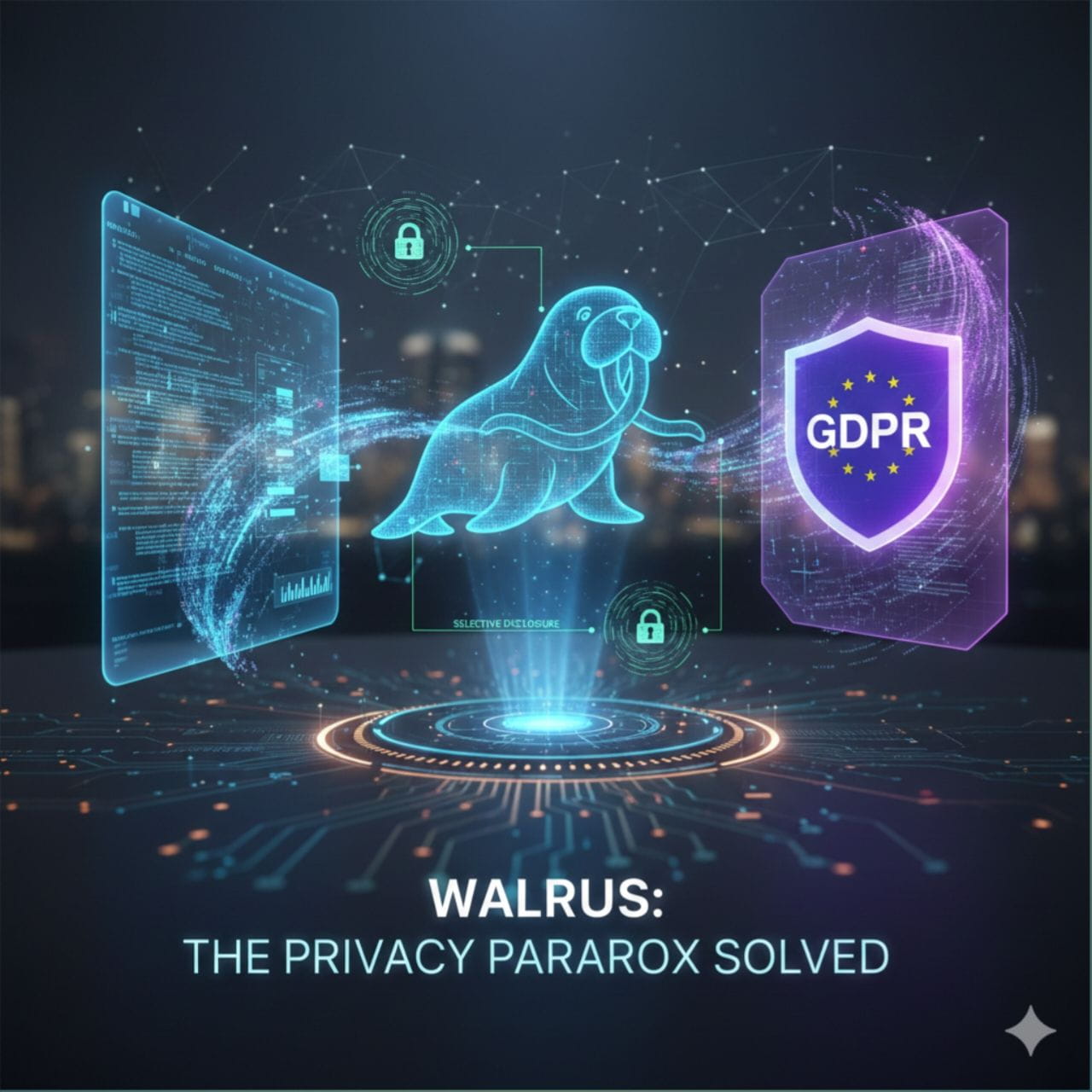
Integrating European data protection into Web3 without compromising decentralization has long seemed like a contradiction. Blockchain technology is celebrated for its transparency and immutability—key features that have powered its rapid adoption. Yet, these same traits create a “Privacy Paradox”: individuals and organizations crave the ability to verify and audit activity, but regulations such as the General Data Protection Regulation (GDPR) demand rigorous privacy, minimal data exposure, and the right to be forgotten. The result is a fundamental tension between open ledgers and strict legal requirements.
Most public blockchains, by design, put data on a permanent, accessible ledger—an approach fundamentally at odds with the privacy-centric ethos of GDPR. Once information is recorded, it’s nearly impossible to erase or limit its exposure. This leaves crypto innovators and European enterprises caught between the promise of decentralization and the risk of non-compliance.
Walrus offers a paradigm shift. Developed specifically to bridge the gap between compliance and decentralization, Walrus reimagines how blockchains handle sensitive data. Instead of forcing personal or business details onto the chain, Walrus employs a privacy-first protocol where crucial information never leaves the user’s control. The system leverages advanced cryptographic techniques to validate transactions and enforce compliance—without exposing the underlying data.
How does Walrus achieve this? The protocol is built around several core principles:
- Selective disclosure enables users to reveal only the bare minimum required for legal or regulatory checks—nothing more. This dramatically reduces unnecessary data exposure and aligns with GDPR’s requirement for data minimization.
- Sensitive data is kept off-chain entirely. Rather than storing personal information on the blockchain, Walrus creates cryptographic proofs. Auditors and validators can confirm that transactions and processes comply with regulatory standards, yet they never access the actual data itself. This separation preserves both privacy and the auditability essential for trust.
- Auditable proofs allow regulators to verify compliance at any time. Using zero-knowledge proofs, Walrus lets authorities confirm that GDPR obligations are being met, without requiring access to confidential information. This approach supports external audits and legal oversight while maintaining the integrity of private data.
This architecture strikes a careful balance—retaining the transparency that underpins decentralized systems while shielding sensitive details from public view. It’s a critical evolution for Web3, particularly for entities operating within or serving the European Union.
Why does this matter? For European businesses and users, Walrus effectively unlocks new possibilities. Projects can finally build DeFi platforms, tokenize assets, or launch digital services that are compatible with both blockchain ideals and European law.
Previously, the perceived incompatibility between GDPR and blockchain discouraged many from embracing Web3. With Walrus, these barriers are removed: companies can pass regulatory audits, protect their users’ privacy, and still benefit from the trust and reliability of decentralized networks.
The implications go beyond compliance. Privacy-preserving protocols like Walrus could accelerate mainstream adoption of blockchain technologies.
Financial institutions, governments, and enterprises have often hesitated to adopt blockchains due to concerns about data leakage and regulatory exposure. By making privacy and compliance core features, Walrus helps de-risk blockchain integration for these stakeholders, opening doors to innovation that were previously closed.
In conclusion, Walrus demonstrates that privacy, compliance, and innovation can coexist on the blockchain.
By combining zero-knowledge proofs, selective disclosure, and off-chain data handling, Walrus offers a concrete solution to the Privacy Paradox—enabling decentralized technology to meet the world’s toughest data protection standards.
For anyone considering deploying blockchain applications in Europe, protocols like Walrus aren’t just a technical nicety—they are the foundation for building real, lasting trust in the next generation of digital services.
Disclaimer: Not Financial Advice

