
President Donald Trump has outlined what he calls a long-term economic strategy aimed at eliminating the U.S. trade deficit, potentially as early as next year — a major shift from traditional trade policy.
🔑 Key Idea:
Tariffs are no longer temporary negotiation tools. Under Trump’s vision, they become permanent instruments of economic policy designed to protect domestic industry and labor.
📌 Core Pillars of the Strategy
High tariffs on foreign-made goods
Incentives for companies to manufacture inside the U.S.
Reduced reliance on overseas supply chains
Rebuilding domestic manufacturing capacity
The message to global companies is direct:
Access the U.S. market → produce in America.
🏭 Supporters’ View
Manufacturing jobs return
Supply chains become more secure
Economic sovereignty strengthens
Long-term industrial resilience improves
⚠️ Critics’ Concerns
Higher consumer prices
Retaliatory tariffs from trade partners
Increased risk of global trade tensions
Potential volatility in equity, FX, and commodities markets
📉 Many economists argue that fully eliminating a trade deficit is difficult and may introduce systemic risks.
🔥 Trump’s Position
Short-term economic pressure is acceptable, according to Trump, if it leads to long-term strength and independence. His stance suggests limited willingness to compromise.
🌍 Why This Matters for Global Markets
Export-driven economies could face pressure
Global supply chains may be restructured
Trade flows, currencies, and inflation expectations could shift
Risk assets, including crypto, may see increased volatility
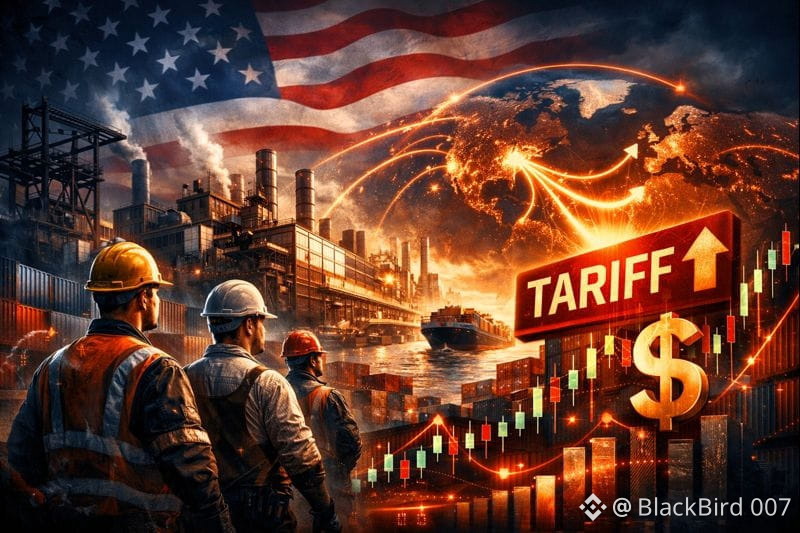
📊 Market Takeaway
This is not a marginal policy adjustment — it represents a potential reset of global trade dynamics. Whether it becomes a historic transformation or a high-risk experiment remains uncertain.
📈 Macro uncertainty = volatility
And volatility is something markets — including crypto — closely track.
