
I have been thinking about a subtle challenge in blockchain smart contracts: many rules check if something was done correctly, but they don't always verify when it happened. Timing matters a lot in finance think deadlines, interest accrual, or lockup periods. Dusk Network @Dusk addresses this in a clean, builtin way that keeps things private and compliant.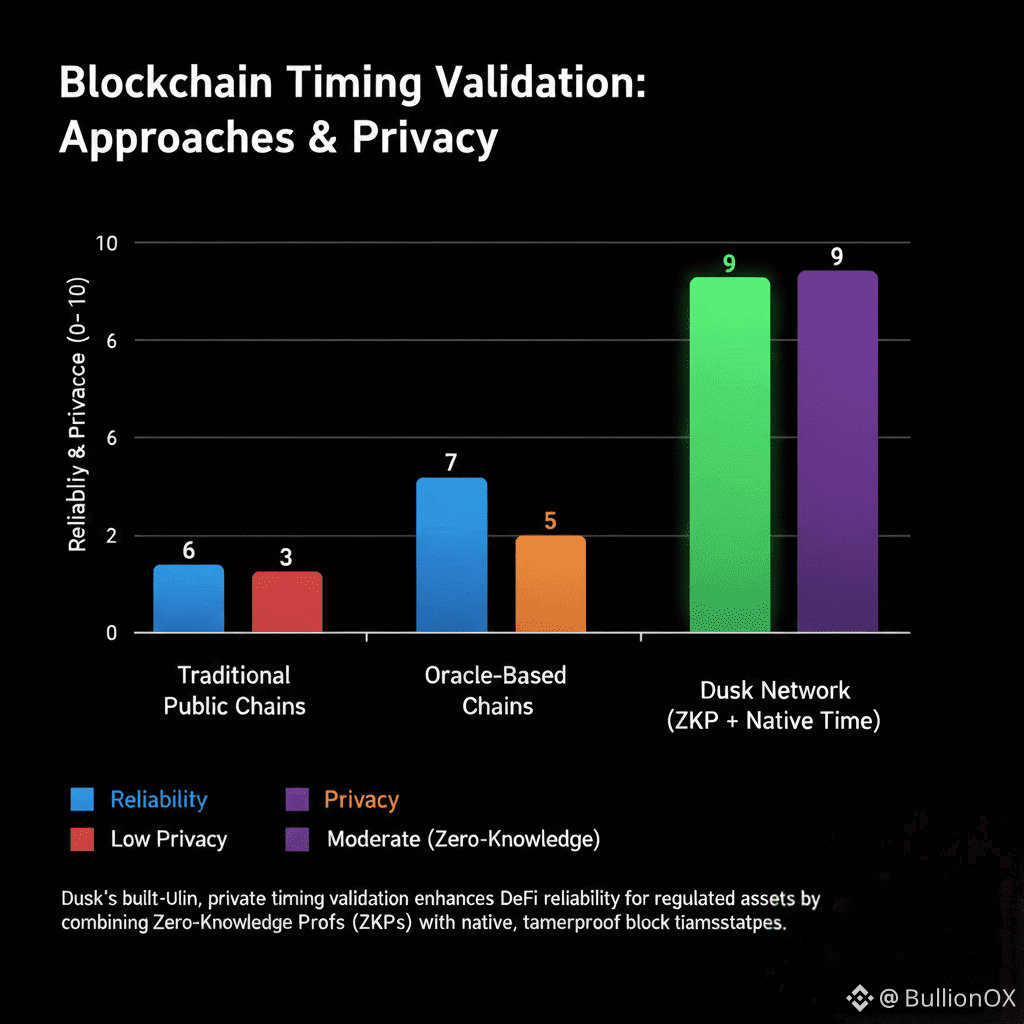
Dusk's confidential smart contracts use zeroknowledge proofs to prove execution is valid. But for timingsensitive logic, they rely on the protocol's native timestamping and block ordering. Every transaction is sequenced by block height and timestamp at inclusion. The chain provides a reliable, tamperproof time reference that contracts can reference without revealing private details.
In shielded transactions Phoenix model, the proof can include commitments to block height or timestamp. The contract logic checks these against predefined rules like "only execute after block X" or "apply interest based on time elapsed since Y." The ZKP proves the condition was met without disclosing the exact timing values to outsiders.
This approach avoids common pitfalls. Many chains force transparent timestamps or external oracles for time checks, which can leak information or introduce trust points. Dusk keeps the timing proof internal to the transaction. Validators see the block metadata and verify the proof, but private data stays hidden.
For complianceready RWAs, this is practical. A tokenized bond contract can enforce maturity dates or coupon payments by referencing block timestamps. The proof confirms the rule was respected at the right moment. Regulators can audit the proof for correctness without seeing investorspecific timing data.
DuskEVM mainnet since January 2026 supports this in Solidity contracts. Developers write normal timebased logic using block.timestamp or block.number, and the privacy layer wraps it in ZKPs. The chain guarantees the timestamp is accurate and monotonic, so timing rules hold without extra tools.
The modular design helps here too. Execution layer handles the logic, consensus ensures ordering, and data availability stores commitments. This separation keeps verification efficient even when timing proofs are involved.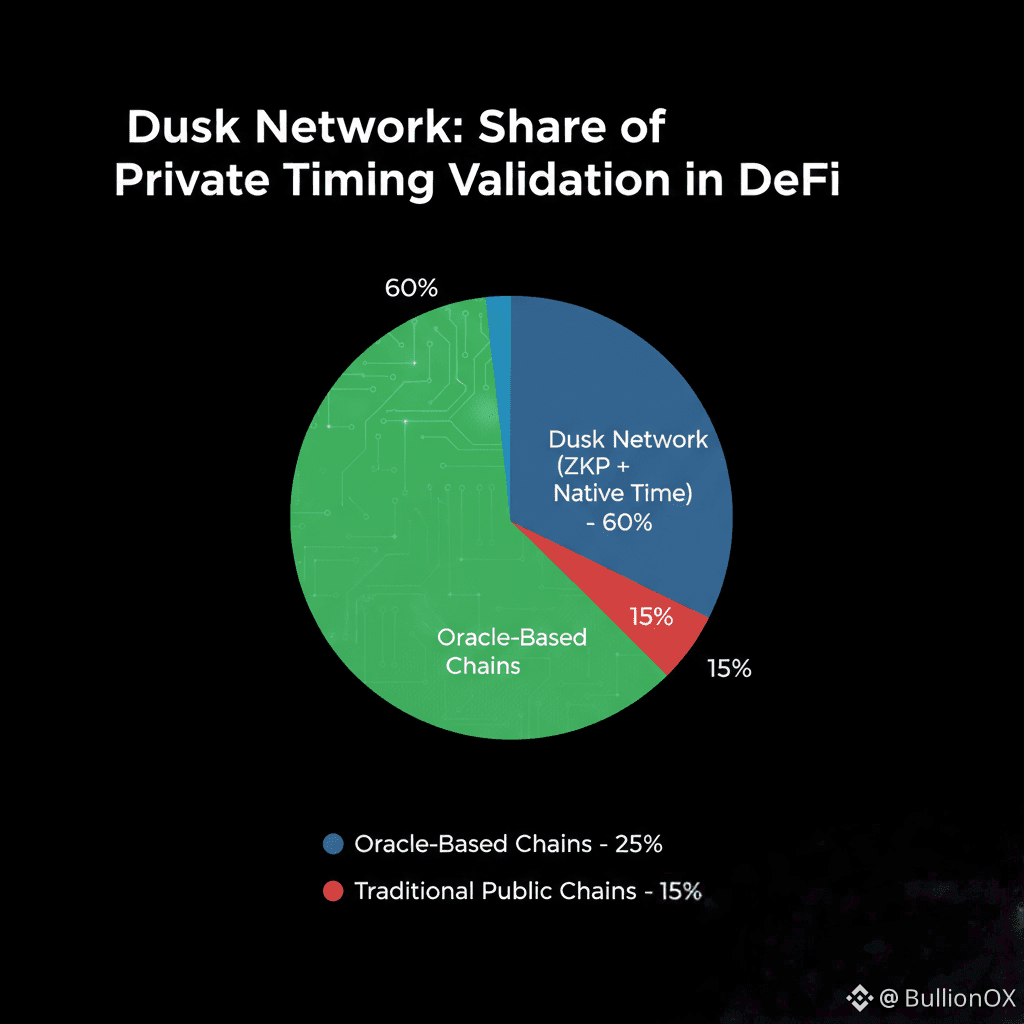
In real use, this means contracts can enforce vesting schedules, expiration dates, or timelocked funds privately. No need for public clocks or thirdparty services that could compromise privacy.
Dusk's handling of timingsensitive validation shows thoughtful design. It makes rules stronger without sacrificing confidentiality.
What do you think does builtin, private timing validation make DeFi feel more reliable for regulated assets?
Have you run into timing issues in other chains?
