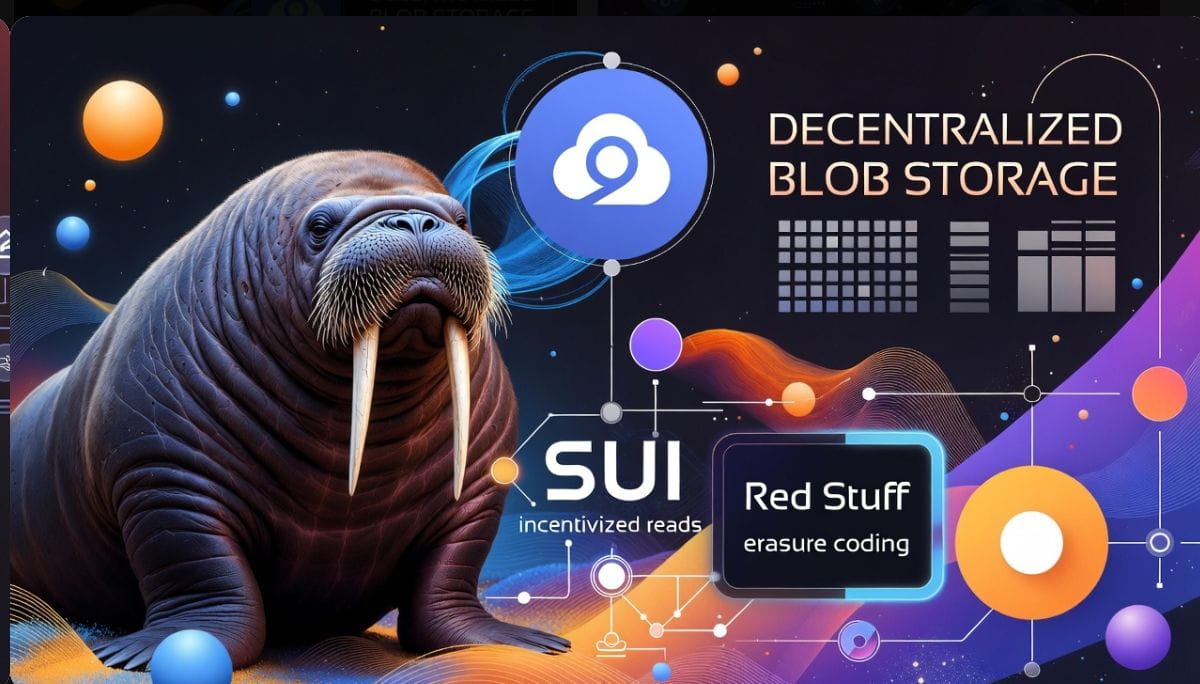
Walrus, developed by Mysten Labs and built on the Sui blockchain, represents a next-generation decentralized storage protocol optimized for large binary files (blobs) such as videos, images, AI datasets, and other unstructured data. Unlike traditional decentralized storage systems that struggle with high replication costs or complex incentives, Walrus achieves high availability and resilience with a low overhead typically around 4-5x replication thanks to its innovative Red Stuff erasure coding scheme.
A key challenge in decentralized storage is not just writing and persisting data, but ensuring efficient, reliable reads. Walrus addresses this through a multi-layered approach to incentivized reads, combining best-effort free access with economic mechanisms that reward nodes for serving data when needed. This design keeps reads fast and resilient while aligning incentives across the network.
The Read Process in Walrus
Walrus stores blobs by encoding them into "slivers" distributed across a committee of storage nodes (selected via delegated proof-of-stake using the native WAL token). The protocol uses a two-dimensional erasure coding system (Red Stuff) that provides strong fault tolerance.
When a client wants to read a blob:
The client requests primary slivers (or secondary in certain modes) from storage nodes.
It needs only a low quorum typically f+1 slivers (where f is the tolerated faults) to reconstruct the full blob, making reads highly resilient even if many nodes are offline or slow.
Nodes are expected to serve data promptly as part of their role in the network.
In ideal conditions, reads are best-effort and often free/fast, as nodes maintain data to earn ongoing staking rewards and avoid penalties.
Why Incentivization Matters for Reads
Storage nodes are primarily rewarded for availability (via proofs of availability, staking, and epoch-based distributions), but serving reads adds load. Without proper incentives, nodes might deprioritize or refuse non-paying read requests, leading to delays or failures--especially for high-demand blobs.
Walrus solves this with flexible incentivized read pathways:
Node Service Model Users (or apps) can sign paid contracts directly with storage nodes for prioritized or guaranteed read access. This creates a market where nodes offer better performance for compensation.
On-Chain Bounties If a standard read fails (e.g., insufficient responsive nodes), users post bounties on-chain. Storage nodes that provide the missing slivers or help reconstruct the blob claim the bounty in WAL tokens. This crowdsources recovery and rewards helpful nodes economically.
Protocol-Level Incentives Broader mechanisms encourage good read behavior:
- Nodes stake WAL to join committees and earn rewards proportional to performance (including serving data).
- Poor performance (e.g., failing challenges or not serving during high demand) risks slashing or reduced rewards.
- The system uses incentivized proofs of availability (PoA) on-chain certificates on Sui that verify custody and trigger rewards/penalties.
These layers ensure reads remain reliable without forcing mandatory free serving in every case, creating a balanced, market-driven ecosystem.
Benefits of Walrus's Incentivized Read Design
High Throughput & Low Latency Low read quorums and erasure coding enable fast reconstruction, even under partial failures.
Economic Alignment Nodes are motivated to maintain high uptime and responsiveness to attract stake delegations and maximize WAL earnings.
Scalability As usage grows, incentives scale logarithmically, supporting more blobs without exploding costs.
Programmability Blobs on Walrus are tied to Sui objects, allowing smart contracts to manage lifetimes, permissions, or even monetize access--extending incentives beyond basic reads.
In the AI era, where massive datasets need persistent, verifiable access, Walrus's model turns storage into programmable, governable infrastructure. Developers build on it for censorship-resistant apps, while enterprises gain cost-effective alternatives to centralized cloud storage. By blending cryptographic resilience with tokenomics-driven incentives, Walrus makes reliable reads not just possible but economically sustainable.
As the protocol matures (with mainnet live and WAL token active), its incentivized read mechanisms position it as a strong contender in decentralized data markets. For builders looking to decentralize their full stack on Sui, Walrus delivers the missing piece: efficient, incentivized blob access that scales.