
In the early days of the digital revolution, storage was simple. Files were kept on local hard drives, backed up on external disks, or stored in centralized servers owned by large corporations. There was convenience, yes, but also vulnerability. Data loss, corruption, and censorship were constant threats. As the internet evolved, so did the need for something more resilient—something decentralized that could protect the integrity of information while remaining accessible. WAL emerged as one of the responses to this need, quietly developing infrastructure that could support the growing demands of Web3 and decentralized applications.
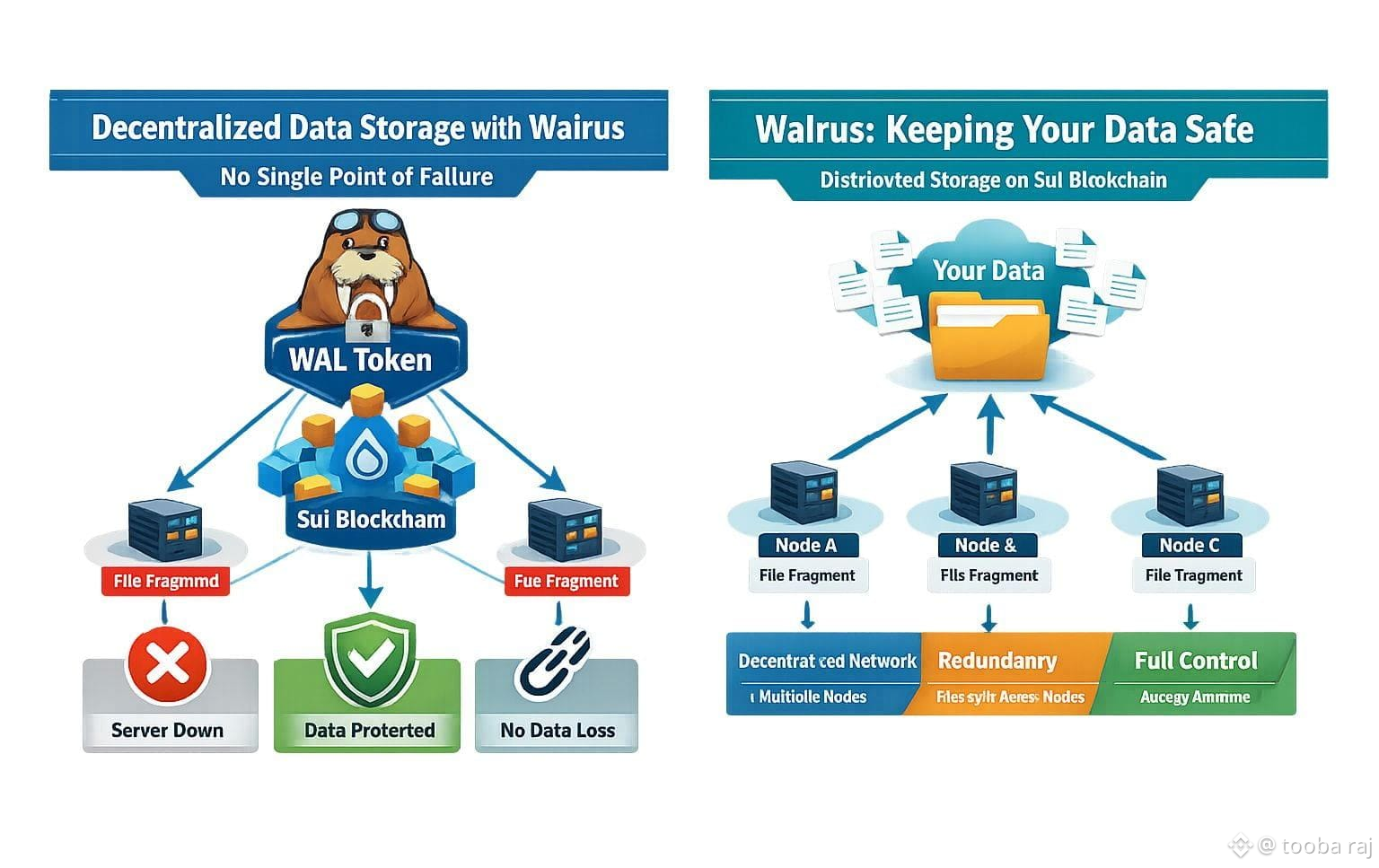
What makes WAL distinct is its focus on reliability and consistency. Unlike conventional cloud storage that relies on centralized control, WAL operates on principles of decentralization, distributing data across multiple nodes in a network. This is not merely about redundancy; it is about creating a system where no single point of failure can compromise access or authenticity. For developers building decentralized applications, this distinction is profound. They are no longer forced to choose between efficiency and security; they can achieve both, knowing that the underlying infrastructure will support their applications without interference or censorship.
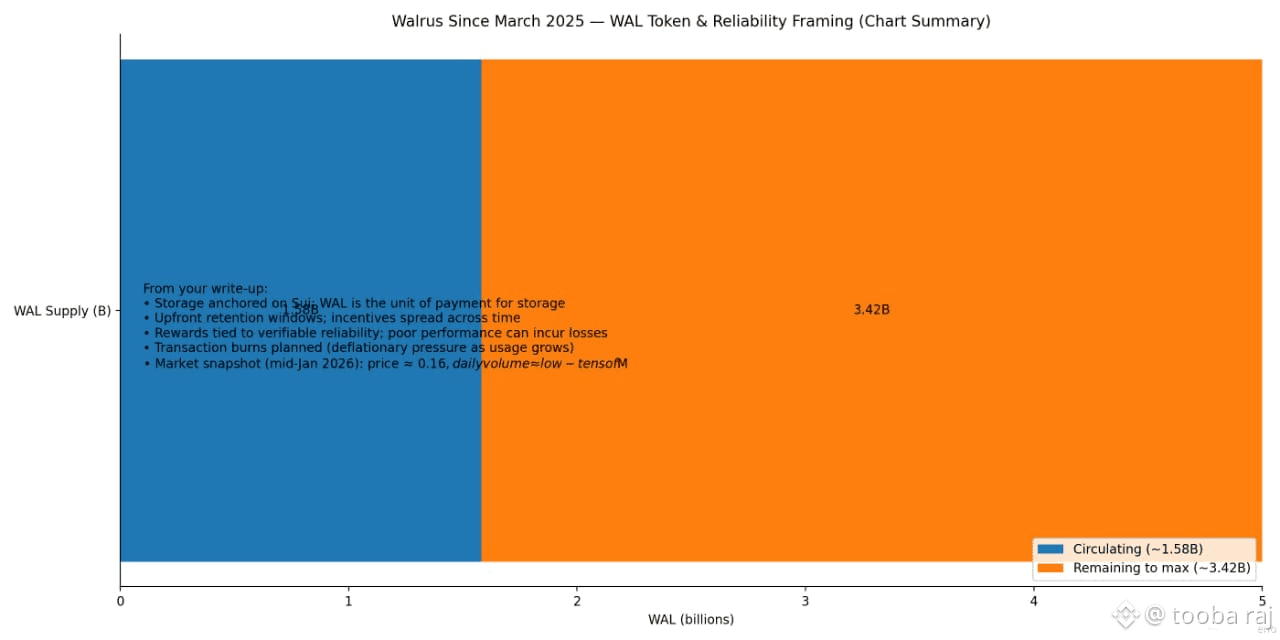
Yet, understanding WAL is not just about technology; it is about philosophy. The creators of WAL recognized that data is not just a collection of bits and bytes—it is human knowledge, expression, and creativity. Protecting it requires more than speed or storage capacity. It requires systems that are resilient by design, capable of adapting to changing conditions and threats. In this sense, WAL reflects a broader shift in digital thinking: from centralized control to distributed responsibility, from temporary convenience to long-term preservation.
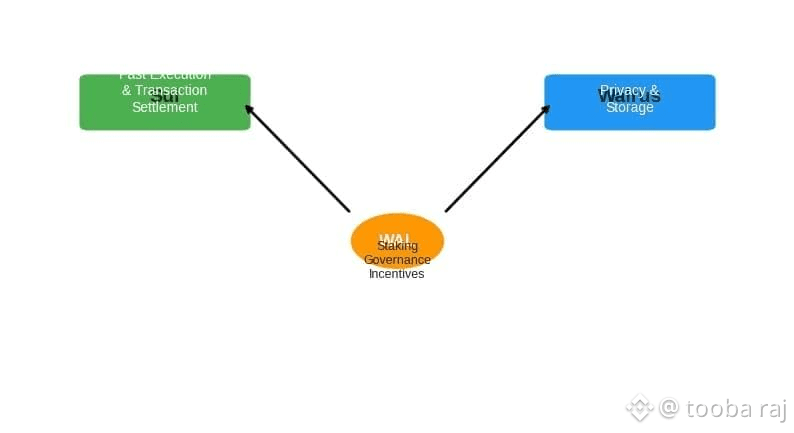
The network itself is designed with scalability in mind. As more nodes join and more data is stored, the system grows stronger rather than weaker. Each new participant contributes to the stability of the network, ensuring that the storage remains decentralized and secure even under increasing demand. This self-reinforcing mechanism is critical because the success of decentralized storage is not measured merely by adoption but by resilience. It must continue to function in the face of network congestion, node failures, and potential malicious actors. WAL’s architecture addresses these challenges head-on, balancing the needs of speed, reliability, and security.
For users, WAL is often invisible, quietly performing the essential task of data preservation. Yet this invisibility is part of its strength. The goal is not to attract attention or generate buzz, but to provide a backbone upon which other innovations can be built. DeFi applications, NFT platforms, and decentralized marketplaces all depend on reliable off-chain storage. When WAL performs its function correctly, users experience continuity without realizing the complexity behind it. This subtlety is a hallmark of mature infrastructure—when it works well, it disappears into the background, becoming an invisible enabler of progress.
Beyond the technical, WAL represents a vision of trust in the digital age. Trust has historically been tied to institutions—banks, corporations, governments—but the promise of decentralization is to shift that trust to systems and protocols that operate transparently and predictably. WAL embodies this philosophy by providing storage that is verifiable, auditable, and resilient, removing the need for users to place faith in a single centralized entity. The weight of this responsibility is substantial, yet WAL carries it with quiet efficiency, reflecting a maturity in both design and purpose.
In the grand scope of technological evolution, WAL may not be the flashiest innovation, but it is among the most consequential. It addresses one of the fundamental questions of the digital era: how can we preserve and protect human knowledge in a way that aligns with the principles of decentralization? The answer lies not in hype or marketing but in careful, deliberate engineering, in the thoughtful deployment of resources, and in the unwavering focus on reliability. As the digital landscape continues to expand, systems like WAL will be remembered not for the attention they drew but for the stability they provided—the weight they carried so that others could build without fear.
In this sense, WAL is more than storage; it is a quiet pillar of the decentralized world. It asks little of those who rely on it, yet gives much: continuity, security, and resilience. And in a world where information is both fragile and invaluable, that is a contribution that cannot be overstated.

