


In the shadowy world of blockchain, where billions move in milliseconds and trust is the scarcest asset, I have often paused during late-night dives into codebases, wondering whether our grand security promises actually hold up when the wolves start to howl. Plasma’s Bitcoin-anchored security caught my eye early on. It is pitched as an unbreachable fortress, tying a fast stablecoin chain to ’s proof-of-work gravity. But the real question lingers: does it truly protect against live attacks, or is it primarily a confidence signal for institutions that want reassurance more than absolutes.
Stripped of jargon, Plasma runs as an EVM-compatible sidechain using PlasmaBFT consensus, delivering sub-second finality and thousands of transactions per second, a setup clearly optimized for stablecoin transfers like at near-zero cost. The centerpiece is the Bitcoin bridge. Users lock BTC into a monitored address, a network of independent verifiers—each running a full Bitcoin node—confirms the deposit, and pBTC is minted 1:1. Plasma then periodically anchors its state roots to Bitcoin, creating an external, immutable audit trail. Withdrawals reverse the flow: pBTC is burned, verifiers reach quorum using threshold signatures, and BTC is released. The model assumes a 2/3 honest majority, inheriting Bitcoin’s resistance to history rewrites.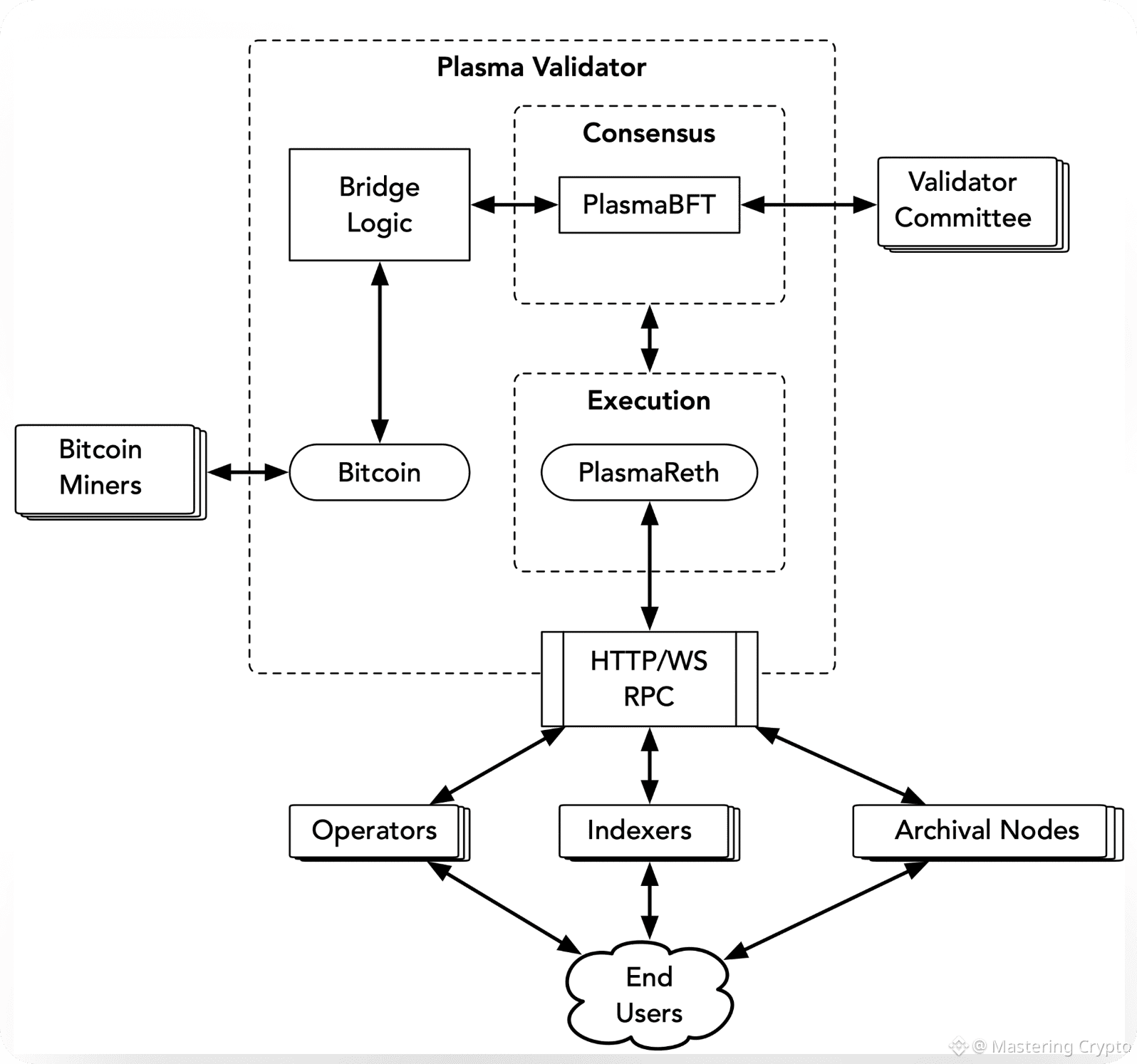
When imagining a live attack scenario, the distinction between theory and practice becomes clear. An attacker attempting to fake deposits or double-spend would need to compromise most verifiers simultaneously or overwhelm PlasmaBFT beyond its Byzantine tolerance. Once Plasma state is anchored to Bitcoin, rewriting history would require a Bitcoin-level reorg, an undertaking so expensive that it borders on fantasy. This is where the anchoring genuinely matters: it does not prevent every misbehavior, but it makes undetectable, long-range fraud extraordinarily difficult. For bridge failures or validator disputes, Bitcoin becomes a cryptographic referee, preserving evidence even if Plasma governance fractures.
That said, this is not flawless armor. Verifier quorums can centralize early, anchors are periodic rather than instant, and Plasma’s relative youth means it has not yet faced prolonged adversarial pressure. A coordinated cartel could still censor transactions temporarily, and denial-of-service risks grow as usage spikes. In these windows, Bitcoin anchoring records what happened, but does not force correct behavior in real time. This gap is why skeptics view the design as strong signaling plus partial protection, rather than an absolute shield.
Zooming out, Plasma fits neatly into a broader shift where Bitcoin reasserts itself as the settlement anchor, while faster chains handle execution. Stablecoins now move hundreds of billions annually, yet bridges remain the ecosystem’s weakest link. By coupling BFT speed with PoW finality, Plasma aims to reduce the trust surface compared to purely federated wrappers. Institutions find this attractive: it looks familiar, auditable, and defensible in risk committees, especially compared with opaque multisigs or unanchored sidechains.
From a builder’s perspective, the appeal is pragmatic. The verifier quorum adds latency but eliminates single points of failure, and Bitcoin anchoring creates a clear forensic trail when things go wrong. Still, the real test lies ahead. Decentralization of verifiers must expand, governance must harden, and upgrades like BitVM-style proofs or future Bitcoin opcodes will determine whether this model evolves from a credible hybrid into something closer to structural security.
So is Plasma’s Bitcoin anchoring real protection or clever signaling. The honest answer is that it is both. It meaningfully raises the cost of catastrophic failure and silent fraud, while also broadcasting seriousness to institutions burned by past bridge collapses. Whether it becomes steel instead of symbol depends on execution under fire. If attacks come, the anchors will not lie—they will tell the story of whether Plasma’s fortress held, or merely looked imposing from afar.


