

Most payment systems don’t fail because of ambition they fail because the underlying rails aren’t built for scale. Delays, fragile integrations, and inconsistent execution quickly turn promising payment ideas into unreliable experiences. This is why EVM compatibility has become a foundational requirement for serious payment infrastructure.
Payments depend heavily on established standards. Wallets, stablecoins, settlement contracts, compliance tooling, and reporting systems are already designed around the Ethereum Virtual Machine. When a network supports the EVM, builders don’t need to rewrite core logic or rebuild integrations from scratch. That reduces operational risk and allows payment systems to move from concept to production much faster.
Scalability in payments is also about consistency under pressure. High transaction volumes demand predictable behavior, clear execution rules, and tooling that has been tested in real market conditions. The EVM has proven itself across years of financial activity, handling everything from microtransactions to large-scale settlements. Using this environment for payments means building on a foundation that is already understood and trusted.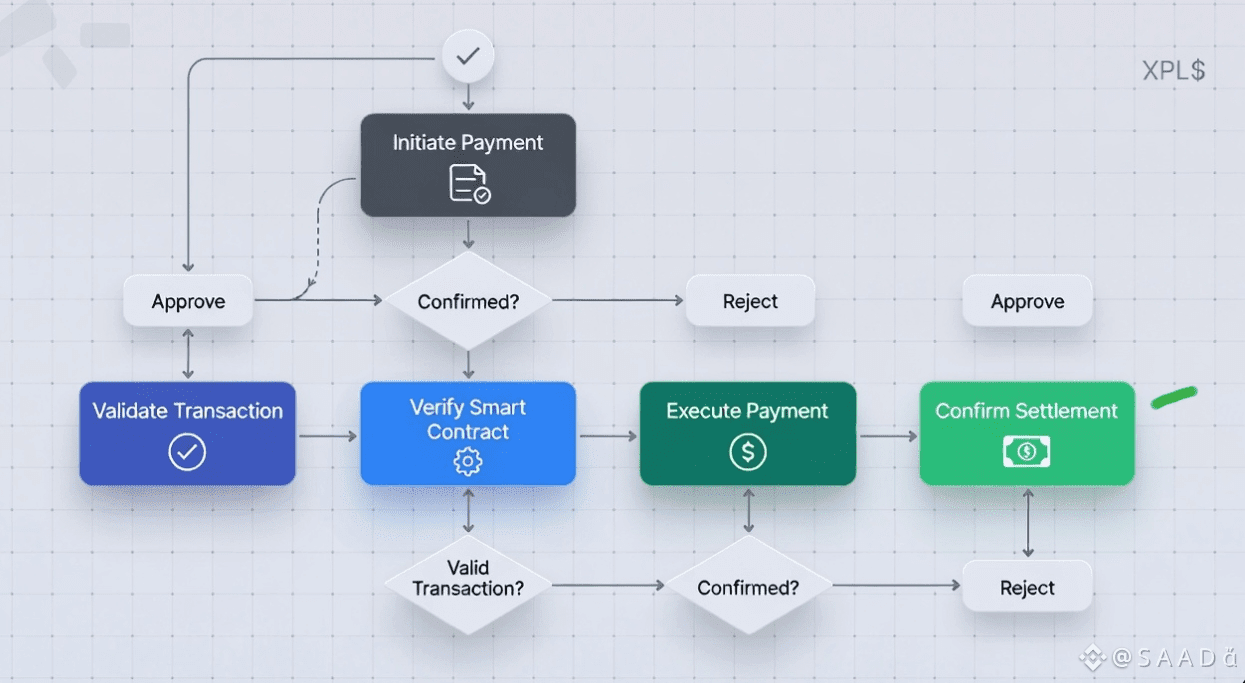
Plasma aligns with this reality by treating EVM compatibility as a structural choice, not a marketing feature. Its design allows existing smart contracts and payment flows to run smoothly while focusing on performance characteristics that payments require speed, throughput, and stability. This makes it easier for developers to deploy payment logic and for service providers to integrate without added complexity.
Effective payment infrastructure should fade into the background. It should be fast, dependable, and easy to integrate. By pairing EVM compatibility with a payment-first architecture, Plasma delivers infrastructure that supports payments at scale without forcing the ecosystem to relearn how payments work.

