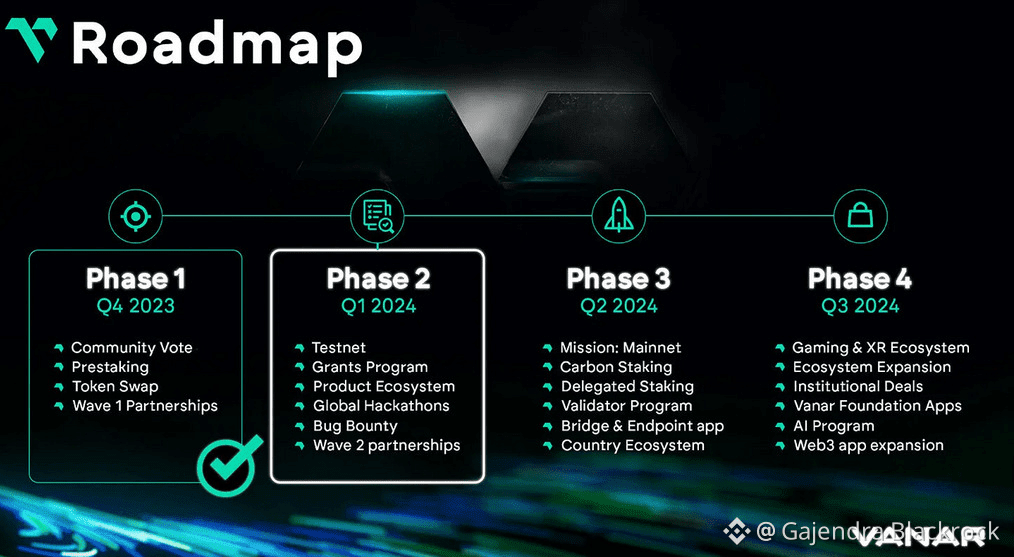
Most Web3 roadmaps show features. Vanar’s roadmap shows sequencing. Phase 1–2 focused on groundwork: prestaking, testnet, grants, hackathons. That’s unsexy—but necessary. In 2021, multiple gaming chains rushed mainnet without stress-testing developer tooling, leading to broken economies and abandoned games within months. Vanar avoided that trap.
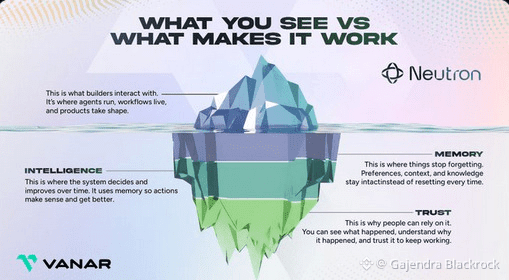
The iceberg model explains this well. What users see is gameplay and XR apps. What makes it work lives below: memory, trust, intelligence. A real-world parallel is online gaming infrastructure. Riot Games scaled esports not by flashy launches, but by stabilizing servers, anti-cheat, and developer pipelines first. Vanar’s Phase 3–4 mirrors this logic—mainnet, delegated staking, validator programs, then ecosystem expansion.
This roadmap isn’t about speed. It’s about reducing failure points before mass adoption. That’s why @Vanarchain positions $VANRY for long-term gaming infrastructure, not short-lived hype cycles. #Vanar $VANRY