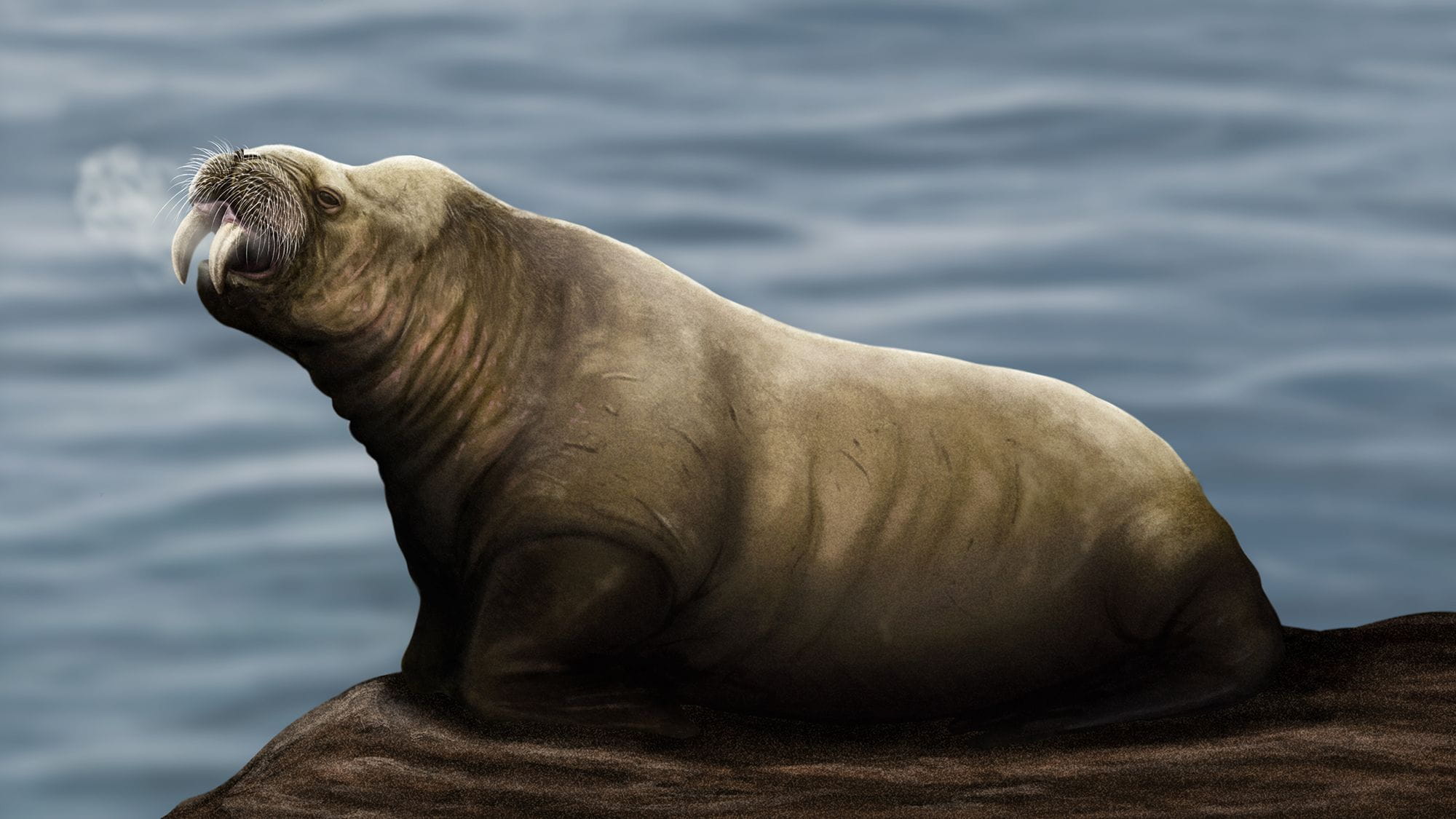
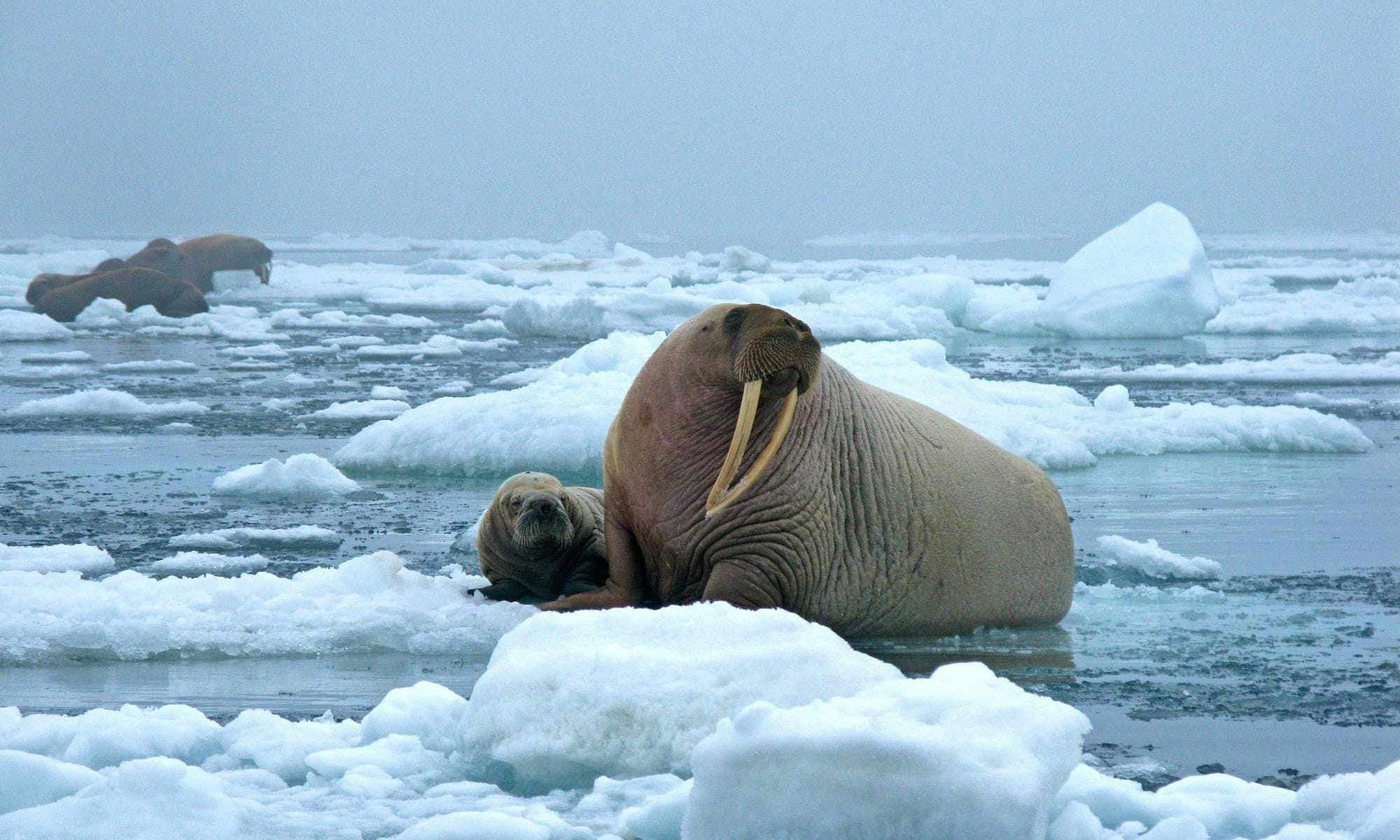
 There's something profoundly honest about a walrus. Maybe it's the way they lounge on ice floes with the unbothered confidence of someone who stopped caring what others think sometime around middle age. Or perhaps it's those magnificent tusks—ivory declarations that they've earned their place in this world and aren't moving for anyone.
I've spent considerable time thinking about walruses lately, and I've come to believe we've done them a disservice. We've reduced them to punchlines and peculiar curiosities, when in reality, they're among the most wonderfully relatable creatures in the animal kingdom.
The Art of Living Large
A walrus doesn't apologize for taking up space. An adult male can weigh nearly two tons, draped in wrinkled, whiskered magnificence. Their skin hangs in folds like a well-worn leather jacket, battle-scarred and beautiful. They are, in the most literal sense, thick-skinned—a quality many of us spend lifetimes trying to develop.
But here's what struck me: walruses change color based on their body temperature. When they're cold, blood retreats from their skin, leaving them pale and ghostly. As they warm up, they flush pink, then cinnamon, then sometimes an almost embarrassed red. They wear their internal state on the outside, unable to hide when they're uncomfortable or overheated. There's something deeply human about that vulnerability.
The Community Builders
Walruses are profoundly social. They haul out onto beaches and ice in groups of hundreds, sometimes thousands, piling onto each other in what looks like chaos but is actually community. They're loud about it too—bellowing, grunting, whistling, creating a cacophony that sounds like a rowdy family reunion.
Young walruses stay with their mothers for three to five years, an extended childhood that allows them to learn the sophisticated skills they'll need: where to find the best clam beds, how to use those sensitive whiskers to detect food in murky water, the social etiquette of walrus society. The mothers are patient teachers, fiercely protective, willing to fight off polar bears to keep their calves safe.
The males sing. Underwater, they produce elaborate sequences of bells, knocks, and pulses—love songs, really, broadcast through the Arctic waters to attract females. These songs can last for hours, each male developing his own signature style. Imagine floating in near-freezing water in the middle of winter, pouring your heart into a performance, hoping someone notices. That's dedication to romance.
The Daily Grind
A walrus can eat about 6,000 clams in a single feeding session. They dive to the seafloor, sometimes 300 feet down, and use their whiskers—which contain more nerve endings than your fingertips—to feel along the bottom in the darkness. When they find a clam, they hold it with their flippers, blast it with a jet of water from their mouth to separate it from the sediment, suck out the meat, and spit out the shell. Then they do it again. And again. And again.
It's repetitive, methodical work done in cold and darkness. But they do it, day after day, because it's what needs to be done. There's a quiet dignity in that kind of labor.
The Weight of Change
Here's where the story gets harder. Walruses are losing their ice. The Arctic is warming faster than almost anywhere else on Earth, and the sea ice platforms where walruses rest between dives are disappearing earlier each spring and forming later each fall.
In recent years, tens of thousands of walruses have been forced to haul out on crowded beaches instead of ice floes. The beaches can become so packed that when something startles the group—a polar bear, a low-flying plane, even another walrus—stampedes occur. Calves are crushed. Adults tumble off cliffs in their panic to reach the water.
A walrus didn't choose this. They're simply trying to live the way their ancestors lived, following patterns etched into their DNA over millennia. But the world is shifting beneath them, and they're paying the price for changes they had no part in creating.
What They Teach Us
If you watch walruses long enough, you notice things. The way they'll use their tusks to haul themselves onto ice, hooking and pulling their massive bodies upward with surprising grace—that's where their name comes from, from an Old Norse word meaning "whale-horse." The way they can slow their heart rate to just four beats per minute during long dives, their bodies making impossible adjustments to survive in an unforgiving environment.
They've adapted to one of the harshest places on Earth, building rich lives in the margins between ice and ocean. They've created culture—teaching their young, singing their songs, forming lasting bonds. They've learned to be both tough and tender, solitary hunters who need community to thrive.
Maybe that's what draws me to them. Walruses remind us that you can be strange-looking and magnificent at the same time. That there's strength in community and beauty in the unglamorous work of survival. That vulnerability isn't weakness—it's just part of being alive.
The next time you see a walrus—in a documentary, a photograph, a zoo—look a little longer. See past the tusks and the whiskers and the blubbery bulk. See a creature that loves, labors, sings, and endures. See a life as complex and worthy as our own.
Because in the end, we're not so different. We're all just trying to find our place on a changing planet, hoping there's enough ice left to rest on.