
Walrus is reshaping how decentralized systems handle large data by shifting from simple storage to guaranteed, verifiable data custody a concept critical for the next generation of Web3 applications. Traditional decentralized storage solutions often struggle with efficiency, reliability, and cost, especially when handling large binary files like videos, AI datasets, and application assets. Walrus is designed to overcome these limitations through a combination of innovative coding techniques, economic incentives, and deep blockchain integration.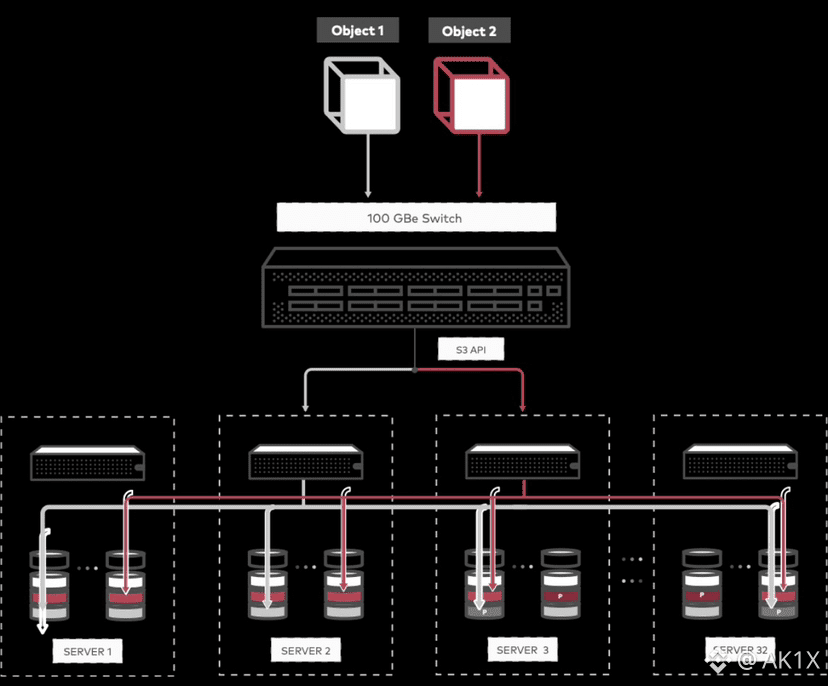
The core challenge in decentralized data storage has always been balancing data availability with cost and performance. Many systems either replicate entire files multiple times across nodes or rely on external assumptions about uptime and availability, which can lead to data loss or inaccessibility over time. Walrus tackles this problem with a RedStuff erasure coding mechanism, which breaks data into encoded fragments that can be reconstructed even if many storage nodes fail. This significantly reduces redundancy and storage overhead while maintaining strong data integrity and high availability.
Another key innovation in Walrus is its Proof of Availability (PoA) system, a cryptographic approach that continuously verifies that data is still being stored by the network. Unlike traditional storage models that assume data stays online once uploaded, Walrus requires storage nodes to regularly submit proofs on the Sui blockchain, ensuring that data custody is publicly verifiable and resistant to node failure. This turns data availability into a programmable digital asset and aligns the network’s economic incentives with real, lasting storage performance.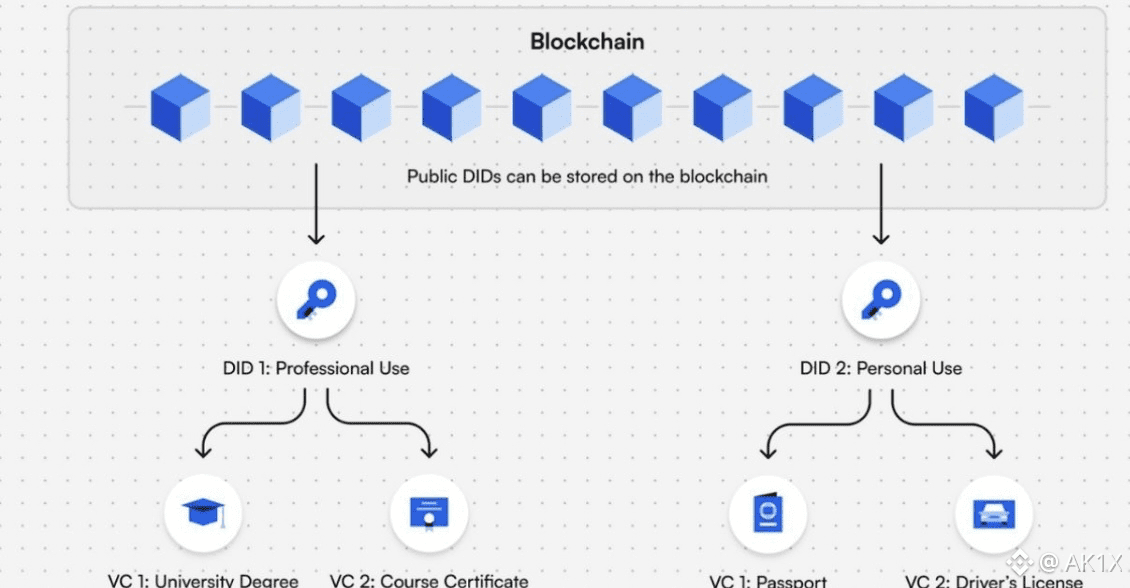
Walrus separates its design into two planes: the data plane, which focuses on storing and serving data fragments efficiently, and the control plane, orchestrated by the Sui blockchain. Sui manages metadata, economic logic, and proof verification, acting as a trusted coordination layer, while Walrus nodes handle the actual data storage. This separation allows developers to build sophisticated decentralized applications without burdening the blockchain with large file storage, reducing costs and improving performance.
The protocol is also engineered to be chain-agnostic for developers, meaning that even though Sui handles the control plane, applications can utilize Walrus’s storage capabilities across different blockchain ecosystems. This expands Walrus’s utility beyond a single network and positions it as a foundational infrastructure layer for cross-chain Web3 projects.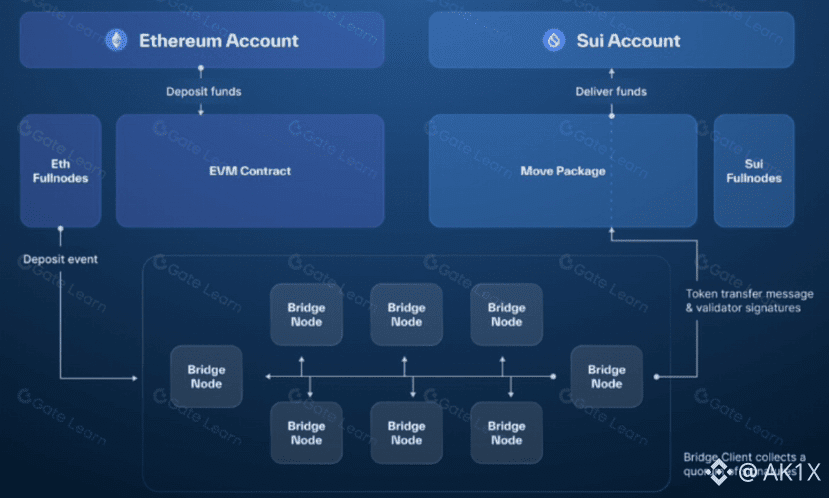
Walrus’s real-world relevance extends to multiple use cases. It enables decentralized media platforms to store high-resolution content, supports AI models requiring large datasets, and provides storage for decentralized websites and applications. By offering scalable, reliable, and cost-effective storage, Walrus addresses the data needs of complex systems that centralized solutions still dominate today.
Economically, the $WAL token underpins the Walrus ecosystem. It is used to pay for storage services, incentivize node operators, and participate in governance. Users prepay storage fees, and node operators earn rewards for providing reliable storage. This economic structure encourages long-term participation and aligns incentives between data providers and consumers, fostering a sustainable storage network.
Walrus marks a significant evolution in decentralized storage by making data custody measurable, economical, and programmable. Its combination of advanced coding techniques, continuous availability proofs, and blockchain coordination transforms storage from a passive backend service into an active, verifiable layer of the Web3 stack. As decentralized applications grow in complexity and data demands rise, protocols like Walrus will play an essential role in ensuring that data remains as secure, accessible, and permanent as the transactions that drive Web3 itself.

