

Imagine actually owning a rare in-game item. Not renting it. Not watching it disappear when a publisher changes direction or shuts servers down. It’s yours — full stop.
Or picture an artist sharing something genuinely special with fans, without a stack of platforms standing in the middle and skimming value along the way.
That’s the idea Web3 has been selling for years.
But for most people, the experience still feels rough around the edges. Fees spike. Wallets confuse. Transactions lag. And too many blockchains feel like they were designed for traders talking to other traders, not for people who just want things to work.
That’s where adoption keeps stalling.
And that’s the problem Vanar Chain is trying to solve.
Vanar isn’t chasing every trend or trying to impress the loudest corner of crypto Twitter. It’s taking a narrower view. Build something that actually works for gamers, artists, brands, and everyday users — people who don’t care how gas fees are calculated and don’t want to care.
At its core, Vanar Chain is a carbon-neutral, high-performance Layer-1 blockchain built to connect traditional entertainment with Web3 infrastructure.
What gives it weight early on is who’s behind it. Vanar is backed by Vortex Gaming, a serious player in the global gaming space with millions of users already inside its ecosystem. That matters. It means Vanar isn’t launching into a vacuum, hoping users arrive later. There’s already an audience. Already activity. Already a reason to exist.
On the technical side, Vanar is fully EVM compatible. In practical terms, that means developers familiar with Ethereum, Polygon, or BNB Chain don’t need to relearn everything or rebuild from scratch. They can deploy, test, and iterate without friction. For builders, that’s a big deal.
Vanar’s design choices feel grounded in how people actually use products.
Transactions are fast, and fees are close to negligible. That’s not a luxury feature — it’s essential. Gaming and entertainment rely on frequent, small interactions. Nobody is paying double-digit dollars to mint a cosmetic item or move a digital collectible.
The chain is also carbon neutral, which may sound abstract until you think about brands. Large entertainment companies don’t want sustainability debates attached to their launches. Vanar removes that obstacle before it becomes a problem.
User experience gets similar attention. The aim isn’t to teach users blockchain vocabulary. It’s to make the technology fade into the background. Wallets, interactions, and transactions are meant to feel familiar, even boring — in a good way.
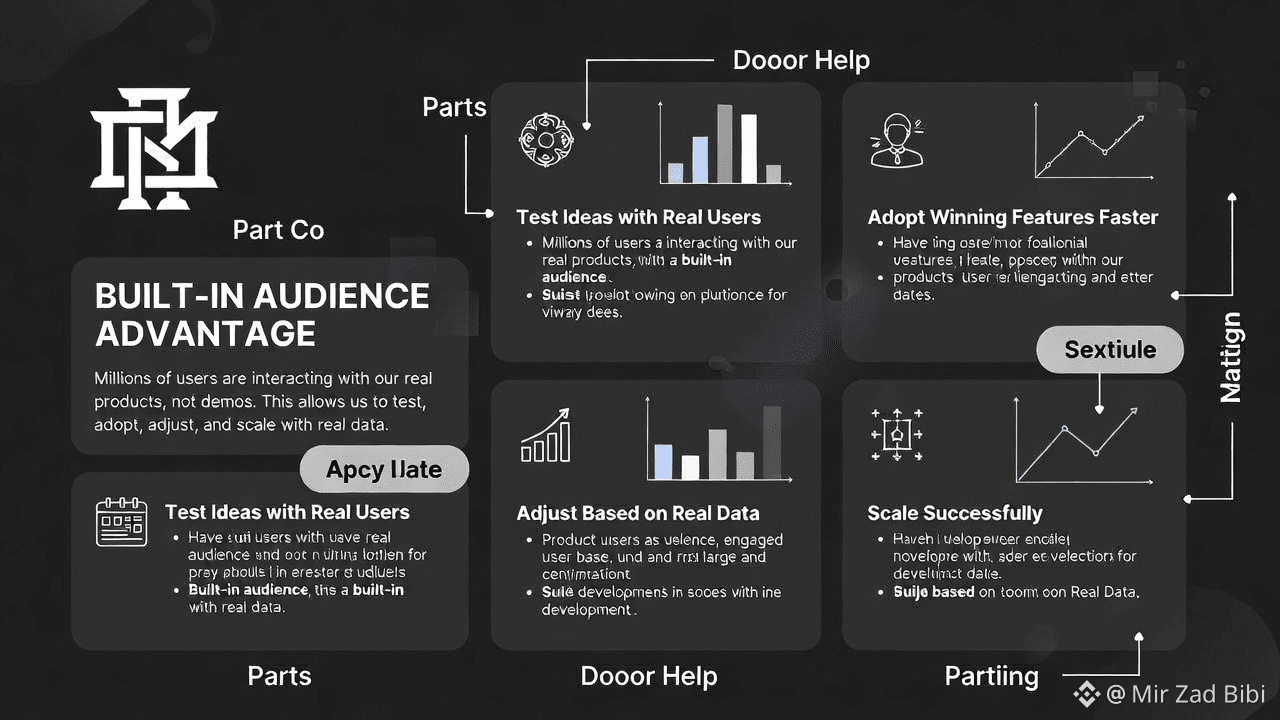
And then there’s the advantage most networks would love to have: a built-in audience. Through Vortex Gaming, Vanar has access to millions of users who can interact with real products, not demos. Adoption isn’t theoretical here. It’s something that can be tested, adjusted, and scaled.
What’s important is that this isn’t all hypothetical.
In gaming, assets are already moving on-chain. Items, characters, and skins start to behave like real property instead of temporary licenses. Play-to-earn stops being about chasing emissions and starts looking more like ownership.
In music and entertainment, the focus shifts to practical ideas — NFT tickets, direct fan access, clearer royalty flows. Not flashy experiments, just tools creators can actually use.
Brands, too, are thinking beyond simple NFT drops. Loyalty programs, digital collectibles, and fan engagement are evolving, and Vanar positions itself as infrastructure that brands can plug into without dragging their customers through crypto complexity.
Developers are noticing this as well. EVM compatibility makes migration straightforward, and that ease tends to attract experimentation. Projects don’t have to bet everything to try Vanar — they can just deploy and see what happens.
The $VANRY token sits quietly at the center of all this.
It’s used to pay for transactions, participate in governance, support incentives across the ecosystem, and stake to help secure the network. Its role is functional first. It’s meant to move, to be used, not just watched on a price chart.
There are fair questions, of course.
Competition is fierce. Chains like Solana, Polygon, and Avalanche are strong, flexible, and well established. Vanar isn’t trying to beat them at being general. It’s making a different bet — that focus matters, especially when paired with EVM compatibility and an existing user base.
Adoption is never easy. Vanar’s approach leans on better UX, real partnerships, and onboarding through things people already enjoy — games, music, brands — rather than crypto-native abstractions.
And then there’s the hype concern. The space has seen plenty of chains promise the world. The distinction here is subtle but important: many projects start with a token and hope users follow. Vanar starts with users and builds the chain around them.
For Binance users, participation is simple. $VANRY is available on Binance and other exchanges. Vanar Chain can be added to MetaMask, early applications explored, and progress followed through official channels as the ecosystem grows.
Vanar Chain isn’t trying to be everything.
It’s focused on a specific belief — that gaming, entertainment, culture, and real-world engagement will push Web3 forward faster than finance alone. And it’s building infrastructure meant to feel natural to people who’ve never thought about blockchains at all.
In a space that often chases speculation, Vanar feels more interested in behavior.
Do you think an entertainment-first blockchain has a real edge — or will broad, general-purpose networks always win in the end?
