
Vanar Chain positions itself as a new kind of Layer-1 blockchain, designed from the ground up to support artificial intelligence, data persistence, and real-world financial use cases. Instead of treating data as something external that must live off-chain, Vanar rethinks the role of the blockchain itself. In its design, the chain is not just a settlement layer for transactions, but a permanent memory layer where information can be stored, interpreted, and acted upon directly. This approach aims to close one of the biggest gaps in blockchain adoption: the disconnect between on-chain logic and real-world data.
A different approach to on-chain data
Most blockchains rely on external storage systems for documents, media, and complex datasets. They store a reference or hash on-chain and depend on off-chain systems to keep the actual data available. Vanar Chain abandons this model. Its architecture allows meaningful data to be compressed, structured, and written directly onto the blockchain in a form that remains usable over time.
Instead of raw files, Vanar stores information as intelligent data objects that retain meaning, context, and verifiability. This makes the blockchain itself the single source of truth, reducing reliance on external storage providers and minimizing the risk of broken links, lost files, or unverifiable records.
Neutron: turning files into on-chain memory

At the core of Vanar Chain is Neutron, an AI-driven compression and data transformation engine. Neutron converts large files such as contracts, records, certificates, and media into highly compact units that can live permanently on-chain. These units preserve semantic meaning rather than just raw bytes, allowing applications to understand and work with the data instead of merely proving its existence.
This process makes it practical to store information that would normally be far too large or expensive to place on a blockchain. By embedding meaning directly into the data structure, Neutron enables smart contracts and applications to reference, query, and validate information without leaving the chain.
Kayon: on-chain reasoning and explainable decisions
Storing data is only part of Vanar’s vision. Kayon acts as the reasoning layer that interprets and evaluates on-chain memory. It allows applications to run logic, checks, and decision processes directly against stored data in a transparent and auditable way.
Unlike traditional AI systems that operate as black boxes, Kayon’s outputs are designed to be explainable. When a decision is made—such as approving a transaction, validating compliance, or triggering a workflow—the reasoning can be traced and verified on-chain. This is particularly important for regulated industries where accountability, auditability, and transparency are essential.
Built for regulated finance and real-world assets
Vanar Chain’s architecture is especially suited for real-world assets and regulated financial products. Assets such as equities, bonds, real estate, or invoices depend heavily on documentation, legal context, and compliance rules. By keeping both the asset logic and its supporting documents on-chain, Vanar reduces operational complexity and compliance risk.
Smart contracts can automatically enforce rules based on the actual content of documents rather than simple boolean inputs. This opens the door to more advanced automation in areas like settlement, custody, reporting, and lifecycle management of tokenized assets.
The role of the VANRY token
VANRY is the native utility token of Vanar Chain. It is used to pay transaction fees, secure the network, and access advanced on-chain services. As Neutron compression and Kayon reasoning require computational resources, VANRY plays a central role in pricing and incentivizing these operations.
The token is also designed to support interoperability, with wrapped versions enabling interaction with other ecosystems. This allows Vanar to operate as part of the broader blockchain landscape rather than in isolation.
Developer-friendly infrastructure
Vanar Chain maintains compatibility with existing Ethereum tooling, lowering the barrier for developers. Teams familiar with EVM-based development can build on Vanar while gaining access to its AI-native features. Wallets, explorers, documentation, and staking tools are part of the growing ecosystem, making it easier for both developers and users to participate.
Beyond basic smart contracts, Vanar encourages the creation of applications that combine data, reasoning, and automation. This shifts development from simple transactional logic to richer, decision-driven workflows.
Trade-offs and long-term considerations
Persisting more data on-chain introduces new challenges, including storage economics, long-term scalability, and indexing. Vanar’s model depends heavily on the effectiveness of its compression and data structures. If these systems scale efficiently, they could redefine how blockchains handle information. If not, cost and performance will be the key pressure points.
Adoption will ultimately depend on real-world usage. Enterprise integrations, throughput under load, and predictable costs will determine whether Vanar’s architecture can support production-grade systems at scale.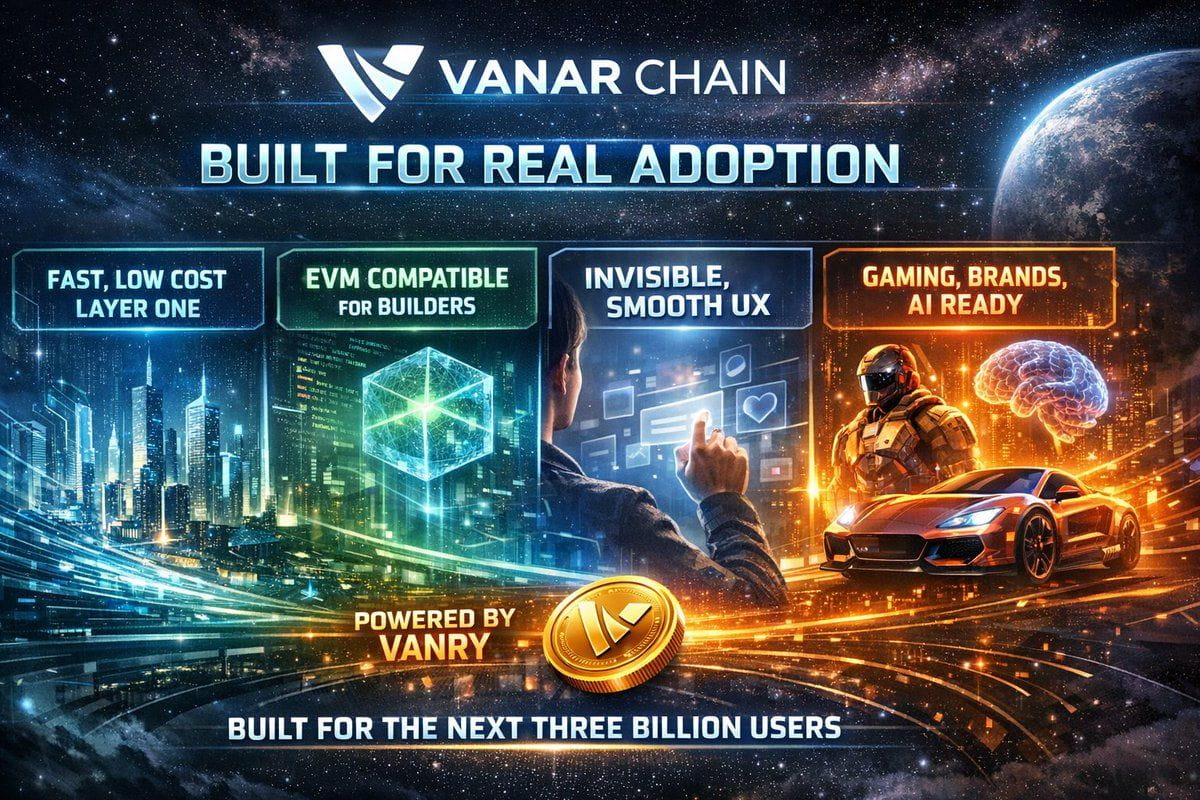
Looking ahead
Vanar Chain represents a shift from blockchains as transaction ledgers to blockchains as intelligent systems capable of storing memory and executing reasoning. Its focus on AI-native design, verifiable data, and explainable logic positions it as a strong candidate for enterprise, institutional, and regulated use cases.
If its technology delivers as intended, Vanar could enable a new generation of decentralized applications that operate with real-world context, not just code. For builders and institutions seeking to bridge blockchain, AI, and compliance, Vanar Chain offers a compelling and forward-looking foundation.
