
We live in a world where we are forced to make a dangerous choice:
Use a CEX (Centralized Exchange): Give them your passport, your ID, and your home address. Then pray they don't get hacked and leak your data to the dark web.
Use DeFi (Decentralized Finance): Keep your privacy, but live in fear that regulators will eventually shut down the platform or freeze your assets for being "non-compliant."
This is the KYC Paradox. You either sacrifice your safety (identity theft risk) or your legitimacy (regulatory risk).
Dusk Network (DUSK) has built the only working solution to this problem. It’s called Citadel.
If you want to understand why DUSK is poised to capture the institutional market, you have to understand Citadel. It isn't just a "feature"; it is the bridge between the old world and the new.
1. The Problem: "Honey Pots" of Data
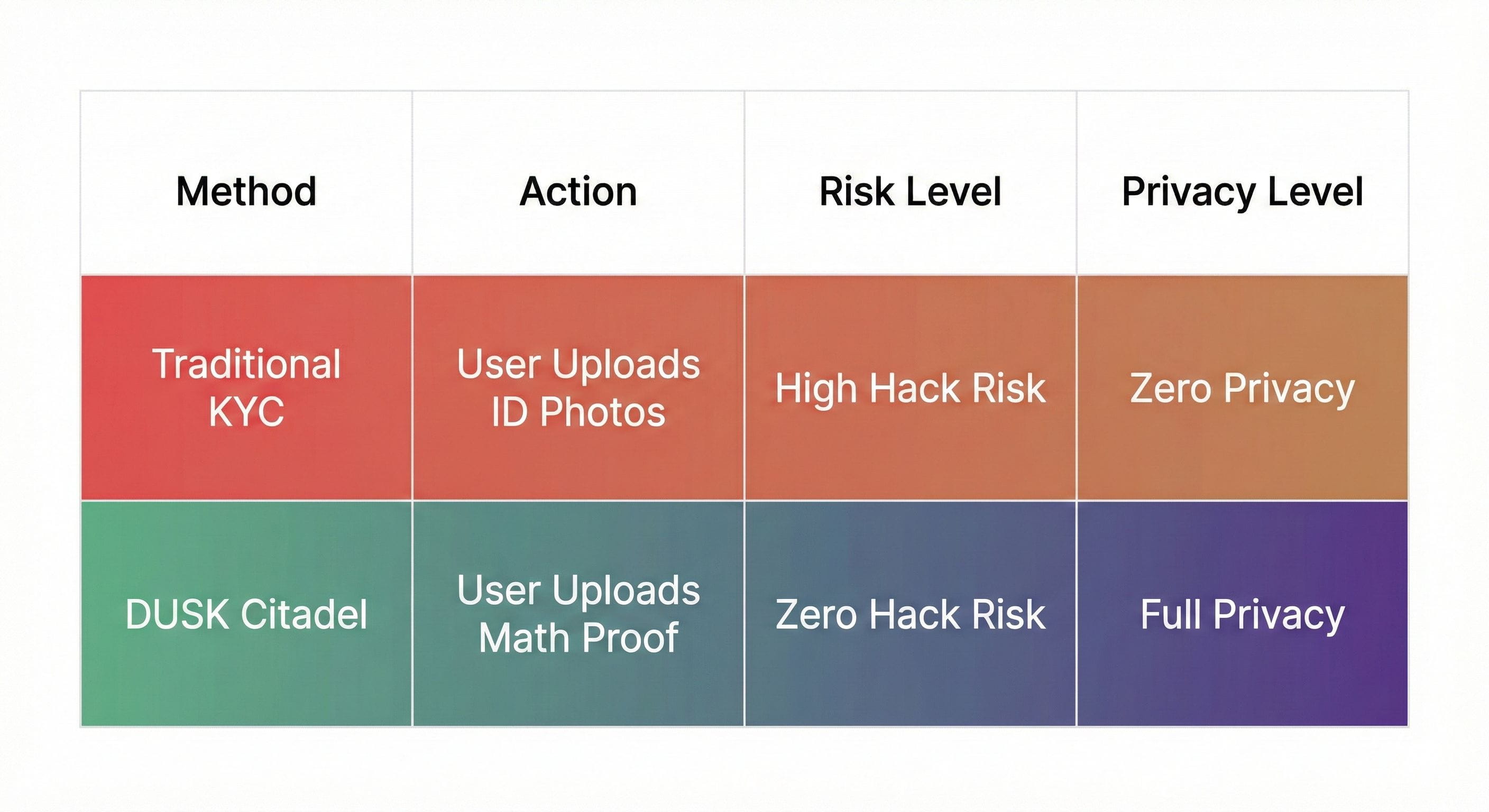
Every time you sign up for a new launchpad or exchange, you upload your ID. That company stores it in a centralized database.
To a hacker, that database is a "Honey Pot." If they crack it, they get thousands of IDs. This happens every year. In the traditional system, proving you are human means exposing yourself to risk.
2. The Solution: "Verify, Don't Reveal"
Citadel flips this model on its head using Zero-Knowledge Proofs (ZKPs).
Here is how the workflow changes on Dusk:
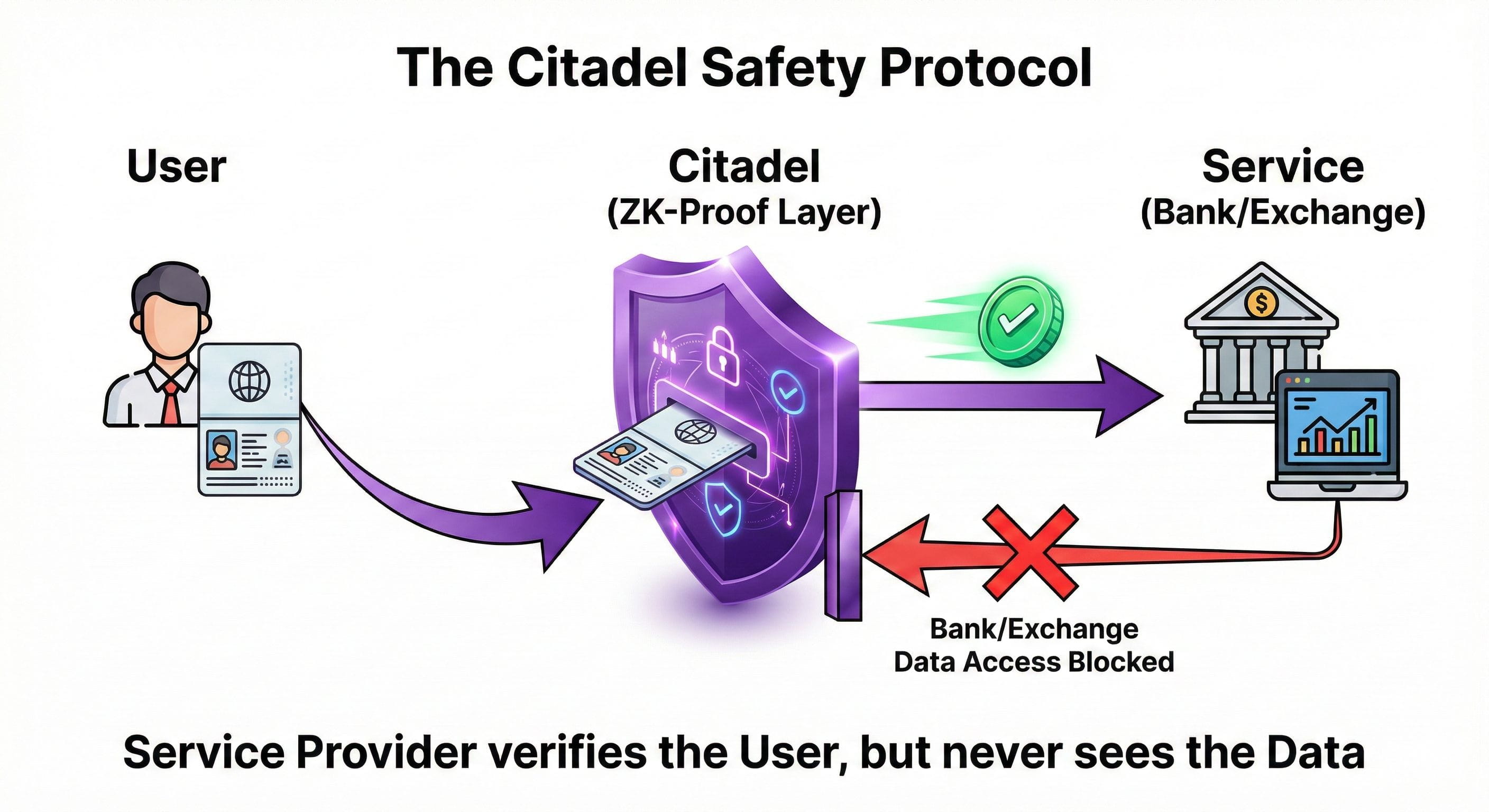
Step 1: You verify your identity once with a trusted provider.
Step 2: Citadel generates a cryptographic "Proof" (a complex math problem solution) that says, "This user is verified and safe."
Step 3: When you want to trade or join a launchpad on Dusk, you show the Proof, not your Passport.
The protocol checks the math. The math confirms you are verified. But the protocol and the people running it never see your name, your face, or your address.
You get the green light of Compliance, with the iron clad protection of Privacy.
3. Why "Shelter" is the Killer App for Wallets
Dusk takes this a step further with Shelter.
In Ethereum, if you want to keep your assets safe, you might use a "cold wallet" (like a Ledger). But if you want to stake or vote, you have to move funds to a "hot wallet" (like MetaMask), which is risky.
Shelter allows you to own the keys to your assets in one wallet, but delegate the staking power to another, without ever moving the money.
It separates "Ownership" from "Action."
Citadel protects Who You Are.
Shelter protects What You Own.
Together, they form a defensive layer that no other Layer-1 blockchain is offering.
4. The Market Opportunity
Why does this pump the DUSK token?
Institutions are terrified of data liability (GDPR in Europe). If they hold user data, they are liable if it gets stolen. Citadel solves this liability for them. It allows them to onboard users without holding the "toxic waste" of personal data.
As privacy laws get stricter in 2026, platforms will rush to solutions like Citadel that allow them to follow the law without holding the bag.
Dusk isn't just a blockchain; it's a digital safe house.
Disclaimer: This content is for educational and informational purposes only it's not an financial advice. Cryptocurrency investments are subject to high market risk and volatility. Always conduct your own research before making any investment decisions.
