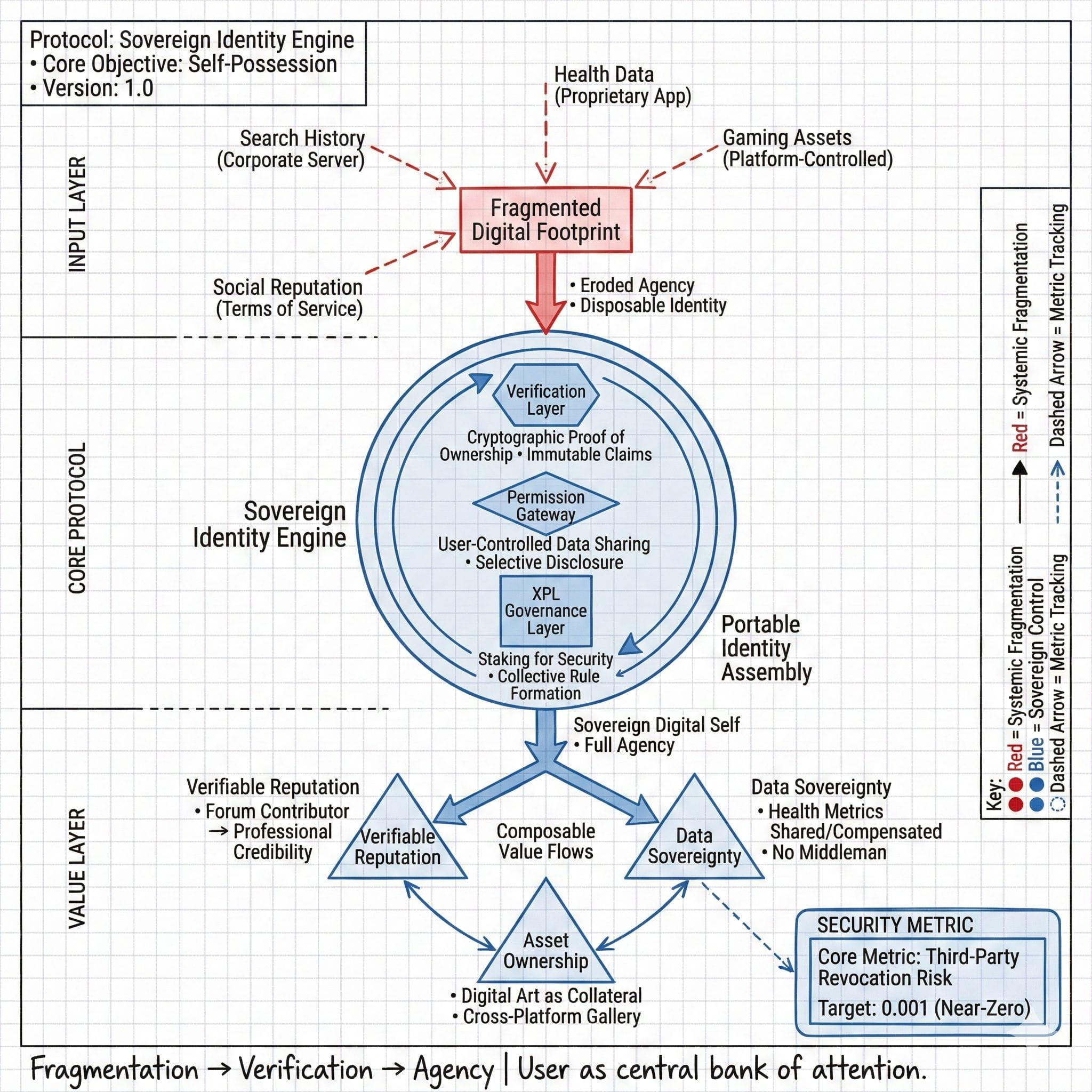
Have you ever stopped to consider the trail of breadcrumbs you leave behind every single day? It’s not just your search history or your social media likes. It’s the playlist you curated for a specific heartache, the health data from your watch tracing your journey back to wellness, the unique in-game item you spent months earning, and the digital art you collected because it spoke to your soul. These aren't just data points; they are the digital fragments of your identity, your time, your taste, and your effort. Yet, where do they live? On the servers of corporations. Who controls them? Terms of Service you didn't write. Who profits from them? Often, not you. We have become sharecroppers on the digital plantations of the 21st century, cultivating rich lives of expression and connection on land we do not own, subject to the sudden whims of a platform’s policy change or a service shutting down.
This is the quiet erosion of self in the internet age. We pour our creativity, our social capital, and our very attention into systems designed to extract value from our engagement. Our digital footprint—the composite map of who we are online—is fragmented, locked away in proprietary silos, and ultimately disposable to anyone but us. You can be de-platformed. Your content can be demonetized. Your cherished digital possessions can vanish because a parent company decided to sunset a game. The feeling this creates is a profound lack of agency, a sense that your digital self is merely a tenant, never a homeowner. You decorate the apartment, but you don’t hold the deed.
What if the next layer of the internet was built to reverse this dynamic entirely? What if the core innovation wasn't about speeding up what we already do, but about fundamentally changing who holds the keys? This is the shift from platforms to protocols, from user accounts to self-sovereign digital identities. It imagines a world where your digital footprint isn't a trail you leave for others to follow and monetize, but a sovereign territory you actively govern. Your data, your assets, your reputation, and your memberships become composable elements of a portable identity that you own, control, and can choose to bring into any compatible digital space.
Imagine your digital life not as a series of isolated profiles, but as a personal, verifiable dossier that travels with you. That hard-earned reputation from a contributor forum? It’s a verifiable credential you can bring to a professional network to showcase expertise. The collection of art you’ve gathered? It’s a gallery you can hang in any compatible virtual space or use as collateral in a decentralized finance protocol, with you deciding the terms. Your medical fitness data from a health app? It’s encrypted information you can choose to share—and be compensated for—with a research institution, without surrendering it to a middleman. The walls between apps become doors you control, and the value generated in one sphere can fluidly empower you in another.
This requires a foundation that treats user sovereignty as its first principle. It needs to be more than a fast ledger; it must be a judicious and impartial witness. It provides the framework for creating, holding, and proving ownership of these digital fragments without ever taking custody of them. It’s the infrastructure that allows you to cryptographically sign a statement ("I am a trusted member of X community"), own a unique asset (this one-of-a-kind digital sculpture), or prove a fact (I completed this course) in a way that is undeniable, portable, and cannot be revoked by a third party. The native token in such a system, XPL, becomes the fuel for this self-governance. It is the resource used to assert claims on the network, to participate in the collective security that makes this sovereignty possible, and to shape the rules of this new digital commons. Its value is tied to the robustness and fairness of the territory it helps secure.
The emotional transformation here is from vulnerability to empowerment, from being a product to being a protagonist. It replaces the anxiety of losing access with the confidence of holding the master key. It swaps the feeling of starting from zero in every new app with the power of bringing your full, verified history with you. This is how technology moves from being extractive to being emancipatory. It allows you to build a digital legacy with the same permanence and respect as a physical one.
We are moving beyond building apps that demand our data. We are beginning to architect environments for self-possession. The goal is a digital landscape where you are the central bank of your own attention, the curator of your own achievements, and the governor of your own community affiliations. It’s a world where your online presence is finally coherent, cumulative, and truly yours. This is the promise of a decentralized future that understands the most valuable asset isn't a token—it's the authentic, sovereign human behind the screen, finally able to build a digital home they can truly, forever, own.