
In early 2026, Bitcoin (BTC) is showing renewed strength, and one of the biggest drivers behind this momentum isn’t retail hype — it’s institutional investors piling into Bitcoin Exchange-Traded Funds (ETFs). Despite recent market pullbacks and macro uncertainty, big players are taking dips as buying opportunities through regulated ETF vehicles. Here’s how and why this shift matters.
🧠 What’s Happening With Bitcoin ETF Inflows?
📊 Over recent weeks and months, U.S. spot Bitcoin ETFs recorded strong inflows, with notable capital entering funds like BlackRock’s iShares Bitcoin Trust (IBIT), Fidelity’s FBTC, and Bitwise’s BITB — sometimes exceeding hundreds of millions in a single session.
✔️ For example, ETFs saw one of their largest weekly inflows (~$1.42B) in mid-January 2026, signaling a return of institutional confidence after late-2025 outflows.
✔️ Earlier this month, spot Bitcoin ETFs logged $753.7M in net inflows on a single day, the highest since October 2025, driven by post-year-end reallocations.
💼 Why Institutions Are “Buying the Dip”
📌 1. Regulated access & compliance
Bitcoin ETFs let institutions get exposure through traditional brokerage accounts with familiar risk frameworks, making them more comfortable adding BTC to portfolios.
📌 2. Long-term strategic positioning
Many institutions are using dips in Bitcoin price as buying opportunities, accumulating more exposure when prices soften instead of selling out. This reflects disciplined, multi-year allocation strategies rather than short-term trading.
📌 3. Macro and policy factors
Improving macro data and progress on clearer digital asset legislation have eased uncertainty, making institutional capital redeploy into Bitcoin ETFs more attractive.
📊 Buying the Dip — Simple Concept Chart
Below is a visual idea of how inflows and price action can interact when institutions buy the dip:
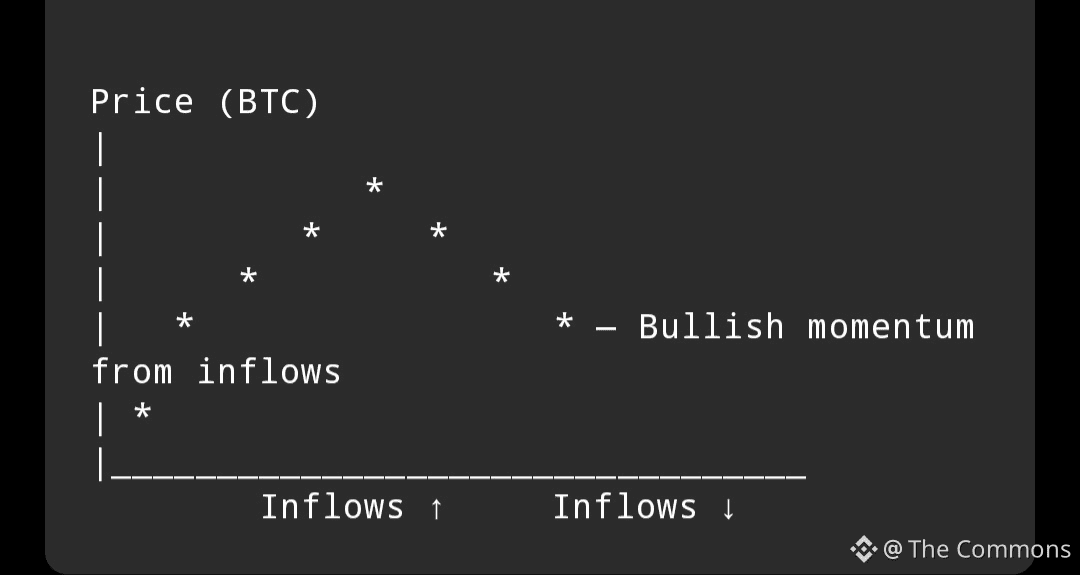
🔹 When ETF inflows increase, institutions are adding exposure — often during price dips.
🔹 When inflows slow or reverse (outflows), it may coincide with short-term profit-taking or rotation.
🧾 What This Means for Bitcoin’s Future
👉 Institutional capital adds liquidity and structure to Bitcoin’s market.
👉 Buying the dip through ETFs may provide a price floor during volatility.
👉 Continued inflows — even amid macro pressure — show confidence in Bitcoin’s long-term role as a portfolio asset.
However, inflows aren’t always linear; ETFs can see whipsaw flows (inflows one day, outflows the next) as institutions tactically rebalance. �
📌 Key Takeaways
💡 Bitcoin ETF inflows reflect institutional demand, long-term allocation, and confidence in digital assets.
💡 Institutions often add exposure during dips rather than selling — a “buy the dip” mindset.
💡 ETF inflows remain a key market driver alongside macro forces and broader regulatory clarity.
#BitcoinETF #BinanceHODLerBREV #InstitutionalCrypto" #BTC #CryptoInvesting"
